
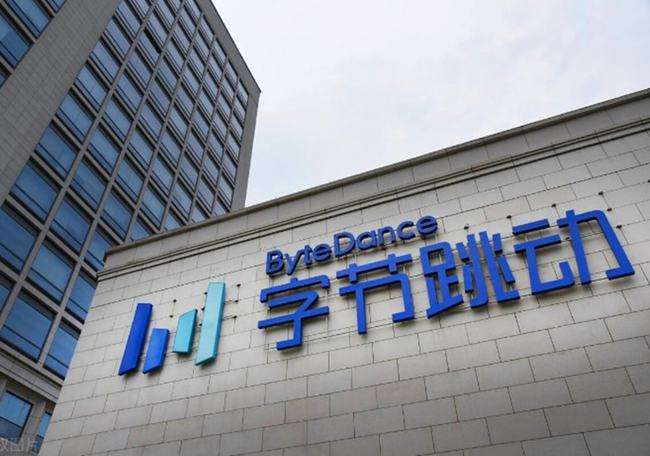
Tian Keyu, the former ByteDance intern who was fired and sued for 8 million yuan after a dispute over the company’s model training project, has re-entered the AI industry with a startup in the world-model space. On July 13, media reports citing people familiar with the matter said Tian’s new venture was incubated and led by investment from Meng Xing, a partner at FiveY Capital, has raised tens of millions of dollars, and carries an overall valuation of about $200 million.
His path from dismissal at a major tech company to first author on a top AI conference paper and then founder of a startup valued at roughly $200 million has kept him in the spotlight.
Academic record and the ByteDance dispute
Tian is a PhD student at Peking University and earned his undergraduate degree from the School of Software at Beihang University. His research focuses on deep learning optimization, generative models and reinforcement learning.
In 2024, a VAR image-generation paper he helped complete won the best paper award at NeurIPS. The paper proposed a new image-generation method that, according to the source material, challenged mainstream diffusion models of the time on image quality, generation speed and scalability. The related GitHub project received more than 4,400 stars.
Still, Tian became widely known less for the paper than for a controversy during his internship at ByteDance. From 2021 to August 2024, he interned at ByteDance and worked on areas including hyperparameter optimization and reinforcement learning algorithms.
In November 2024, ByteDance said in an internal notice that a former intern, dissatisfied with the allocation of team resources, had maliciously attacked the team’s model training tasks by writing and tampering with code, causing substantial waste of resources. That intern was later identified as Tian in subsequent reports. ByteDance then terminated his internship agreement and shared the matter with the Sunshine Integrity Alliance, the Enterprise Anti-Fraud Alliance and Tian’s university.
Some reports said the incident affected more than 8,000 GPUs and caused ByteDance losses of more than $10 million. Tian later denied attacking the model training tasks on multiple occasions, said another intern had actually carried out the attack, and said he had called police after being defamed.
ByteDance, for its part, maintained that Tian had engaged in the conduct and had not recognized the seriousness of the issue afterward, prompting the company to take the matter to court.
ByteDance sought 8 million yuan in damages
On Nov. 25, 2024, ByteDance’s lawsuit against Tian was formally accepted by the Haidian District People’s Court in Beijing. The company asked the court to order compensation of 8 million yuan for alleged infringement losses, reimbursement of 20,000 yuan in reasonable expenses, and a public apology.
Ten days after ByteDance filed suit, a paper Tian had helped complete won the NeurIPS 2024 best paper award. The contrast between a serious disciplinary notice and an 8 million yuan damages claim on one side, and the top prize at a leading global AI conference on the other, turned him into one of the most controversial young researchers in the AI field.
A startup built around world models
After leaving ByteDance, Tian largely disappeared from public view for a period. His next move has now come into focus.
Corporate registration records show Tian is serving as the legal representative or a senior executive at several entities, including Beijing Lanzhitan Network Technology Co., Ltd., Beijing Lantan Network Technology Co., Ltd., and Sanya Haitang District Tanlan Network Technology Studio. Their business scopes cover computer technology, AI hardware, intelligent robots, and the development and promotion of artificial intelligence technologies.
Judging from the listed business scopes and the team background, the direction Tian has chosen is not a standard large-model application play but the more closely watched world-model segment. In the source description, world models refer to systems that let AI do more than chat or generate images, giving it the ability to understand space, motion and causal relationships in the real world and predict what may happen next. Autonomous driving, robotics, embodied AI and AI video generation could all rely on world models as a foundational capability.
People familiar with the matter said Tian’s project was incubated and funded by Meng Xing at FiveY Capital, has completed a financing round worth tens of millions of dollars, and is valued at about $200 million.
Investor background
Meng previously worked at JPMorgan and Shunwei Capital before joining Didi, where he served as COO of an autonomous driving company. In 2024, he joined FiveY Capital and began focusing on incubating early-stage technology projects.
From being fired by ByteDance and sued for 8 million yuan, to winning a best paper award at a top AI conference, to building a startup now reportedly valued at around $200 million, Tian’s trajectory has been unusually dramatic. The source material did not disclose further details on what product the company will ultimately deliver.