
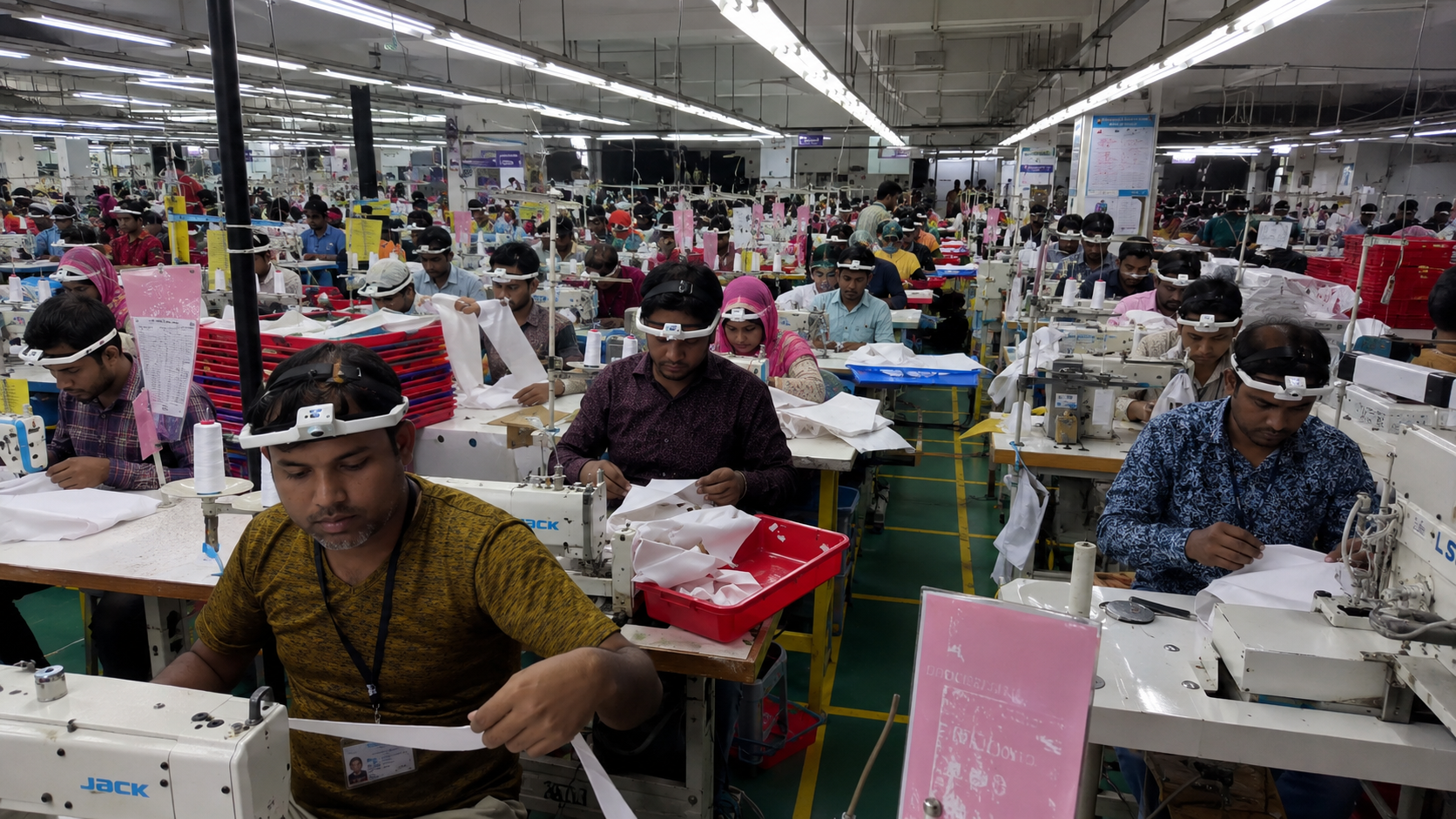
Training a robot to fold laundry is harder than training an AI to write code. That's the core obstacle facing the humanoid robot industry in 2026. Text, code, and math problems are abundant online, but data on "pinching a wet shirt with two fingers, flipping it, and folding it neatly" does not exist. The solution: gig workers with iPhones strapped to their foreheads.
A Medical Student in Nigeria: $15/Hour, iPhone on Forehead
Zeus lives in a one-room apartment in a central Nigerian mountain town. He's a medical student. After work, he straps an iPhone to his forehead, turns on a ring light, and films himself making the bed, folding clothes, and pretending to wash dishes. Each clip lasts 15 minutes, repeated over and over. His employer is Micro1, headquartered in Palo Alto, California, with "thousands" of contractors across 50-plus countries. Zeus told MIT Technology Review that $15 an hour is decent pay in Nigeria's high-unemployment economy, but he admitted the job bores him: "I'm someone who needs to use my brain." Arjun, a tutor in Delhi, India, faces a different challenge. He has two daughters and must shoo his 2-year-old out of the frame before recording. A 15-minute household chore video takes him nearly an hour to brainstorm new scenarios. Sasha, a former bank teller in Nigeria, tiptoes around her shared compound to avoid capturing neighbors. Dattu, an engineering student in a tech hub city in India, folds the same set of clothes repeatedly on his balcony. All four workers use pseudonyms and are not authorized to speak publicly about the job.
Why Robots Need to Watch Humans Fold Clothes
Humanoid robots are attracting massive capital — global investment topped $6 billion in 2025. But building a robot that works in a real home faces a fundamental issue: virtual simulations can teach robots acrobatics but can't replicate the physics of gripping objects. Grabbing a wet T-shirt, for example: a force error of 0.1 Newtons can cause it to slip. The success of LLMs (large language models) suggests a new approach: robots could learn manipulation by watching vast amounts of human actions. The catch: such data exists only in the real world and must be collected piece by piece. UC Berkeley roboticist Ken Goldberg told MIT Technology Review: "LLMs are trained on text that would take humans 100,000 years to read. Humanoid robots need even more data because controlling robot joints is more complex than generating text." Micro1's CEO estimates robot companies spend over $100 million annually buying real-world action data from suppliers like Micro1. Competitors are following suit: Scale AI claims to have collected over 100,000 hours of video, and food delivery platform DoorDash pays its couriers to film household chores.
The Gray Areas Behind the Videos
The supply chain has several troubling structural issues. First, privacy. Micro1 requires workers not to show their faces, names, or phone numbers and promises AI plus human filtering to remove sensitive info. Even so, the footage captures workers' home interiors, possessions, and daily routines. University of Maryland professor Yasmine Kotturi said, "Companies have a responsibility to inform workers about the long-term direction of this technology and how it will affect them." Second, data quality. Aaron Prather of ASTM International noted, "How we live at home doesn't always meet safety standards. If these people teach bad habits, that could lead to accidents — bad data." Micro1's CEO said the company rejects unsafe demonstrations, but added that clumsy actions help robots learn "what not to do." The deeper issue is structural wage arbitrage. AI companies in rich nations need training data but pay developing-world wages. $15 an hour is a taxi fare in Silicon Valley; in Nigeria, it's an attractive salary. Zeus knows the nature of the job, but in a high-unemployment economy, he has few alternatives. The AI race is a product of engineer density × computing power × data. And the data term is being outsourced to the people least likely to ever afford these robots.