


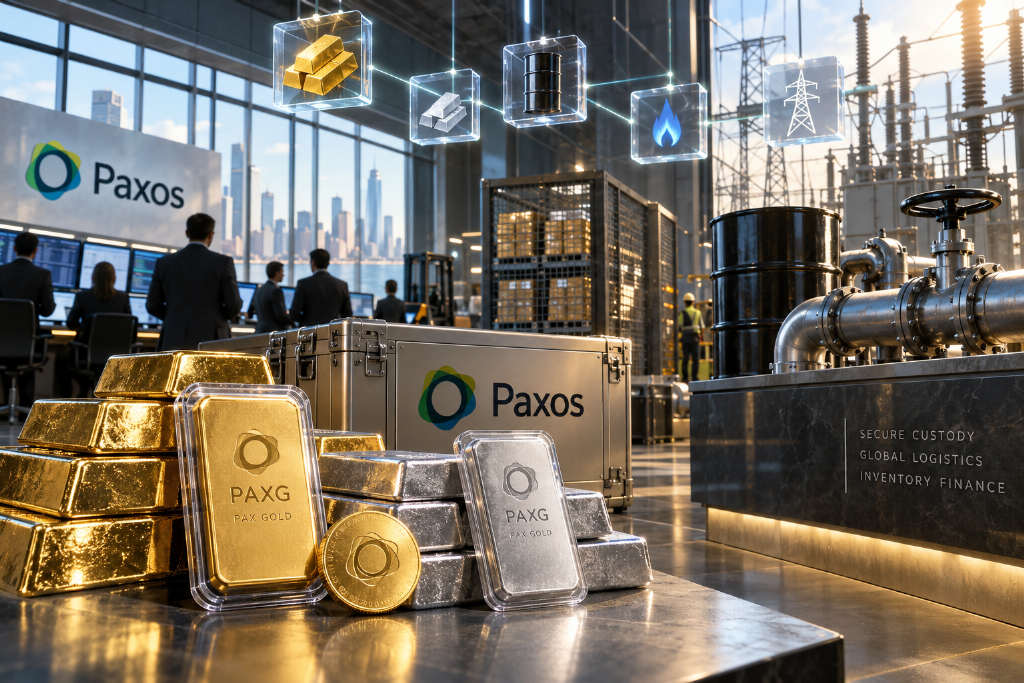
Tokenized commodities could move beyond a market centered on gold and develop into a broader system for metals financing, energy trading and borrowing against physical inventories, according to executives at Paxos Labs, Theo and Energy Substantiation interviewed by CoinDesk.
The pitch, they said, is not just easier access to commodity exposure on blockchain rails. It is also about connecting investors looking for exposure and income with businesses that need inventory financing, in markets that have often been difficult for smaller participants to enter.
A market still dominated by gold
CoinGecko data cited by CoinDesk shows the tokenized commodities market reached a capitalization of $5.55 billion at the end of March 2026, up from $1.43 billion at the beginning of 2025. Nearly 90% of that expansion came from gold-backed tokens issued by Paxos and Tether.
These tokens represent either ownership of, or exposure to, physical commodities such as gold, silver and oil. Gold remains the main pillar of the sector, but executives interviewed by CoinDesk said the larger opportunity lies in putting those assets to work rather than simply mirroring spot prices.
Paxos Labs sees lending as the next step
Paxos Labs is making that case through PAXGy. The token is backed by PAX Gold (PAXG), and the reserves are deployed to institutional borrowers. The structure is designed so that each token becomes redeemable for more PAXG as lending rates are repaid in ounce terms, giving holders a way to keep gold price exposure while potentially increasing their gold holdings.
“The big proposition is access,” Paxos Labs co-founder Bhau Kotecha told CoinDesk. He said gold lending has historically depended on scale and relationships that many investors do not have.
Kotecha said he sees demand from individuals, family offices and institutions, and added that borrowing against PAXGy could be a next step. He also cautioned that lending returns are not guaranteed and borrower defaults could reduce the token’s value.
Theo pushes silver into the financing conversation
Theo is taking a similar approach with silver. Its thSLVR product passes through income from institutional silver leases while maintaining exposure to the metal’s price.
Theo Chief Investment Officer Iggy Ioppe told CoinDesk he expects growth to come from existing commodity owners and users: institutions looking for productive collateral, refiners financing inventory and corporate treasuries seeking assets that settle quickly.
Ioppe called silver “the natural second” after gold, pointing to industrial demand and an established leasing market. He also said the opportunity is more complicated because silver is more volatile and the supply of available metal is tighter.
His forecast is aggressive. Ioppe expects tokenized commodities to grow into a market worth tens of billions of dollars within five years and more than $100 billion within a decade. Within 15 years, he said, tokenization should become part of ordinary commodity settlement and financing.
Energy products face a harder buildout
Oil presents a larger logistical challenge, but Energy Substantiation sees a significant opening there as well.
The company expanded its WTIC token from Ethereum to Solana on Oct. 2. According to its announcement, each token represents one barrel of West Texas Intermediate crude backed by verified physical inventory.
Co-founder and CEO JP Thieriot said tokens tied to natural gas and Brent crude are also in development. He expects demand from energy buyers hedging costs, investors seeking exposure and suppliers that need working capital. His view is that oil tokens could account for a quarter of the oil market within 10 years.
Executives disagree on timing, not direction
The executives do not agree on how quickly energy can follow metals. Ioppe argued that storage and transportation make income-generating energy tokens harder to build. Thieriot said commodities that are constantly moving require “verifiable inventory, workable custody and settlement.”
That leaves the same practical test across the sector: tokenized commodities need reliable links to physical markets, and owners need a clear reason to use them.
Related development mentioned by CoinDesk
CoinDesk also noted that blockchain finance platform Theo has launched a tokenized silver product backed by $40 million in active leases.