
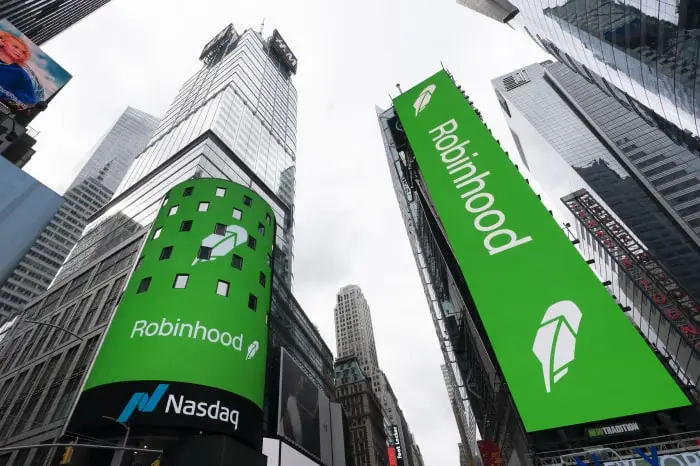
The fight is shifting from the asset to the point of sale
In a commentary published by TechFlowPost, the central claim is blunt: in the business of putting stocks onchain, the real prize may not be the asset, the technology, or even the license. It may be the interface where the user presses “buy.”
The piece points to three developments moving in the same direction. In July 2026, Robinhood launched its own blockchain and surpassed $100 million in total value locked within seven days. In December 2025, Kraken acquired Backed Finance, the issuer behind tokenized stock product xStocks. Telegram then brought those tokenized U.S. equities into its messaging environment.
The article’s conclusion is that these companies are competing for distribution. Whoever owns the entry point to the trade has the strongest position in the stack.
Why this cycle looks different from 2020
TechFlowPost contrasts the current wave with earlier efforts such as Mirror’s synthetic assets and FTX’s stock tokens. Those products, the article says, ran into regulatory pressure and ecosystem collapse, and users were largely buying price exposure rather than actual shares.
This time, the underlying assets are described as real. The commentary cites the ERC-8056 standard backed by Robinhood and Superstate, which is designed to handle stock splits and dividends at the smart-contract layer. It also points to Ondo’s partnership with proxy voting company Broadridge, which allows token holders to vote in shareholder meetings with private keys.
The article also stresses composability. A tokenized NVIDIA stock position can be deposited into a lending protocol, used to borrow stablecoins, and then put to work elsewhere. In that framing, assets that once sat idle in a brokerage account start functioning as capital inside DeFi.
Chains and issuers are being pushed toward commodity status
The market backdrop is getting bigger. TechFlowPost cites Boston Consulting Group’s forecast that tokenized assets could reach $10 trillion globally by 2030. By mid-2026, onchain RWA had exceeded $31.4 billion, up nearly fivefold from the start of 2025. The article also references a Chainalysis report saying the number of new Ethereum wallets created specifically to receive RWA tokens has surged, with stock purchases becoming a fresh reason for new capital to enter crypto rails.
Still, a larger market does not mean value is evenly distributed. The article breaks the stack into three layers. At the bottom sit public chains and custodians such as Ethereum, Solana, and BitGo, which handle asset existence and transfer. In the middle are issuers including Backed, Dinari, and Ondo, which build the legal structure and map real shares into 1:1 tokens. At the top is the user-facing distribution layer.
According to the commentary, the lower two layers are under pressure. Users do not care which chain a tokenized stock runs on as long as it is cheap and secure, which pushes blockchains toward utility-like infrastructure. Issuance is also getting crowded as more licensed firms enter, driving fees lower and making the business look more like contract manufacturing.
By contrast, the platform that controls the button can charge listing fees, route users into wealth products, perpetuals, and lending, and sit at the center of secondary-market liquidity. The article notes that Backed reportedly accounts for about 24% of compliant tokenized stocks, which helps explain why Kraken chose to buy the issuer outright.
Capital flows suggest brokerage users are being connected to DeFi
The commentary argues that this is no longer just a narrative trade. Capital has already started to sort the winners. In Robinhood Chain’s first week, a meme coin called CASHCAT posted nearly $98 million in single-day trading volume, while network-wide DEX turnover hit $560 million in one day. On the surface, it looked like a classic casino chain.
The TVL breakdown tells a different story. Out of the $100 million locked on the chain, $90 million sat in lending protocol Morpho, supporting roughly 7% annualized yield through Robinhood Earn. In the article’s reading, about 90% of the money was there to save rather than speculate.
That matters because Robinhood has 27.6 million brokerage accounts. The commentary says savings-oriented capital from those users is quietly entering DeFi through a new distribution pipe. It also says major protocols are lining up to provide the back end: Morpho for lending, Lighter for perpetuals. Lighter signed a 12-year deal, agreed to a 50-50 fee split, and airdropped tokens worth $11 million to Robinhood users.
On the infrastructure side, the chain is built on the Arbitrum stack, offers 100-millisecond block confirmation, and uses ETH for gas. Robinhood has also opened AI agent trading to eligible U.S. users, allowing automated strategies to monitor markets around the clock and run arbitrage or yield strategies.
One business, two very different distribution models
The article says the same tokenized-equity business now looks very different depending on geography.
In the United States, Robinhood hides DeFi behind a brokerage interface. From the user’s perspective, buying a tokenized stock does not feel much different from buying a regular stock. Private keys, bridges, and gas are abstracted away in the front end.
In Lagos or Buenos Aires, Telegram presents the opposite model. TechFlowPost says a Nigerian retail investor who wanted to buy Apple stock once had to navigate offshore account opening, foreign-exchange controls, and expensive wire transfers. Now that investor can open the TON wallet inside Telegram and buy one tokenized Apple share in a flow that resembles sending a message. The article says TON has nearly 100 million wallet users and sits on top of Telegram’s 1 billion monthly active users. That is the route Kraken’s xStocks is using to reach emerging markets.
The commentary adds that, according to reports, SK Hynix’s U.S. listing, which set a record with $26.5 billion in financing, was also delivered to Telegram users through xStocks. It notes that tokenized stocks can be embedded in mini apps inside group chats and used for tipping or payments, giving financial assets a social-style distribution path that bypasses traditional gatekeepers.
U.S. regulation remains the hard boundary
For all the momentum, Robinhood, Kraken, and Telegram face the same obstacle: none has a clean path into the U.S. market for this product set. The article points to a January 2026 statement from the U.S. Securities and Exchange Commission saying tokenization does not change the nature of a security and that onchain stocks remain subject to securities law.
Under that framework, Robinhood’s stock tokens are issued through a Jersey trust and are available only to non-U.S. users. Kraken’s xStocks, built around a Swiss structure, is also kept outside the United States.
TechFlowPost says Kraken has another reason to make these moves. The exchange is preparing for a U.S. IPO in 2026 and had already spent $1.5 billion to acquire traditional broker NinjaTrader. Bringing the issuer in-house strengthens the story it can tell Wall Street, even if the products themselves still cannot enter its home market.
The article contrasts that with Dinari, a smaller company that obtained a U.S. transfer agent license, legally sold tokens backed by real shares, and turned that capability into an API product for others. Ondo took a different route: the underlying shares stay in a compliant U.S. custody chain while the blockchain layer only maps ownership, matching the SEC’s relatively friendlier view of a third-party custody model.
The scarce asset is the user’s tap
The commentary ends with a clear thesis. The technical story around putting assets onchain has been overvalued, while the monopoly value of distribution has been underestimated. Standards for stock splits and dividends, oracles, and legal structures matter, but they are likely to become easier to replicate over time. What is harder to copy is 27.6 million bank-linked brokerage accounts or a chat app that 1 billion people open every day.
Its final point is that the internet did not eliminate brokers; brokers adapted with zero-commission trading. DeFi has not eliminated brokers either. Instead, brokers are turning DeFi into their back end. In the next decade, the number of chains may keep growing and assets may become more interchangeable, but the scarcest thing in the system may still be the button the user touches.