Study says tokenized stocks are surging, but investor rights depend on how they are structured

Study says tokenized stocks are surging, but investor rights depend on how they are structured

N
News Editor
2026-08-26 15:09:00
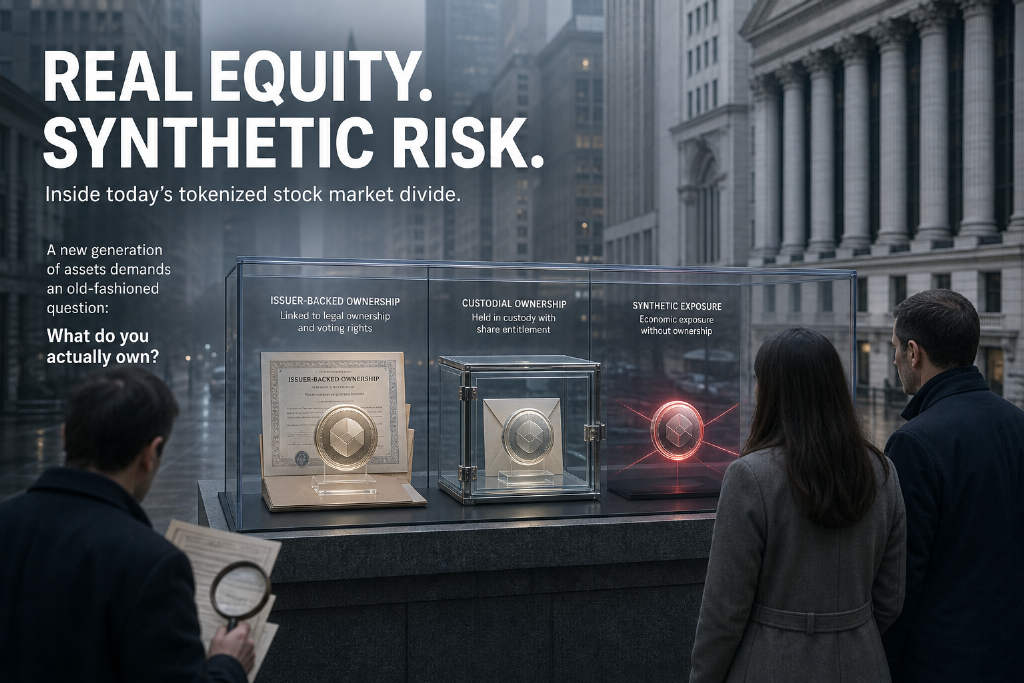
A recent study said the tokenized stock market has been expanding quickly, with activity in both derivatives and spot products rising sharply. Since the start of 2026, trading volume in tokenized stock perpetual contracts has climbed from about $16 billion in 2025 to more than $590 billion, while spot volume has also topped $88 billion. The report argued that headline growth does not answer the more important question for investors: what legal claim and economic rights a token actually represents. It identified three main structures now used in the market: issuer-backed, custodial, and synthetic models. Under an issuer-backed model, a token can directly represent share ownership and may carry rights tied to voting, dividends, and other corporate actions. Custodial structures provide economic exposure through a securities intermediary. Synthetic tokens, by contrast, amount to contractual claims on a third party rather than direct ownership of the underlying shares, which can leave holders exposed to counterparty risk, tracking risk, and gaps in the pass-through of corporate actions. The study said demand for tokenized stocks is likely to keep growing as regulatory frameworks become clearer and blockchain settlement infrastructure matures, but investors still need to determine whether they hold real equity or synthetic exposure.

BlockBeats said on Aug. 26 that a recent study pointed to fast growth in the tokenized stock market. Since the beginning of 2026, trading volume in tokenized stock perpetual contracts has surged from roughly $16 billion in 2025 to more than $590 billion. Spot trading volume, too, has moved past $88 billion.

Market growth has put structure and investor rights in focus

The report said that as the market expands, the bigger question for investors is the legal setup and rights structure behind tokenized stocks. Big volume by itself tells you very little about what holders actually own, or what protections they may really have.

Three main models are now used in the market

According to the study, tokenized stocks now sit in three main buckets: issuer-backed, custodial, and synthetic.

  • Issuer-backed: These tokens may directly stand for ownership of shares and can come with rights linked to voting, dividends, and corporate actions.
  • Custodial: These setups give holders matching economic rights through a securities intermediary.
  • Synthetic: These tokens are, at base, contractual claims on a third party and do not amount to direct ownership of the underlying stock.

Synthetic structures may carry added risk

The study said synthetic tokens can bring counterparty risk, tracking risk, and problems tied to the transmission of corporate actions, because they do not directly represent ownership of the underlying shares.

Demand may keep rising, but the distinction remains critical

The report said demand for tokenized stocks will probably keep climbing as regulatory frameworks get clearer and blockchain-based settlement infrastructure keeps maturing. But investors still need to figure out whether the asset they hold is real equity ownership or synthetic exposure layered on top of it. That split matters. It shapes the rights they get, the risks they take on, and the legal protection available to them.

This article was originally published by Bit.Fan. For more cryptocurrency news and market insights, visit www.bit.fan.
50

Disclaimer:

The market information, project data, and third-party content displayed on this platform are for industry information sharing only and do not constitute any form of investment advice or return commitment.

Cryptocurrency trading carries high risks. Users should fully assess their risk tolerance and make independent decisions. All profits, losses, and legal responsibilities are borne by the users themselves.