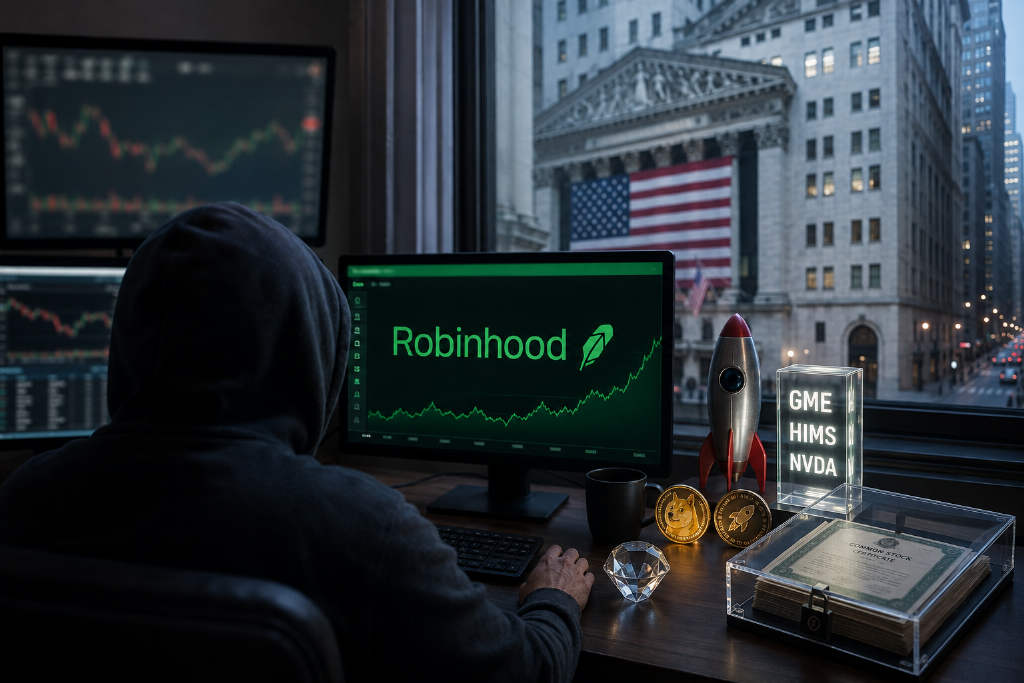
Foresight has published an article examining a trading structure that ties meme coins to U.S. small-cap stocks, arguing that the idea is moving beyond pure speculation and into something closer to a retail gathering point for traders trying to squeeze Wall Street short sellers.
The article links that setup to the January 2021 GameStop episode, where Robinhood became the main venue for retail participation. At the time, short seller Citron posted on X that retail buyers of GME were 「the suckers at this poker game」 and that the stock would soon fall back to $20. Foresight says that remark set off anger among Reddit users already frustrated with Wall Street, leading to calls for traders to hold with 「diamond hands」 and force a short squeeze.
Retail traders then piled into call options. That, in turn, pushed market makers to buy GME in the spot market as a hedge, helping send the stock from $17 to an intraday high of $483 within days, a move of nearly 30x. Melvin Capital, which was short GME, lost billions of dollars, according to the article. Citron exited its short position and later said it would stop publishing short reports.
Foresight also revisits one of the most disputed parts of that episode: Robinhood was accused of cutting off the buy side for retail traders. The company later said the issue came after the Depository Trust & Clearing Corporation, or DTCC, sharply raised collateral requirements, leaving Robinhood short of liquidity. The article describes that as a lasting scar from the event.
A similar play is now being attempted on-chain
According to Foresight, tokenized stock trading now exists on Robinhood’s chain, and retail traders have already begun trying comparable strategies. The article points to a user who disclosed a series of trades on X the day before yesterday.
That user said he targeted a Nasdaq-listed company with a market capitalization of just $4.8 million and a stock price near $0.12. He described the company’s finances as extremely poor, with $6.2 million in liabilities, and called it effectively a dead stock. The key figure in his thesis was short interest of 92.3%.
He said he quietly accumulated 37.4% of the company’s total shares over three weeks, spending $1.8 million through two brokers. He now plans to tokenize the stock on Robinhood’s chain and launch a meme coin paired against it.
His calculation, as quoted by Foresight, is that $500,000 of buying in the stock token could translate into $2 million of buying pressure on the real stock, enough to force shorts to cover.
Why not just buy the stock directly?
The article raises that question directly. If the only goal is to create buying pressure and squeeze shorts, why not buy the underlying stock in the market and stop there?
Foresight’s answer is that tokenized stock trading changes the demand path. Once a meme coin is paired with a stock token, traders who want the meme coin must first buy the stock token and then swap it for the meme coin. In the article’s framing, that creates passive buying of the stock token, which can then push demand toward the underlying equity.
On that basis, Foresight describes stock-token trading as another derivative layer on top of equities. The difference, it says, is where that derivative sits: not inside the conventional centralized stock market, but in a decentralized on-chain market.
Existing examples and on-chain figures
The user said he would reveal more details over time. Foresight quotes him as saying: 「This is either the craziest thing in crypto history or the craziest thing in tradfi history.」
The article adds that regardless of whether the user’s full account is accurate, the structure itself is entirely possible. It says there is already at least one real example: small-cap stock HIMS, which was paired with a meme coin and saw its market capitalization rise from several million to $15 million within just a few days, becoming what the article calls a typical case of retail traders hitting short sellers.
Foresight also cites current data showing that after being paired with meme coins, 20% of NVIDIA stock tokens on Robinhood’s chain had been locked. Across all stock tokens on the chain, 10% were locked on the platform long.xyz.
What the article argues could happen next
Foresight’s view is that if stock-token trading keeps expanding and the activity persists, more real-world U.S. equities will be locked inside the crypto ecosystem. The article says that same structure is likely to attract more participants seeking to use it against short sellers in U.S. equities, especially in small-cap names.
It also argues that if the game grows larger, short sellers in traditional markets will not simply stand aside. Instead, they may bring their own capital and strategies into crypto and open a new front there.
The article ends with a risk warning, saying the market involves risk, investments should be made with caution, and the piece does not constitute investment advice. Readers should decide for themselves whether the views in the article fit their own circumstances and bear responsibility for any investment decisions made on that basis.