
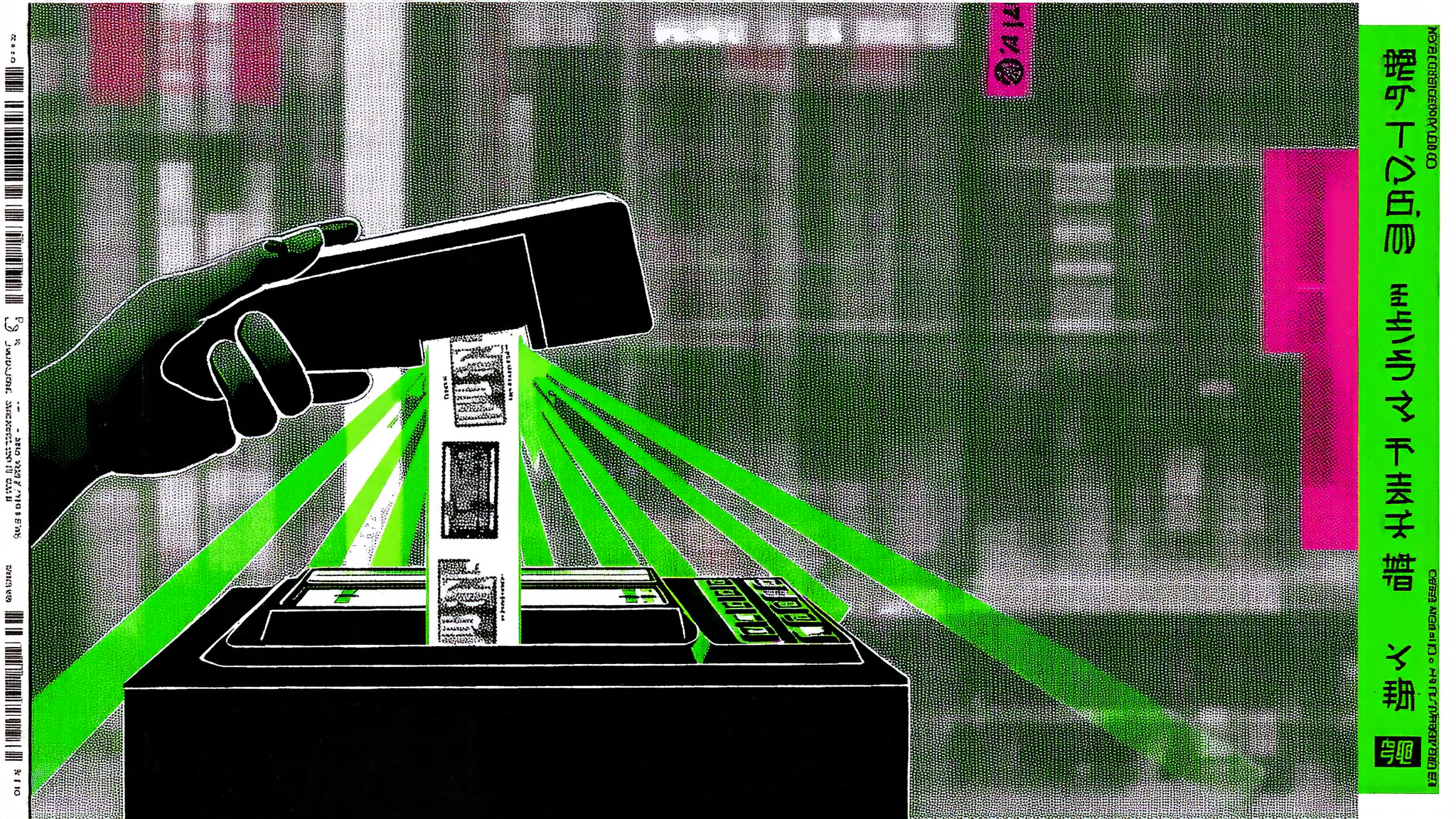
A Lawson convenience store in Tokyo processed a 322-yen payment in the yen stablecoin JPYC on Aug. 6, with the checkout receipt printing “stablecoin” as the payment method, according to CoinPost. The purchase during the demonstration was made by CoinPost reporter Ritsuki Kumazawa.
HashPort ran the store trial
The trial was operated by Tokyo-based HashPort. Customers paid by showing a barcode inside the non-custodial HashPort Wallet, which was scanned by the store’s standard point-of-sale register.
HashPort said the merchant-side acceptance flow ran through HashPort Wallet for Biz embedded in that POS. In practice, that meant Lawson did not open or manage a wallet on its own.
PAYTREE handled the relay and Polygon handled settlement
Between the store register and the customer wallet sat PAYTREE, a multi-code payment gateway from Canal Payment Service, CoinPost reported. The gateway relayed payment data so the wallet provider could check the balance and return an authorization.
The payment settled on Polygon. CoinPost said the gap between the barcode scan and the completion screen was roughly five seconds based on its on-site impression, not on a figure published by HashPort or Lawson.
No extra stablecoin hardware was added at the register
CoinPost said retail stablecoin acceptance in Japan has until now generally required either a dedicated payment terminal beside the normal register or a displayed QR code. In this trial, no stablecoin-specific hardware was added at the till.
HashPort described the demonstration as the first stablecoin payment linked to a convenience-store POS in Japan and the first gasless stablecoin payment in the country. CEO Seihaku Yoshida said the gasless settlement, based on HashPort’s own technology, was used only in this demonstration. The report also noted that neither claim has been independently verified.
Participation was limited, with a second phase set for Aug. 17
Ordinary shoppers were not part of the test. Participation was restricted to parties involved in the trial.
A second phase is scheduled for Aug. 17 at the Lawson Gate City Osaki Atrium store, according to CoinPost. That stage will use MetaMask and cover USDC, USDT and JPYC.
Lawson plans more stablecoin trials during August, though no timing has been given for when the public will be able to pay with stablecoins in its stores.
Store background and executives at the event
The Takanawa Gateway City location is the first “Real×Tech LAWSON” future-format store. It was opened by KDDI and Lawson in June 2025.
Executives present at the demonstration included Canal Payment Service President Ryosuke Shimizu, JPYC Representative Director Noritaka Okabe, Yoshida, and Taro Tamura, general manager of Lawson’s financial company and marketing strategy division.
What HashPort said it tested next
HashPort said it used the trial to test POS integration requirements, register operations, payment time and wallet usability. The company plans to expand HashPort Wallet for Biz to food service, retail and services.
It also said multi-wallet support and privacy payment features are due soon, along with a test deployment at two dental clinics in the Kanto region.
Separately, JPYC has been pushing Polygon-based consumer spending use cases through other efforts. The report cited a program that converts Kansai Electric loyalty points into the stablecoin.