

Despite ETH dipping to $1,820 and pervasive bearishness, Tom Lee, Chairman of BitMine (NYSE: BMNR)—the largest Ethereum treasury public company—painted a radically different picture at the “Proof of Talk 2026” conference held at the Louvre in Paris. In a speech titled “Crypto Spring: ETH is the Future of Money,” he presented extensive data to argue that five macro tailwinds are aligning, and that ETH could eventually hit $250,000. He also disclosed that BitMine recently acquired an additional 111,942 ETH, raising its total holdings to nearly 5.4 million ETH, roughly 4.47 percent of the circulating supply.
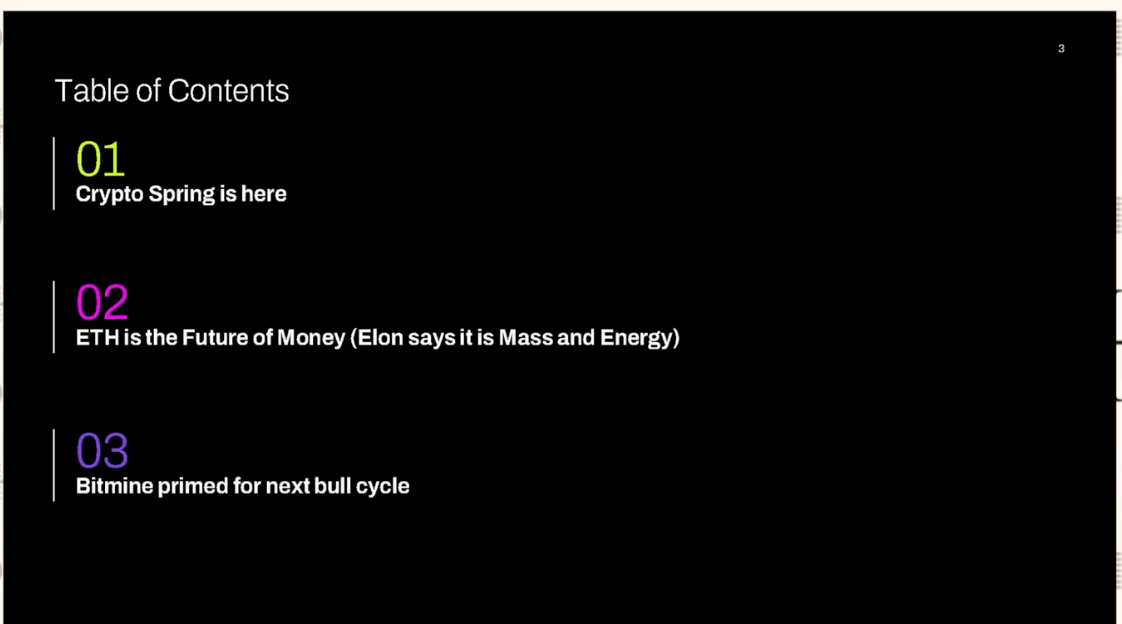
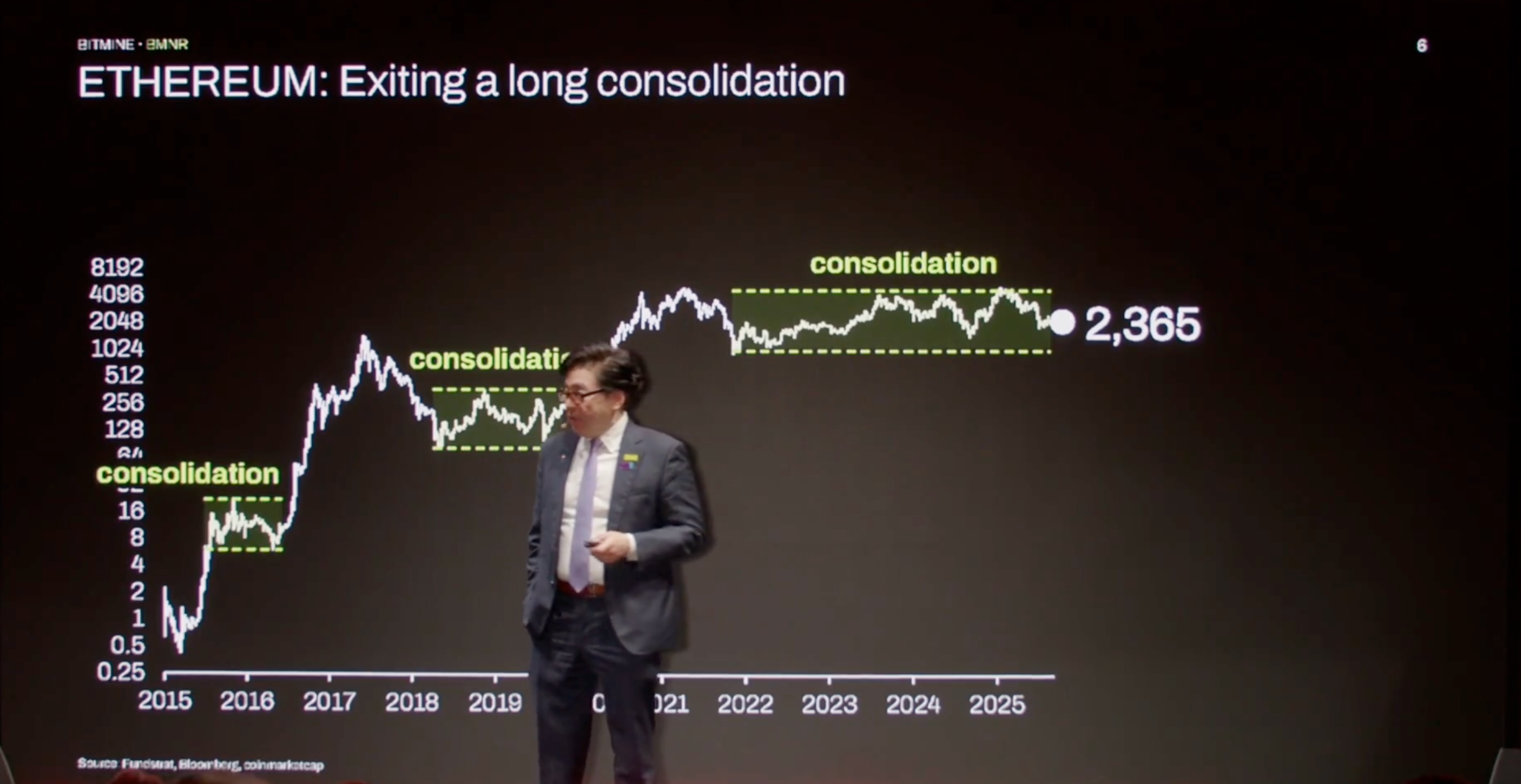
Lee structured his presentation into three parts: macro evidence, why Ethereum represents the future of money, and why buying crypto treasury stocks beats holding the underlying tokens. He first displayed a chart showing ETH consolidating in a range for nearly five years. While bears see a breakdown, Lee insisted a bullish breakout is imminent.
Five Catalysts Signaling Crypto Spring
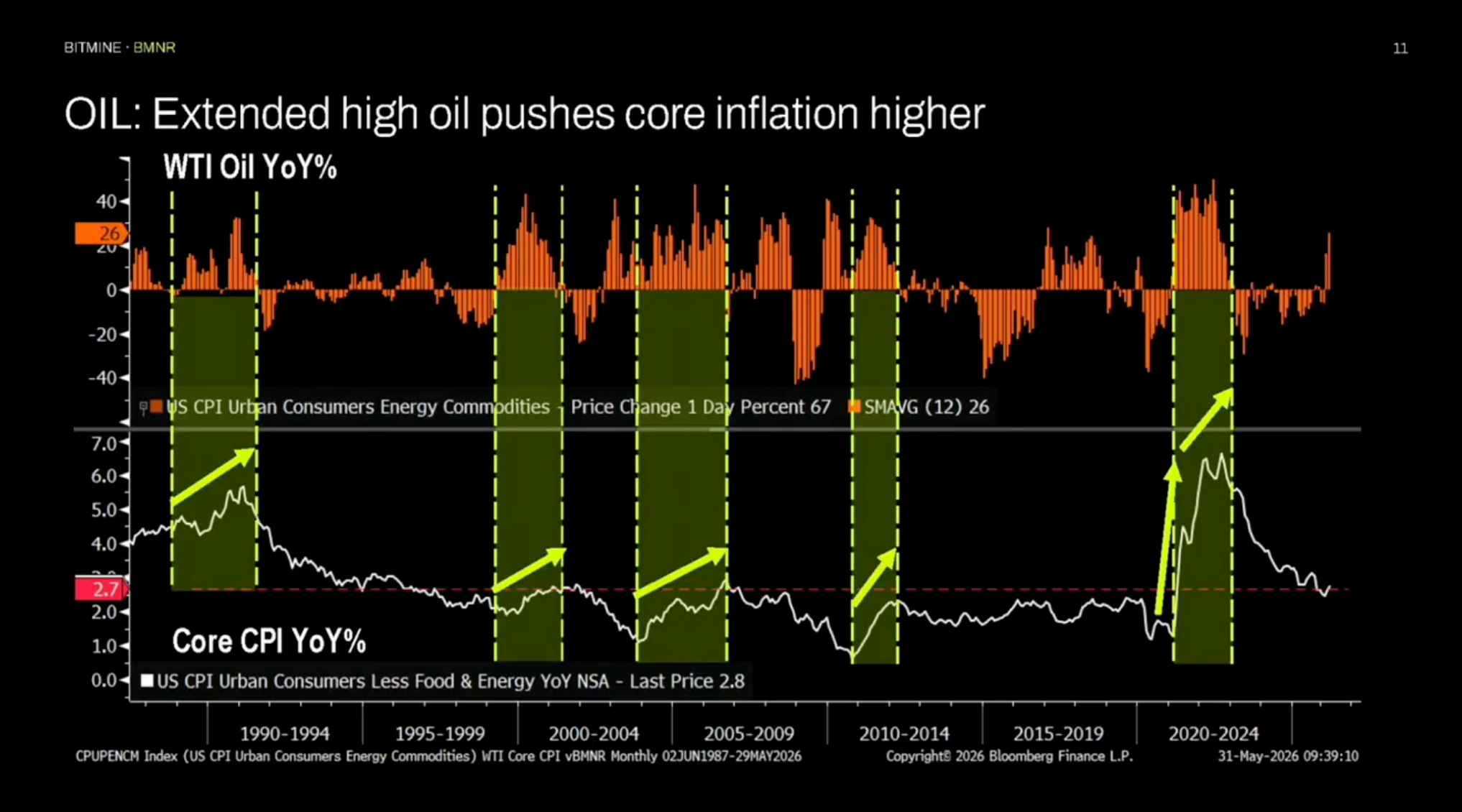
Lee identified five underappreciated tailwinds. First, the end of the Iran war would remove the oil fear premium, potentially pushing oil prices to $40 per barrel. He noted that ETH is currently exhibiting its highest ever negative correlation with oil, so falling oil prices directly benefit ETH. Historically, every spike in oil has accelerated core CPI and forced central banks to hike rates—the end of hostilities removes that pressure.
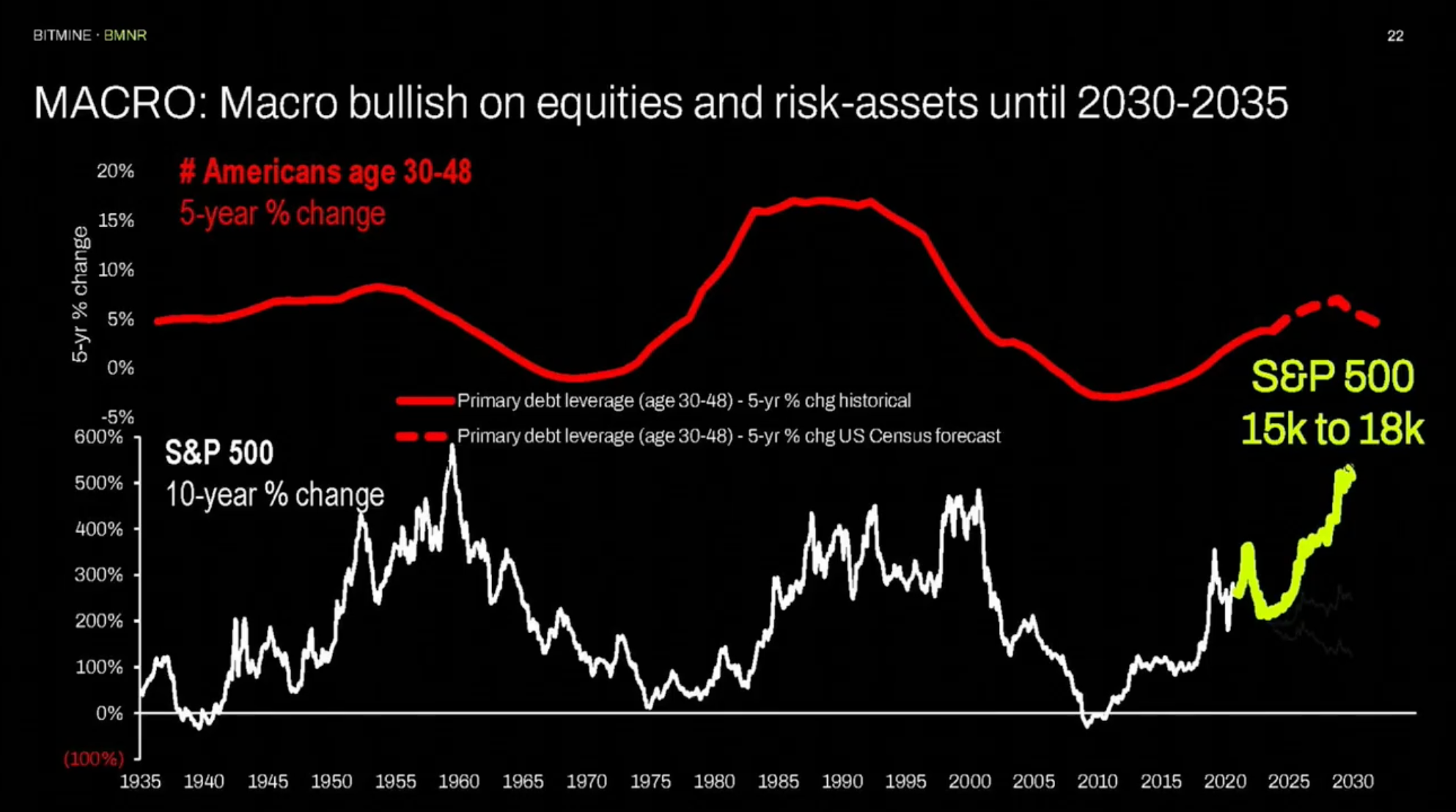
Second, the Clarity Act provides a legal framework for crypto adoption and institutional participation in the US. Prediction markets peg its passage at only 56 percent, but Lee’s discussions with policy experts suggest a much higher probability. Third, the White House remains supportive of Bitcoin and stablecoins. Fourth, new Federal Reserve Chair Kevin Warsh is a Bitcoin advocate. Fifth, a demographic supercycle—rising numbers of Americans aged 30–50—drives above-trend economic growth, and Fundstrat research projects the S&P 500 could reach 15,000 to 18,000 by the end of the decade.
AI and Tokenization: Ethereum’s Value Pillars
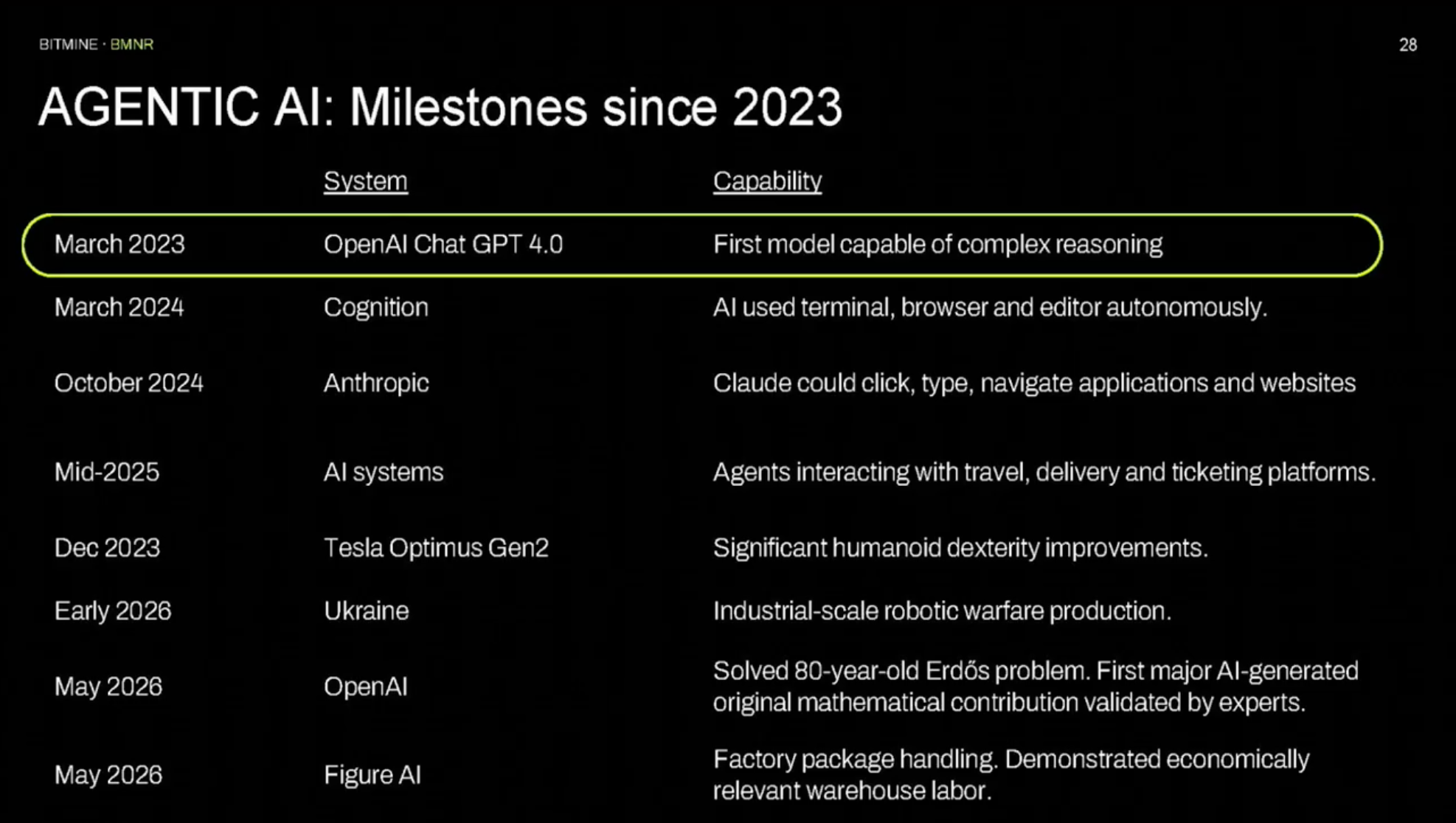
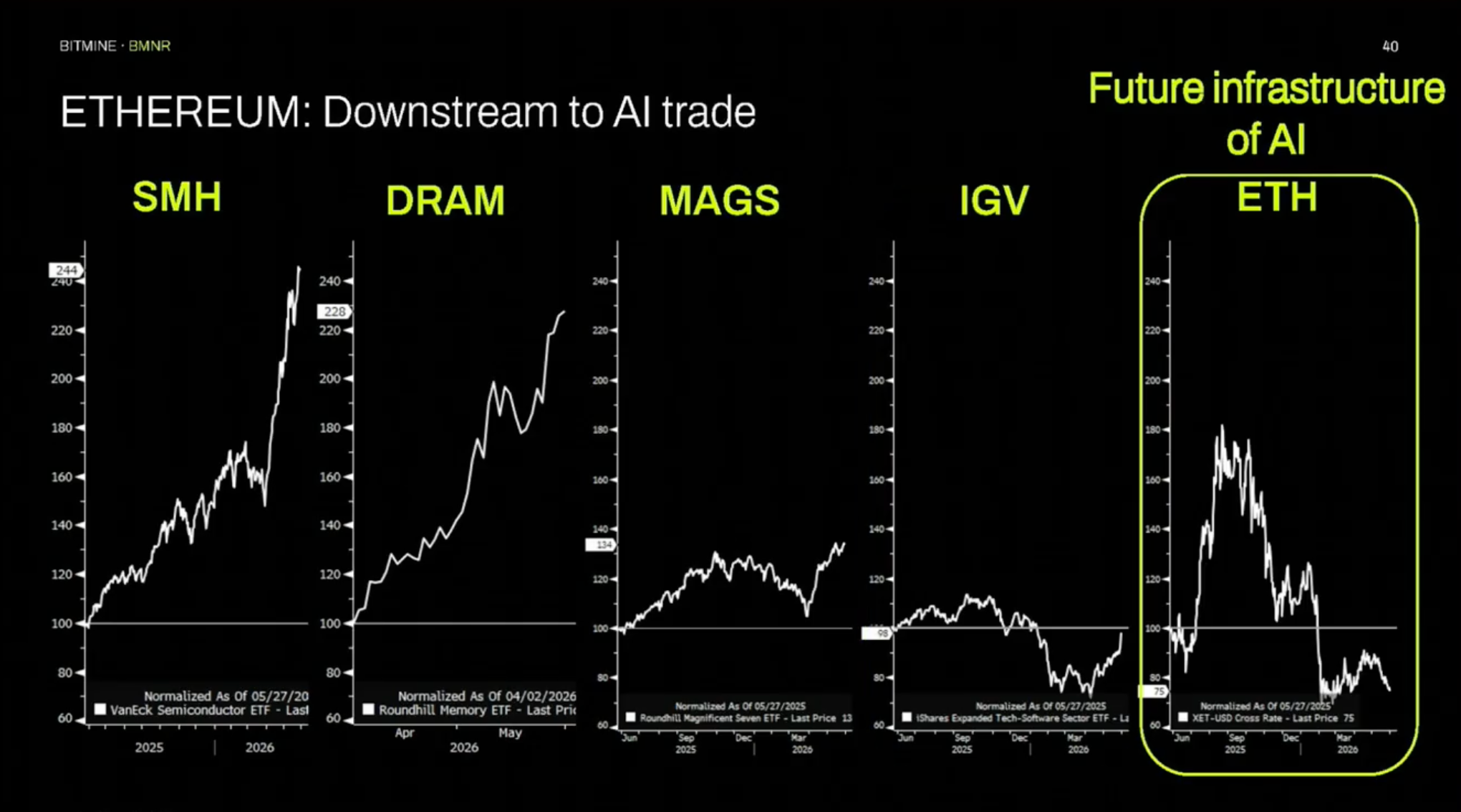
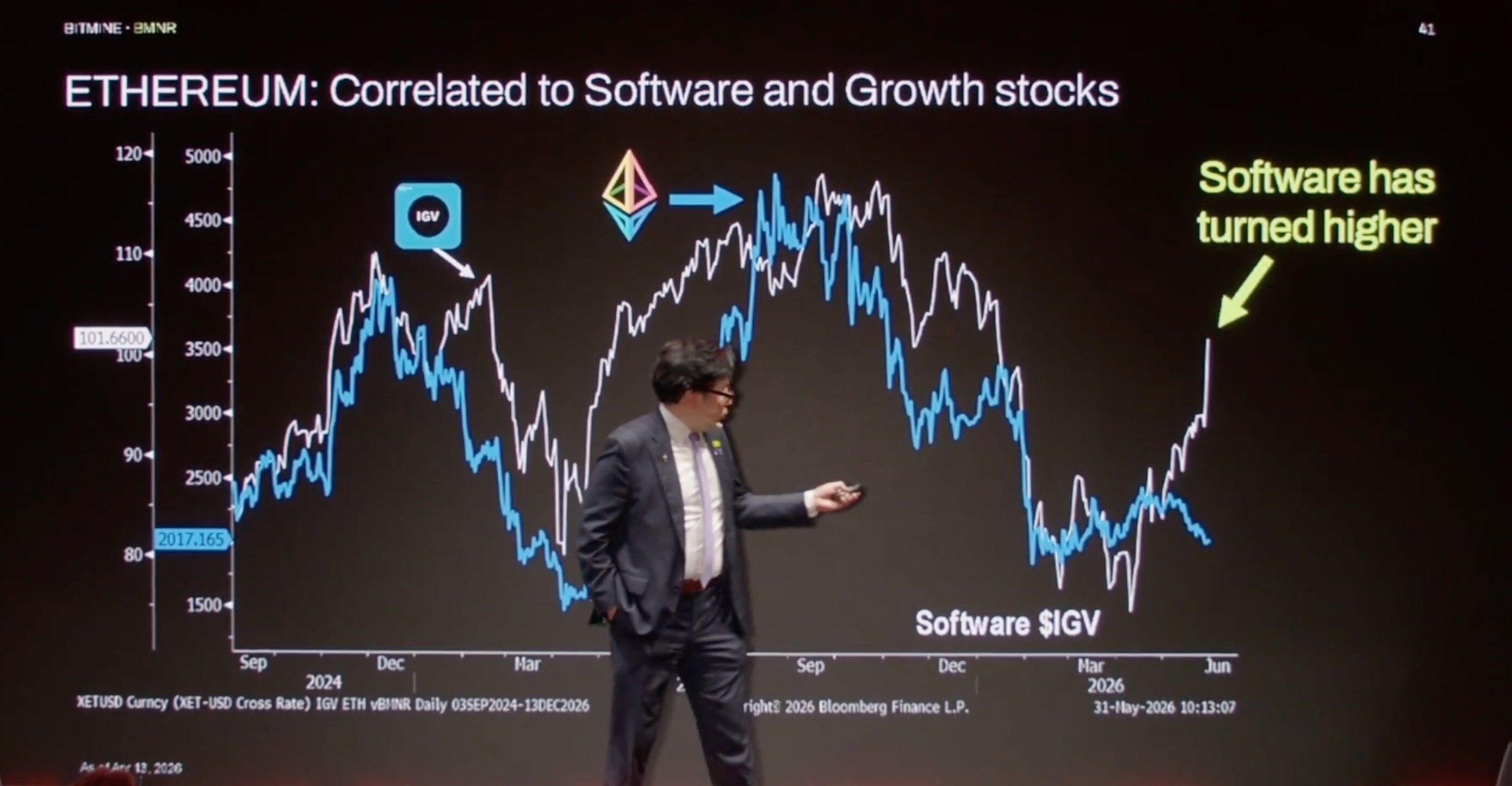
“People have forgotten that crypto is the future of money.” Lee laid out a series of milestones to explain why AI progress will ultimately filter into crypto prices. From the launch of ChatGPT to agentic systems that can interact with websites, breakthroughs in robotics, and industrial-scale drone production in Ukraine, non-human activity now dominates the internet. Robots require control systems, and blockchains are far more efficient than traditional systems for identity verification, authentication, and payments. He showed that software stocks have already gone parabolic; ETH and software shares have historically moved in lockstep, and the recent divergence suggests ETH will catch up within weeks.
Tokenization is the other core narrative. Lee pointed out that stablecoin volumes have already surpassed Visa, and a tokenized securities market could reach $300 trillion, covering real estate, fixed income, equities, derivatives, land, and gold. Crypto asset prices are highly correlated with the volume of tokenized assets, and such a market would push Ethereum’s TVL far beyond its current $100–200 billion. Comparing traditional giants to crypto-native firms, he noted that JPMorgan earns $60 billion annually, while Jane Street—with only 3,000 employees—earns $40 billion, and Tether, with 300 employees, earns $15 billion. Money transfer is more valuable than custody, and crypto excels at it. He predicted that five of the world’s top ten financial institutions will be crypto-native within ten years.
Ethereum Foundation’s Decline and Treasury Rise
Lee devoted substantial time to the shifting role of the Ethereum Foundation. It once held 17% of the ETH supply; by 2020 that fell to 1%, and when BitMine started its treasury business it was 0.3%. Today the Foundation holds only 100,000 ETH—0.1% of supply. At a 5% annual return, that supports only about $10 million in grants. In contrast, Ethereum treasuries led by BitMine now hold 7% of supply and generate roughly $500 million in annual staking rewards, funding the ecosystem’s public goods. A network worth $240 billion with 1,500 nodes in 89 countries cannot be coordinated by a single foundation, Lee argued; corporate validators will take over governance. He drew parallels to industry bodies like mobile communications and semiconductor associations, seeing similar decentralized governance taking shape for Ethereum.
BitMine’s Strategic Playbook
Lee detailed three strategic moves by BitMine. First, an investment in AI and identity firm Eightco (ticker ORBS), the largest public holder of Worldcoin, with a balance sheet including OpenAI (28%), MrBeast (8%), and ETH (8%). Trading at $1, ORBS would be worth around $15 if valued like peer Found Fund Rise at a 13x NAV multiple. Second, the launch of MAVAN, the world’s largest single Ethereum staking operator, which manages and stakes approximately $20 billion in crypto assets across chains including Solana and Hyperliquid; its own staked ETH alone generates about $1 million in daily rewards. Third, an investment in MrBeast, the world’s top content creator with revenues exceeding $1 billion and 50% growth, who is buying Step Financial to build a next-gen banking platform for Gen Z and Alpha. Lee emphasized that Millennials and Gen Z will inherit $50–60 trillion over the next two decades—betting on these demographics, including crypto, is a bet on the future.
Additionally, BitMine successfully uplisted to the NYSE and meets the criteria for inclusion in the Russell 1000 index, effective June 26. This means over $4 trillion in funds benchmarked to the index must evaluate BitMine; only 25 institutions currently own it, leaving 1,575 active managers who may yet buy, creating a massive upcoming catalyst for the stock.
Treasury Stocks: Leveraged Crypto Exposure
Lee underscored that treasury stocks dramatically outperform the underlying assets. From June 30 to December 31 last year, ETH rose 22% while BitMine surged 500%; even in this year’s ETH downturn, BitMine has held up better. If ETH reaches $250,000, BitMine’s stock would hit $5,000—an astronomical return from the current $18 price. Even a more modest ETH level of $22,000 would push the stock to $500. He reiterated that investors seeking liquid, leveraged exposure to crypto treasuries should choose treasury stocks over tokens, and concluded: “If you are bearish today, you are selling at the bottom in BitMine and Ethereum.”