

At a time when crypto sentiment is deeply negative and prices are struggling, Tom Lee, Chairman of Bitmine (NYSE: BMNR) and a long-standing Ethereum bull, delivered a resolutely optimistic keynote at the Proof of Talk 2026 conference held at the Louvre in Paris. His speech, titled “Crypto Spring: ETH is the Future of Money,” asserted that the pervasive bearishness marks a market bottom for both Bitcoin and Ethereum, and that ETH could eventually reach $250,000 as artificial intelligence and tokenization fundamentally reshape financial infrastructure. Ironically, on the day of his speech, BTC slipped below $66,000 and ETH dipped to $1,820, while Bitmine’s ETH holdings were sitting on an unrealized loss of about $8.86 billion.
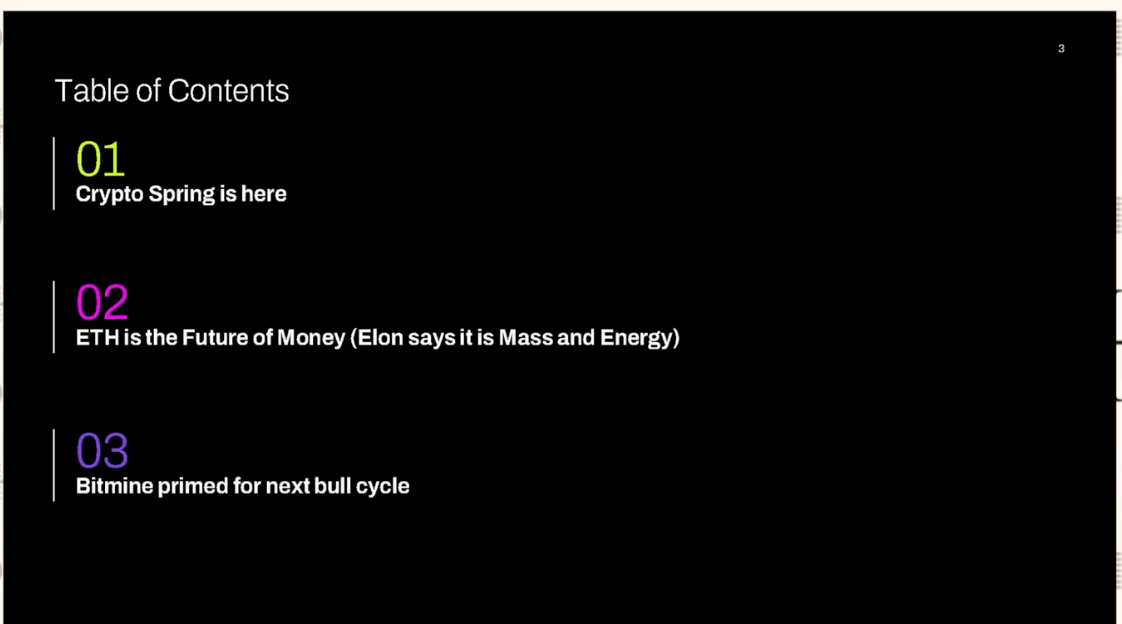
Lee structured his talk around three pillars: the five macro catalysts for crypto spring, why Ethereum is the best candidate for the future of money, and the case for gaining exposure via crypto treasury stocks rather than the underlying tokens. His argument was anchored in a wide range of data points, from oil prices and demographics to legislative developments.
Five macro tailwinds: from oil to the Clarity Act
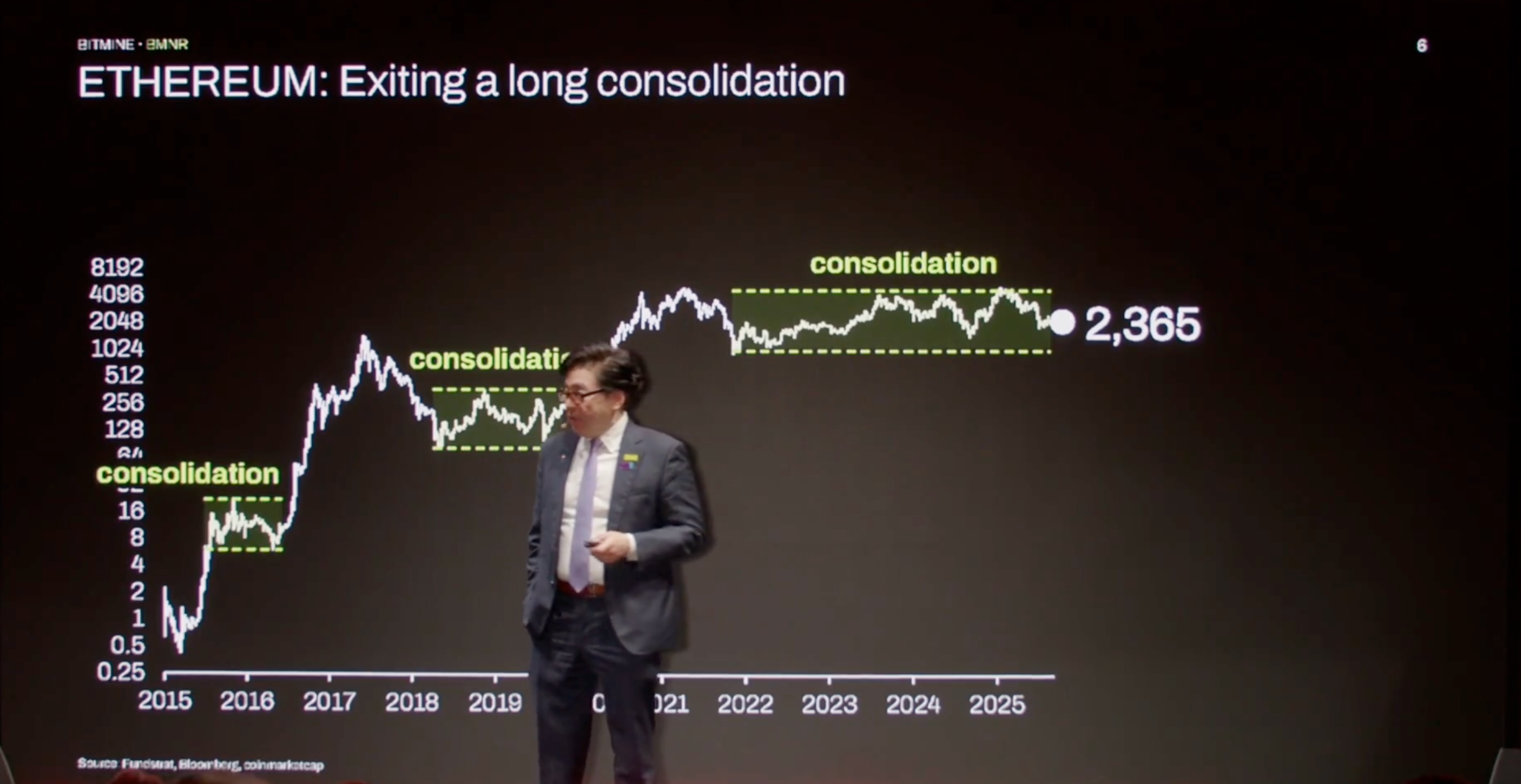
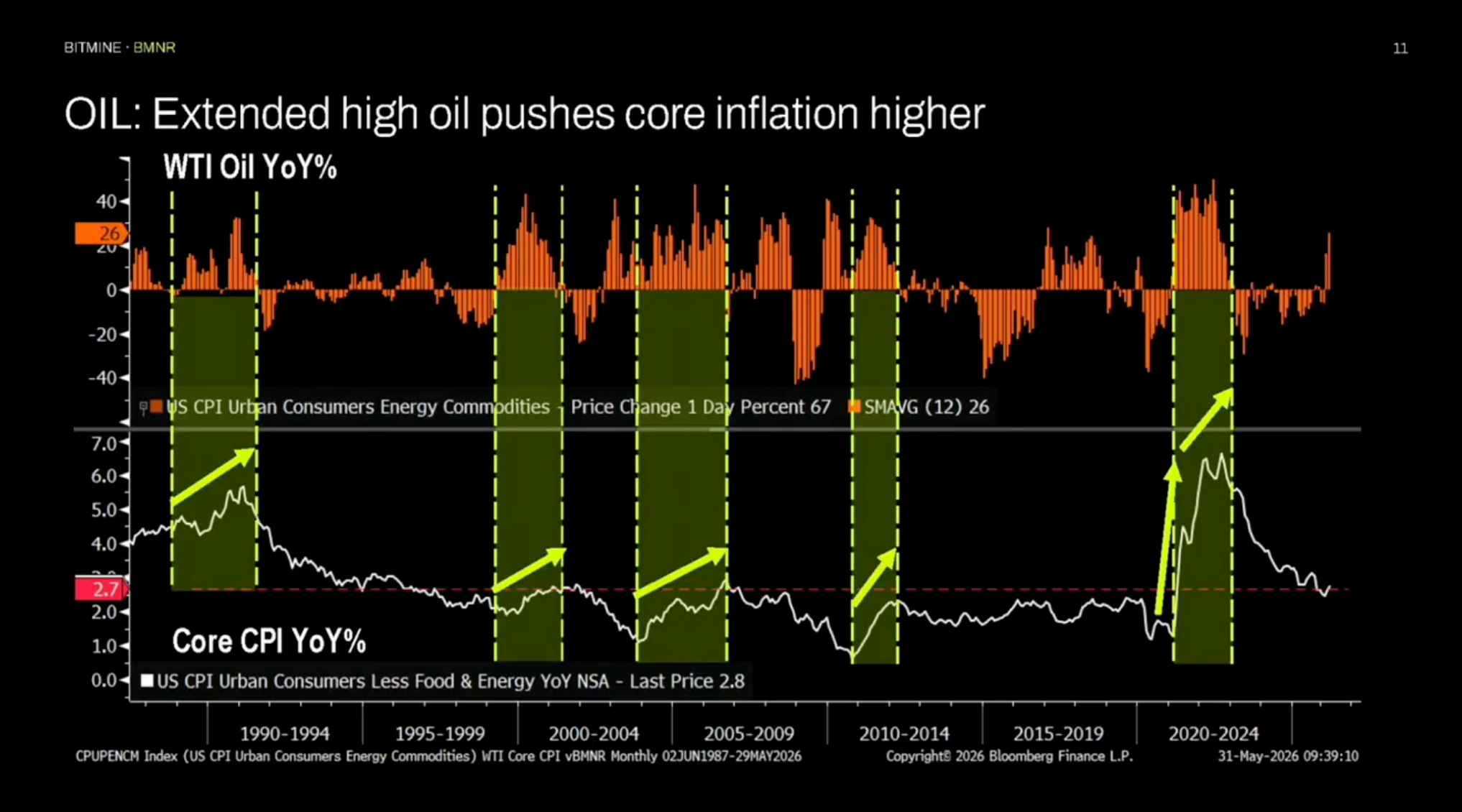
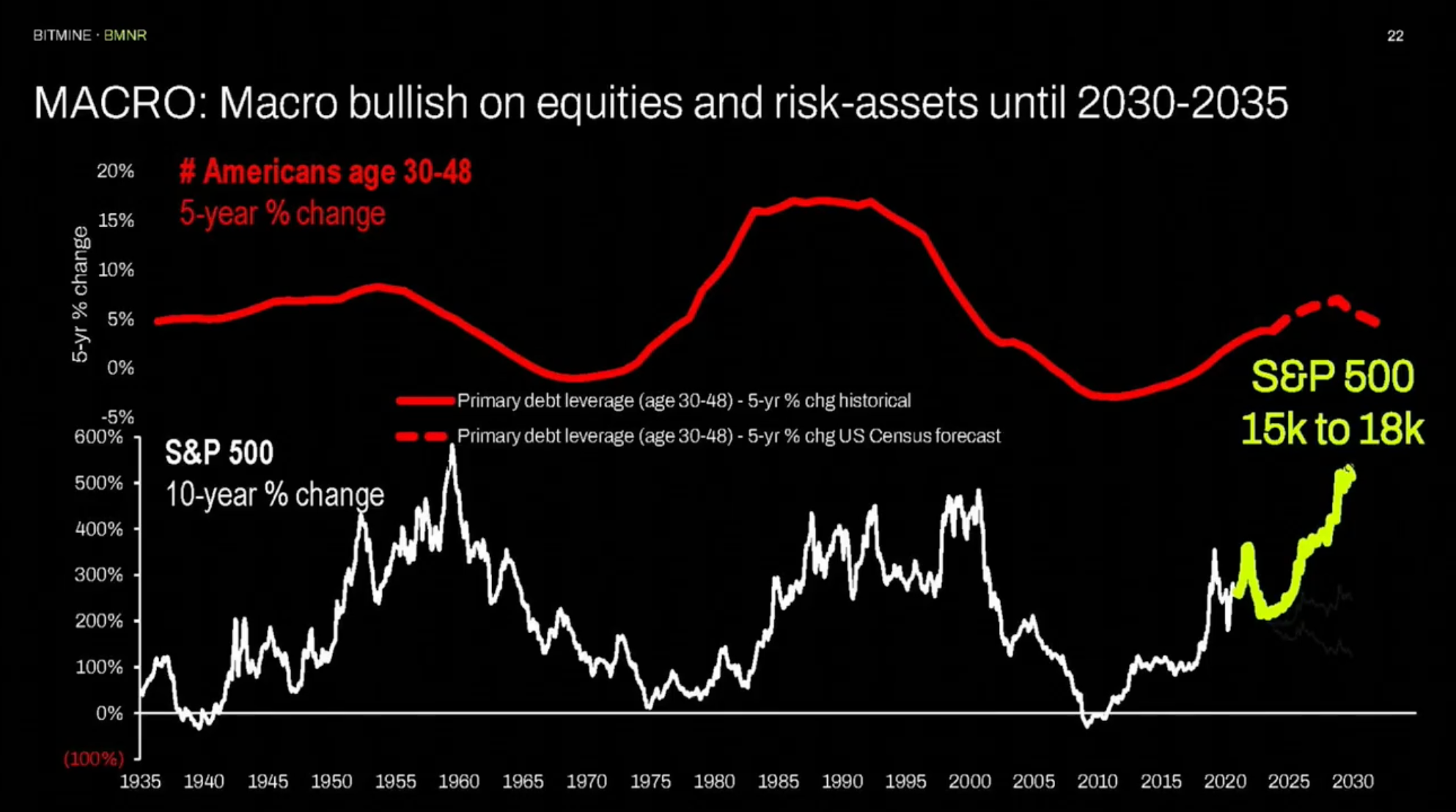
Lee argued that oil is the root driver of inflation, and Ethereum currently exhibits its highest ever negative correlation with oil prices. Once the war premium fades—potentially pushing oil to $40 per barrel—the pressure on central banks to stay hawkish will ease. He further cited four other catalysts: the Clarity Act, which would provide a legal framework for crypto in the U.S. (prediction markets give it only a 56% chance, but Lee believes the real probability is much higher); the White House’s supportive stance on Bitcoin and crypto, especially regarding stablecoins; the appointment of pro-bitcoin Kevin Warsh as the new Fed chair; and a demographic super-trend—the growing population of Americans aged 30–50 could drive the S&P 500 to 15,000–18,000 by the end of the decade, a rising tide that lifts crypto as well.
AI and tokenization: the ultimate narrative
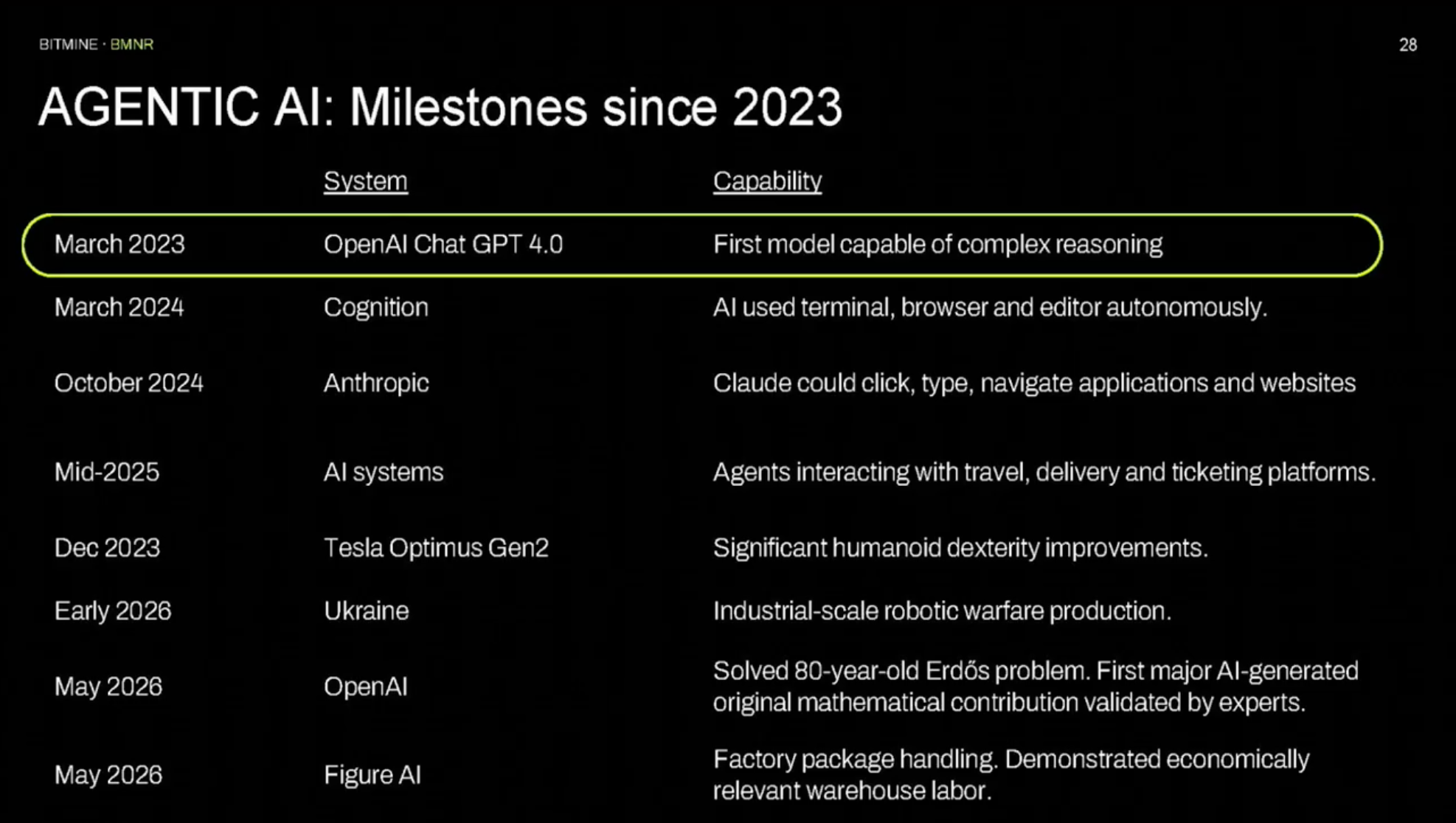
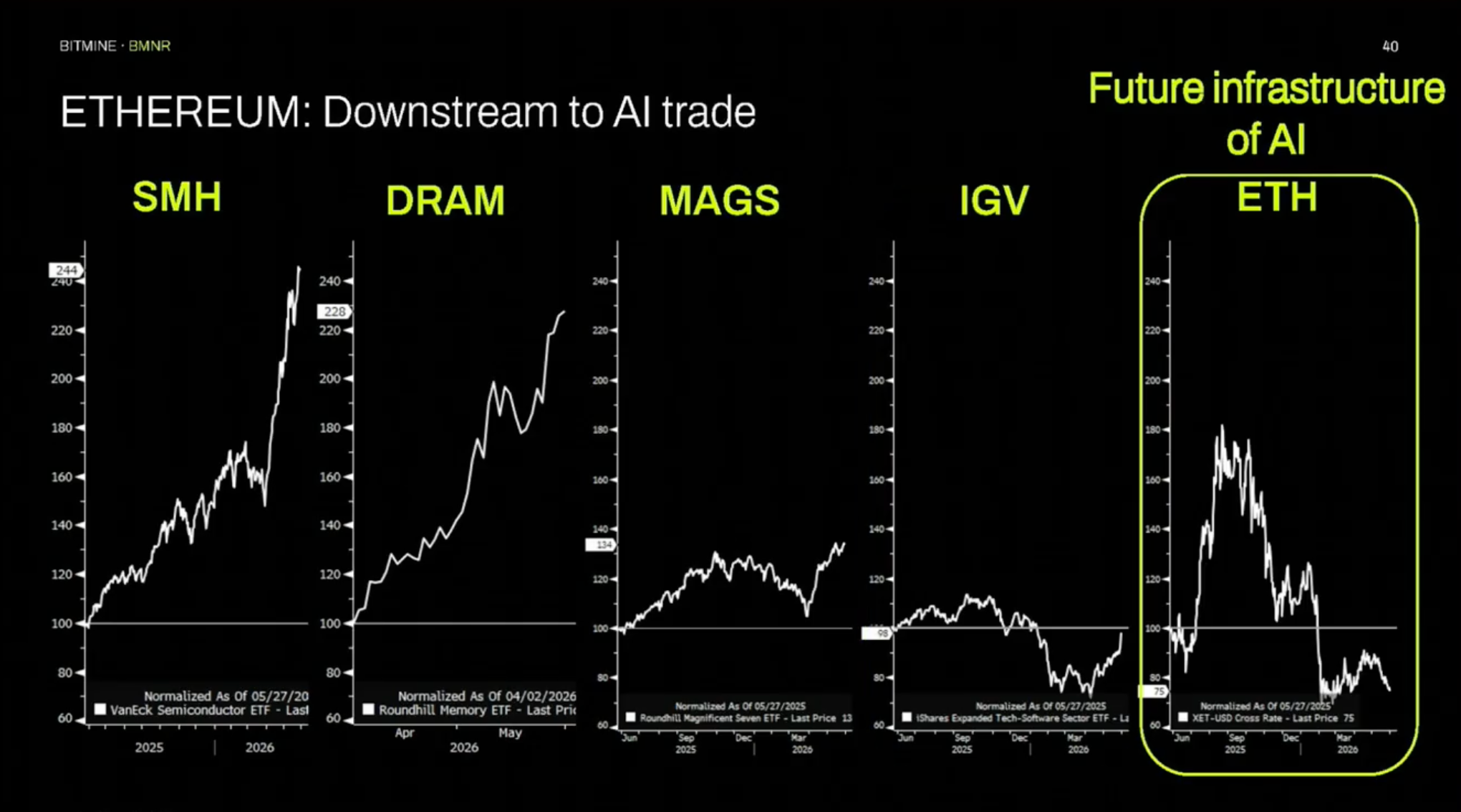
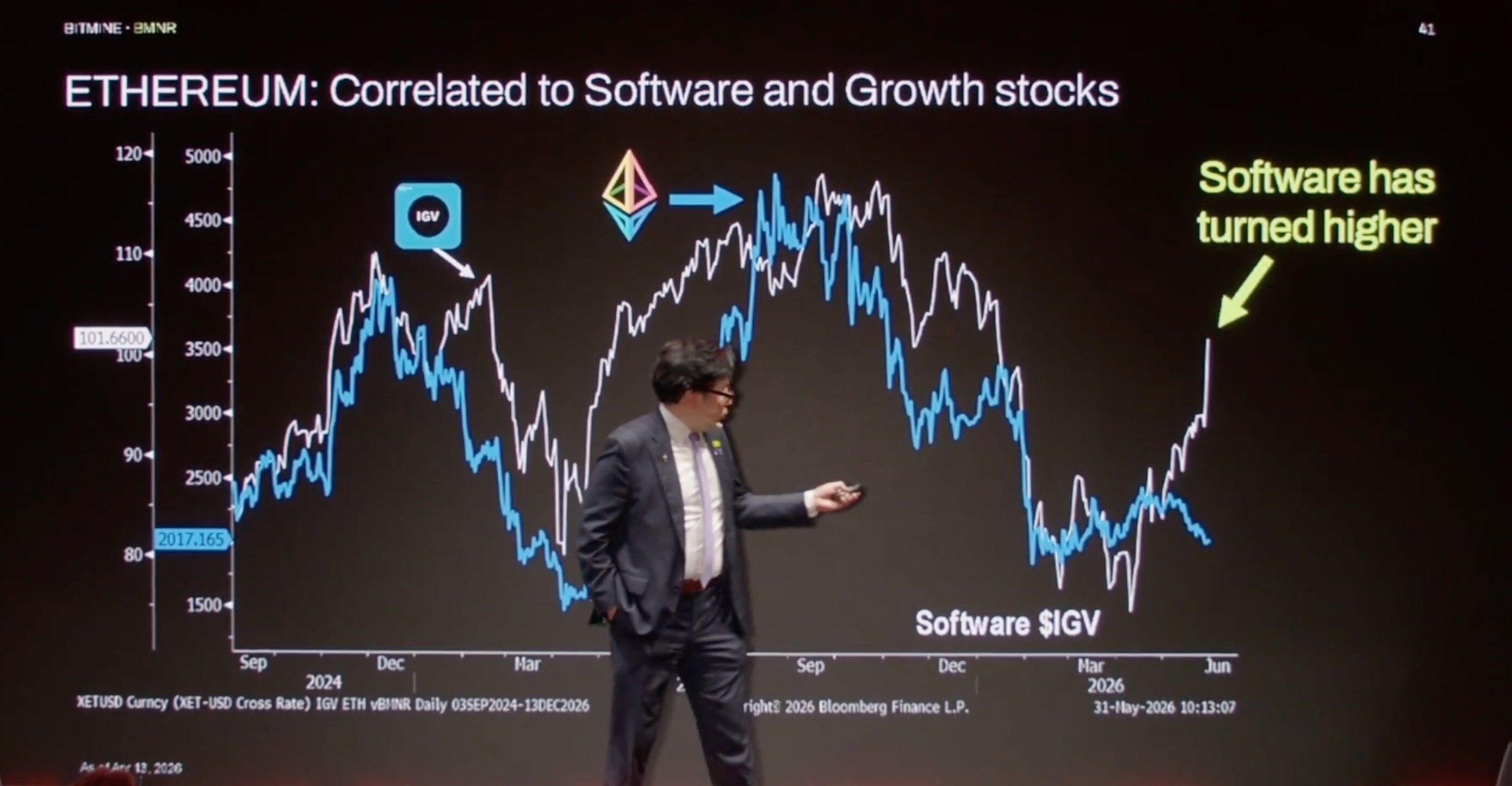
Lee dedicated a significant portion of his speech to the intersection of AI and tokenization. From ChatGPT’s launch in 2023, to agentic AI that can interact with websites, to industrial-scale drone manufacturing in Ukraine and Figure AI’s warehouse robots, non-human traffic is coming to dominate the internet. He contends that blockchain is vastly more efficient than legacy systems for identity verification, payments, and controlling robotic behavior—a convergence that Marc Andreessen calls the “Great Unification.” Although crypto prices have not yet reflected this, software stocks have gone parabolic and have historically moved in tandem with Ethereum, indicating that ETH’s turn is imminent. On tokenization, stablecoin volumes have already surpassed Visa, and the tokenized securities market could reach $300 trillion, spanning real estate, fixed income, derivatives, and more. Currently, Ethereum’s total value locked is in the hundreds of billions; if the market expands, ETH stands to benefit massively.
He illustrated the economic shift with striking comparisons: Jane Street, a firm that basically just moves money, will earn $40 billion this year with only 3,000 employees—nearly matching JPMorgan’s $60 billion. Tether, a crypto-native firm with 300 employees, will earn $15 billion. Lee predicts that within a decade, five of the world’s top ten financial institutions will be crypto-native. He likened Ethereum’s potential to Amazon’s historic 1,000x run from $6, suggesting ETH could see roughly a 50x increase as AI and tokenization converge.
The decline of the Ethereum Foundation and the rise of corporate treasuries
The Ethereum Foundation’s role is shrinking by design. Vitalik Buterin has written about streamlining its functions, and the numbers bear this out: the Foundation’s share of ETH supply has dropped from 17% to 1% by 2020, and now to just 0.1% (100,000 ETH), capable of funding only about $10 million in grants per year. In contrast, crypto treasuries like Bitmine and Sharplink now hold 7% of the supply, with Bitmine alone accounting for 4.5%. These treasuries generate staking yields of about 3%, producing $500 million annually for ecosystem funding. Lee compared the evolving governance model to the CTIA in mobile communications or the semiconductor industry associations—centralized but limited in role—arguing that a 2,400-billion-dollar network with 1,500 nodes across 89 countries is too large to be coordinated by a single foundation.
Bitmine’s deep moat: staking, investments, and NYSE uplisting
As the world’s largest single Ethereum staking operator, Bitmine manages roughly $20 billion in assets through its subsidiary MAVAN, generating about $1 million in daily rewards from its own staked ETH alone. It also holds a stake in Eightco (ORBS), the largest public holder of Worldcoin, alongside 28% in OpenAI, 8% in MrBeast, and 8% in ETH on its balance sheet. Lee believes ORBS, trading at $1, should be worth $15 when compared to similar AI-focused holding company VCX. Another strategic bet is MrBeast, whose disclosed revenue exceeds $1 billion with 50% growth, and who is acquiring Step Financial to create a next-gen financial platform for Gen Z and Alpha generations—a demographic that will inherit $50–60 trillion over the next two decades. On the capital markets front, Bitmine has uplisted to the NYSE and will be added to the Russell 1000 Index on June 26. With over $4 trillion benchmarked to that index, 1,575 active fund managers who currently do not own Bitmine will need to decide whether to initiate a position, a massive catalyst for the stock.
As of the speech, Bitmine’s ETH holdings had reached nearly 5.4 million ETH, or 4.47% of circulating supply, and may soon cross 5%—a move that will be approached cautiously. Lee noted that treasury stocks tend to outperform the underlying crypto in bull markets: from June 30 to Dec 31 last year, ETH rose 22% while Bitmine surged 500%. Even in this year’s down market, Bitmine has outperformed on the way down. He concluded with a bullish scenario analysis: at ETH $22,000, Bitmine shares would be worth $500; at $250,000 ETH, the stock could reach $5,000, compared to a price of around $18 today. For Lee, betting against Ethereum and Bitmine now means selling at the bottom of a structural crypto spring.