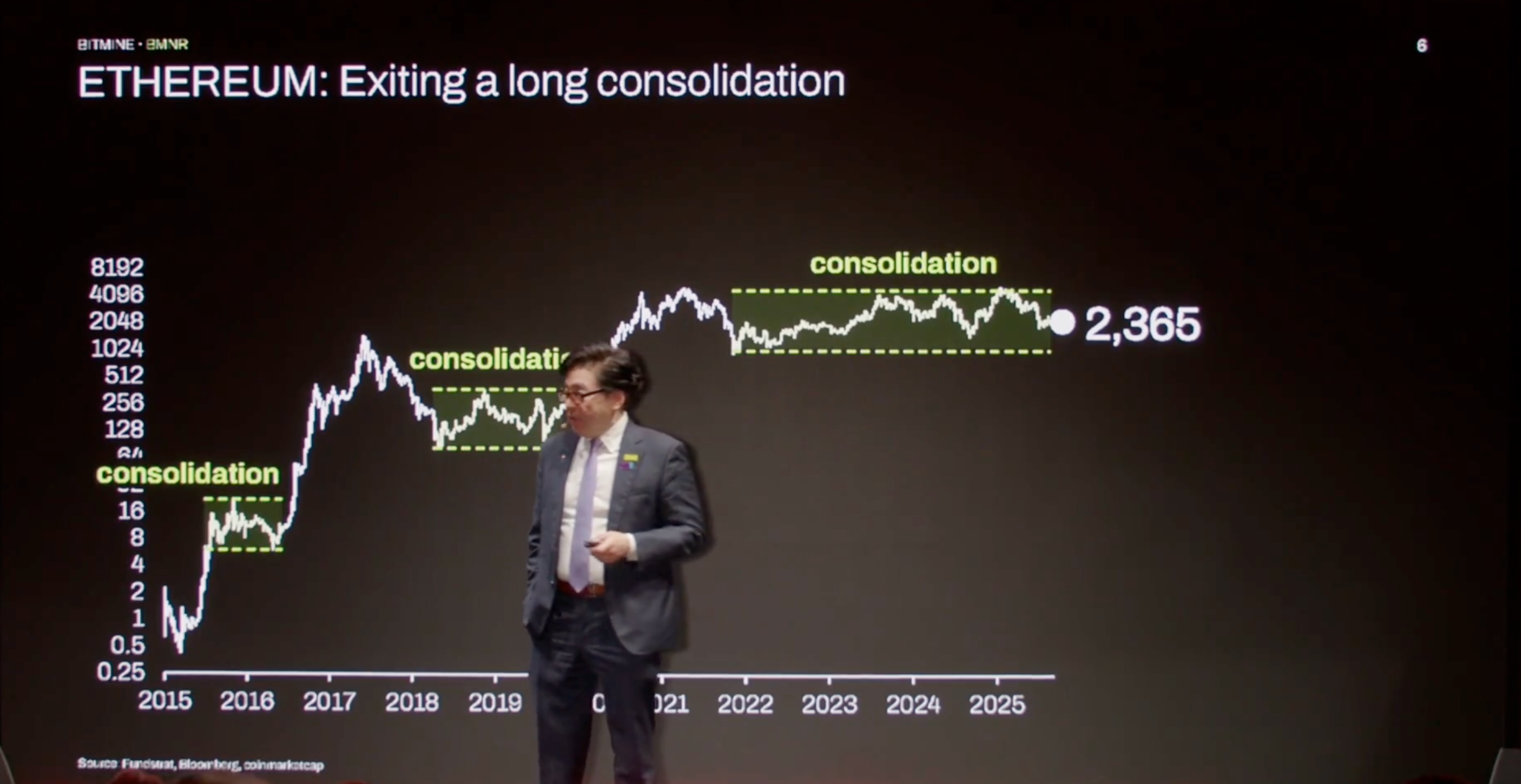
On June 2, at the “Proof of Talk 2026” conference held in the Louvre, Paris, Tom Lee, Chairman of Bitmine (NYSE: BMNR)—the largest corporate holder of ETH—delivered a keynote titled “Crypto Spring: ETH is the Future of Money.” At a time when BTC had slipped below $66,000 and ETH briefly touched $1,820, with Bitmine sitting on an unrealized loss of roughly $8.86 billion, Lee’s bullish call stood in stark contrast to the prevailing bearish sentiment. Yet he argued that the current negativity marks the bottom for both Bitcoin and Ethereum and outlined a path for ETH to reach $250,000.
1. Five Macro Tailwinds Powering Crypto Spring
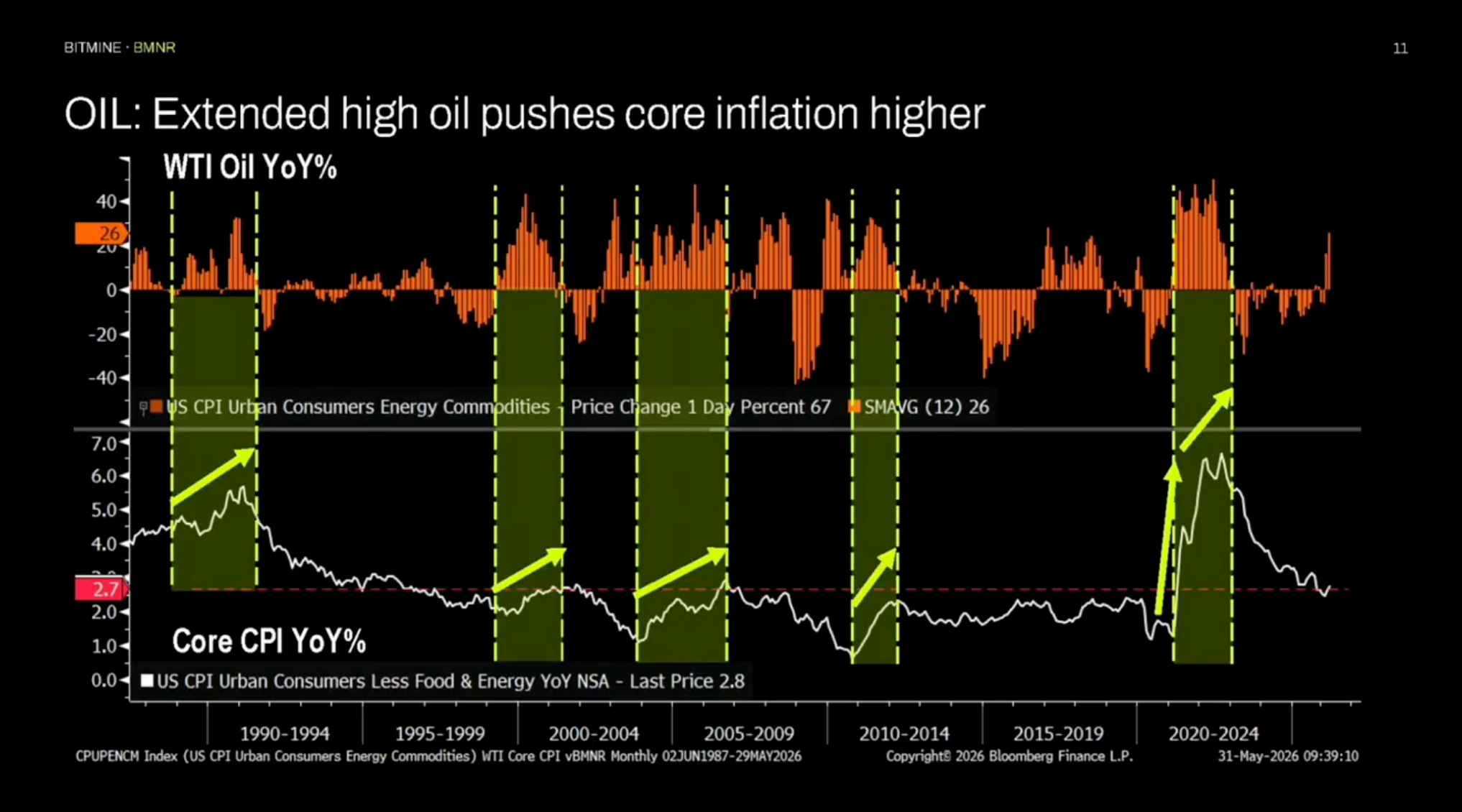
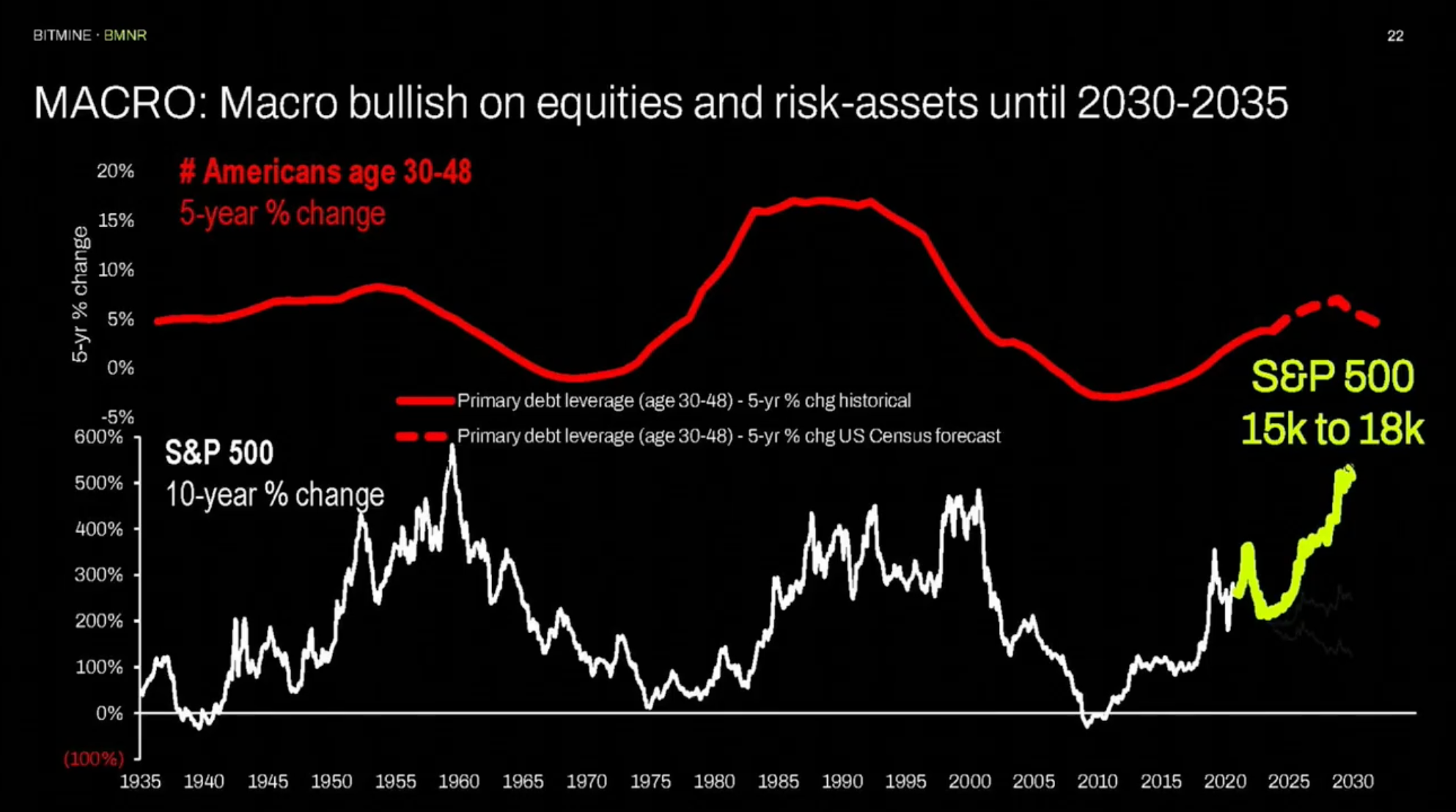
Lee outlined five macro catalysts that he believes will propel crypto out of its multi-year slump. First, the Iran war has pushed oil prices higher, fueling inflation. Oil and ETH are now exhibiting the highest inverse correlation in history. When the war ends, the war premium in oil will evaporate and crude could drop to $40/barrel, providing a strong tailwind for ETH. Second, the U.S. Clarity Act would provide a legal framework for crypto, and despite prediction markets pricing its passage at only 56%, Lee’s conversations in Washington suggest a much higher probability. Third, the White House’s friendly stance toward Bitcoin and stablecoins is a direct positive. Fourth, new Fed Chair Kevin Warsh is pro-Bitcoin. Finally, a structural bull market in equities—driven by the surging 30-50 age demographic—could push the S&P 500 to 15,000-18,000 by decade’s end, indirectly boosting crypto. “Even if you don’t believe in the products being built on blockchain, these five tailwinds are converging this year,” Lee said.
2. AI and Tokenization: Why ETH Becomes the Core of Money
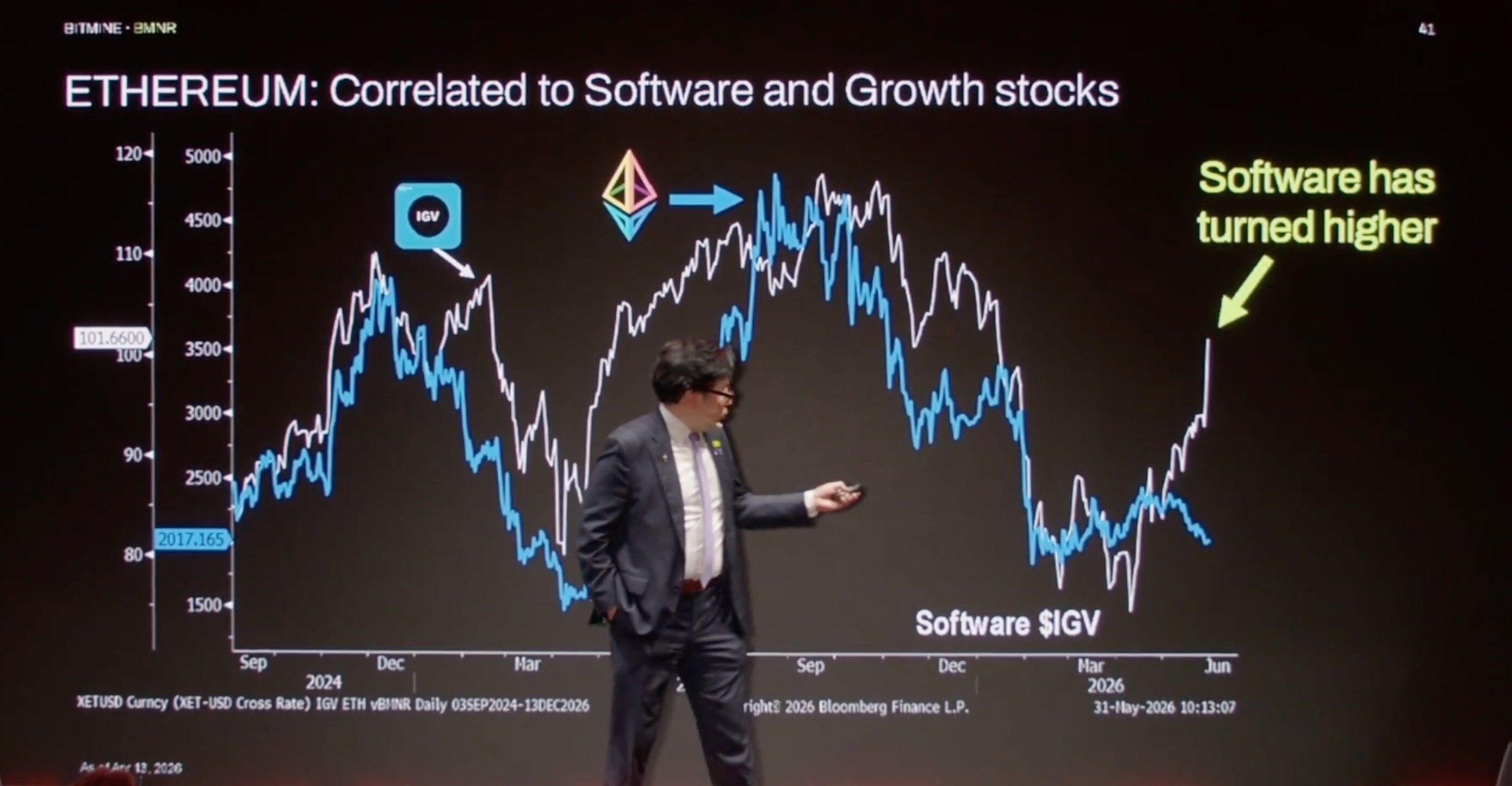
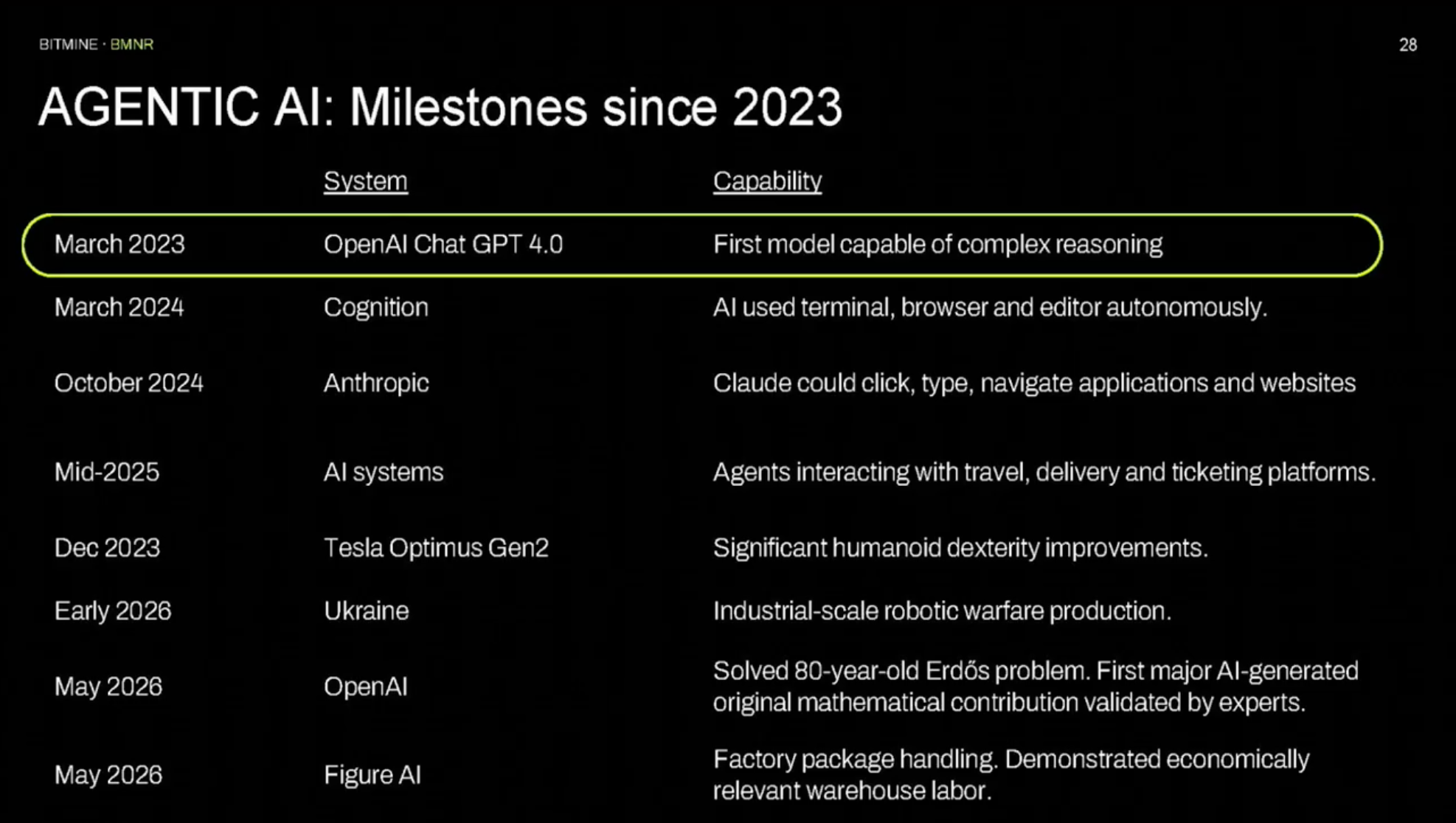
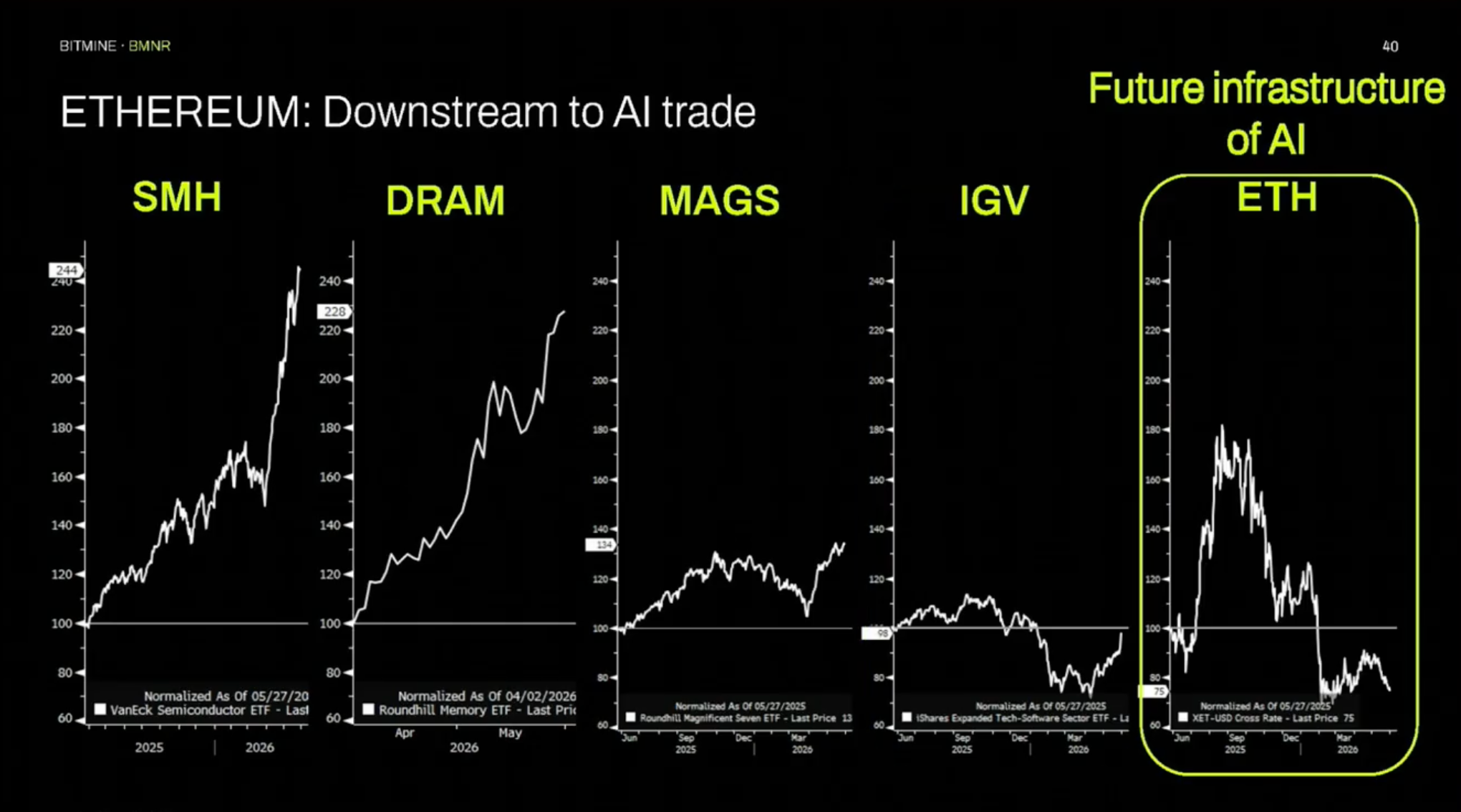
A significant portion of Lee’s speech focused on how artificial intelligence and tokenization will remake financial infrastructure. From the launch of ChatGPT to the dexterity of the Optimus robot, AI agents now can interact with websites and operate physical robots; soon, non-humans will generate most internet traffic. In such a world, blockchain outperforms traditional systems in identity verification, payment speed, and controlling machine behavior. He noted that the AI boom is now moving from semiconductors and storage to software and, inevitably, to crypto. “Ethereum and software stocks have moved in lockstep for years. Now software stocks have gone parabolic; ETH will follow within weeks,” he predicted.
Tokenization represents an even larger opportunity. Stablecoin volumes have already surpassed Visa, and the tokenized securities market could reach $300 trillion—including real estate, fixed income, equities, derivatives, land, and gold. Crypto asset prices correlate strongly with the amount of tokenized assets; if that market materializes, Ethereum’s total value locked won’t be $100 or $200 billion but multiples higher. Lee gave practical examples: Jane Street earns $40 billion annually just from moving money, roughly the same as JPMorgan but with only 3,000 employees. Tether earns $15 billion with 300 employees. “New entrants capture all the value,” Lee emphasized, predicting that five of the world’s ten largest financial institutions will be crypto-native within a decade. Smart contract platforms like Ethereum will become the unit of monetized value. “Holding ETH for transactions is easier than holding dollars,” he said, echoing Elon Musk’s view that in the future currency will simply be computing energy. A recent Standard Chartered report compared Ethereum to Amazon, arguing that it sits at a similar inflection point before a thousand-fold surge. If his thesis on AI and tokenization plays out, Lee sees ETH reaching $250,000—a roughly 50x move from current levels.
3. The Diminishing Role of the Ethereum Foundation
Lee argued that the Ethereum Foundation, once a central coordinator, has shrunk to a marginal player. It once held 17% of ETH supply; by 2020 it was 1%; today it is a mere 0.1%, equal to about 100,000 ETH, capable of supporting only $10 million in grants at a 5% yield. In contrast, corporate ETH treasuries—led by Bitmine—now hold 7% of supply, with Bitmine alone controlling 4.5% (nearly 5.4 million ETH). These treasuries generate roughly $500 million in annual staking rewards, providing a sustainable funding source for the ecosystem. Lee stressed that Ethereum has scaled to $240 billion in value, 1,500 nodes across 89 countries, and 15,000 developers—too large for a single foundation. He drew parallels to the mobile industry’s CTIA and the Semiconductor Industry Association, suggesting that Ethereum should move to a model where the foundation focuses on narrow coordination while private companies and treasuries drive growth. “The foundation becomes stronger by staying focused, and treasuries fill the funding gap. Corporate validators will replace the shrinking foundation as the key stewards of the network,” he concluded.
4. Bitmine: The Ethereum Treasury Stock and an Asymmetric Bet
As the chairman of the largest ETH treasury, Lee naturally highlighted Bitmine’s strategic moves during the crypto winter. First, Bitmine invested in Eightco (ticker: ORBS), which owns a significant stake in Worldcoin and holds assets including OpenAI shares (28% of NAV), MrBeast shares (8%), and ETH (8%). Compared to comparable company VCX, which trades at 13x NAV, ORBS at $1 is deeply undervalued. Second, Bitmine launched MAVAN, the world’s largest single Ethereum staking operator, which now also manages about $2 billion in assets on Solana, Hyperliquid, and other chains. Bitmine’s own staked ETH alone generates around $1 million in daily rewards, and total assets under management are approximately $14 billion. Third, Bitmine invested in MrBeast, whose business surpassed $1 billion in revenue with 50% growth and who has acquired Step Financial to build a neo-bank for Gen Z and Alpha generations—a demographic of 120 million that will inherit $50-60 trillion over the next two decades.
Bitmine has also achieved a NYSE uplisting and, as announced, will be added to the Russell 1000 Index on June 26. This index is tracked by over $4 trillion in assets; currently only 25 institutions hold Bitmine, while 1,600 active managers benchmarked to the Russell 1000 will have to decide whether to allocate—a massive catalyst. On ETH accumulation, Lee revealed that Bitmine reached 1% of supply last August, 4% on April 10, and 4.5% today. The company may approach 5% soon but will slow purchases until deciding whether to cross that threshold. He reiterated why treasury stocks outperform in uptrends: from June 30 to December 31 last year, ETH rose 22%, while Bitmine’s stock surged 500%. If ETH reaches $22,000—what Lee called a reasonable price—Bitmine would be worth $500 per share. If ETH hits $250,000, the stock could reach $5,000. “At $18, that’s a bargain,” Lee told the audience.