
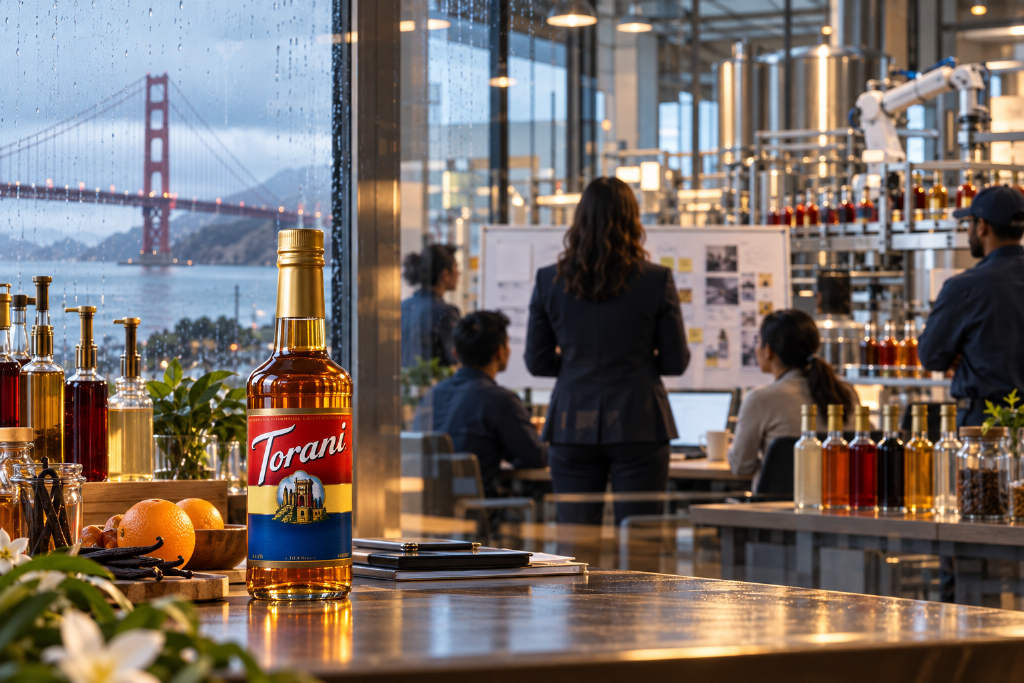
Torani, the U.S. syrup manufacturer, says it has embraced AI and automation without using them as a reason to cut existing staff. CEO Melanie Dulbecco told Business Insider that the company, now 101 years old, has never conducted layoffs.
"I think layoffs are a choice," Dulbecco said. In her view, many companies reduce headcount because payroll is an obvious cost line, but that approach often stops at the short-term math and leaves a harder question unanswered: how the business plans to regain momentum after the cuts.
Layoffs, in her view, solve a spreadsheet problem first
Dulbecco did not argue that layoffs are never necessary. She said a company on the edge of failure may have no other option. Her criticism is aimed at businesses that are not in that position but still move to layoffs early because the savings show up quickly in financial statements.
She said that logic misses what comes next. "I think this is just a financial calculation problem, but it does not consider how a company maintains resilience and how it finds its way back to growth. Because to do those things, you still need a team."
That idea sits at the center of Torani's operating philosophy: employees are not only a cost, but also the group a company depends on when conditions turn and recovery begins.
The pandemic put that philosophy under pressure
In 2020, Torani was in the middle of a major move tied to a new production facility in San Leandro, California. Dulbecco had previously told Fortune that when the company evaluated locations, it did not start with the lowest rent. It started with employee retention. Torani collected workers' ZIP codes, mapped them out, and looked for a site that would keep commuting workable for as many people as possible.
Then the pandemic hit while the factory project was still underway. Torani had already taken on substantial debt linked to the buildout, and at the same time many cafes and beverage shops, key sales channels for the company, were forced to close.
In April 2020, revenue fell 20%. The new factory was still consuming cash, while sales suddenly dropped. Dulbecco said management framed the decision in a different way: when the crisis was over, what choice would the company be proud of having made? Torani decided not to lay off workers and not to place employees on unpaid leave.
That did not mean standing still. The company cut other expenses to ease pressure, including marketing and advertising budgets, paused business travel, and asked departments to reexamine budgets and remove unnecessary spending.
At the same time, it looked for replacement demand. With cafes and beverage shops disrupted, Torani increased its focus on online retail and grocery retail channels to reach consumers more directly.
Dulbecco said revenue started to recover in May after the 20% drop in April. For full-year 2020, revenue rose 15% year over year instead of declining. In her account, that rebound would have been harder if the company had cut staff to save money, because recovery still required experienced people to make products, manage the supply chain and serve customers. Keeping the team in place also avoided the need to rehire and retrain later.
AI is in use, but the effect shows up in hiring, not layoffs
Torani is not presenting itself as a company that rejects new tools. According to the report, it already uses AI in market research, sales forecasting and demand planning to improve operating efficiency.
Dulbecco said the technology has reduced the need to add new employees. Without those systems, Torani would have needed to hire more people to complete the same amount of work. Some tasks are now handled by automation, so the company does not need to open as many new roles.
She drew a clear line between slower hiring and cutting current staff. Torani's approach is to let automation take over some repetitive work while giving employees room to move into other roles and develop new skills.
"Our employees are not worried about technologies like AI because they trust that, as we advance automation, we will elevate the value of work and we will not do things that kill off employees' development opportunities," she said.
"Career Mixology" is the mechanism behind the policy
Dulbecco said Torani supports that approach through an internal development system called "Career Mixology." The idea is to encourage employees to try different roles instead of staying in one function for an entire career.
An employee might begin in inventory management, then move into procurement, supply chain work, or another business unit. In practice, that means a task displaced by AI does not automatically force someone out of the company. The employee may instead shift into a different role after learning new skills.
From Dulbecco's description, AI has already changed Torani's staffing needs. The company has chosen to absorb that change mainly through future hiring levels rather than through layoffs of existing workers.
Growth has continued as the company scales
Torani's operating data, at least so far, suggests the model has not blocked expansion. The company was founded in 1925 and started with flavored syrups for beverages. Over time, its lineup has grown from a handful of syrups to more than 150 products.
According to the report, Torani had nine employees and about $700,000 in annual revenue when Dulbecco joined in 1991. It now has more than 500 employees. She said annual revenue growth has averaged about 20% over the past 35 years, and the company expects revenue to exceed $800 million in 2026.
The report also noted that Torani's model may not transfer neatly to every sector. Food and beverage manufacturing operates under a different business model, cost structure and labor profile than internet companies or software developers.
A different stance during a broader U.S. layoff cycle
That is part of why Torani stands out. Challenger, Gray & Christmas said U.S. employers announced 573,195 job cuts in the first nine months of 2026. That figure was down 39% from a year earlier, but it still points to a labor market where many workers remain exposed to layoffs.
As AI takes on more coding, data analysis, report generation and other tasks that once required teams, the question facing companies is becoming more direct: whether productivity gains will be used to create new work and new roles, or to shrink payroll faster.
Torani's answer, for now, is to move people into other jobs where possible rather than cut them. The original Chinese article was published by MarsBit and credited the source material to the WeChat account CSDN, compiled by Zheng Liyuan.


