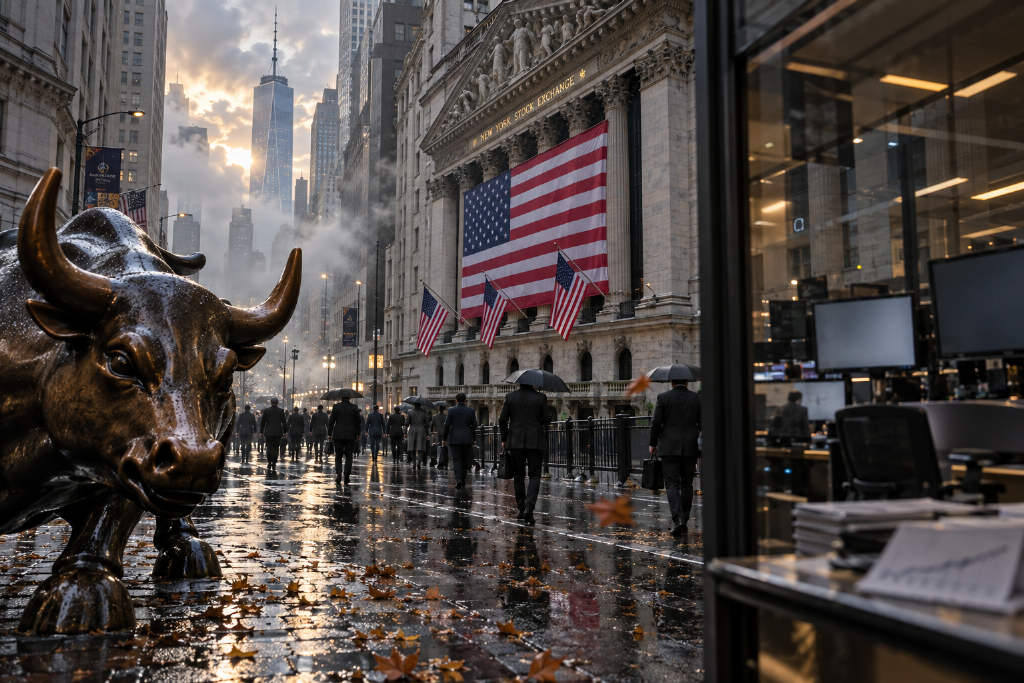
Stocks Hold Firm as Treasury Yields Near 20-Year Highs, With AI Seen as Support

Stocks Hold Firm as Treasury Yields Near 20-Year Highs, With AI Seen as Support

N
News Editor
2026-09-27 14:55:15
U.S. equities are showing resilience even as the 10-year Treasury yield rises to its highest level in nearly two decades, leaving the S&P 500 without a clear hit and prompting investors to revisit how stocks have behaved during past yield surges. The historical record in the report is mixed rather than one-directional. In 1994, a Federal Reserve rate-hike cycle triggered a bond selloff and the S&P 500 fell about 8% before recovering as the economy and corporate earnings stayed firm. In 2016, higher yields were treated as a sign of economic recovery and policy normalization, allowing stocks and Treasury yields to climb together. By contrast, aggressive Fed tightening in 2022 put pressure on both bonds and equities, and the S&P 500 dropped sharply. For 2026, the report says the market is again facing a combination of rising yields and resilient growth. Heavy investment by technology companies in AI infrastructure is described as a support for the economy and stocks, while a U.S.-Iran agreement and lower oil prices could ease inflation pressure. Bank of America rate strategist Meghan Swiber said strong performance in stocks and other risk assets has yet to send the Fed a clear signal that demand is slowing.

U.S. stocks are holding up even as the 10-year Treasury yield climbs to its highest level in nearly 20 years, a divergence that is pushing investors to revisit the historical relationship between rising bond yields and equity performance, according to BlockBeats on Sept. 27.

The report said the S&P 500 has not taken an obvious hit despite the jump in yields, challenging the view that higher Treasury yields necessarily lead to weaker equities.

Past episodes show different market reactions

History suggests rising yields do not automatically send stocks lower. In 1994, Federal Reserve rate hikes triggered a bond selloff, and the S&P 500 fell about 8% at one point. It later recovered those losses as the economy and corporate earnings remained resilient.

In 2016, markets treated higher yields as a signal of economic recovery and policy normalization, and U.S. stocks rose alongside Treasury yields. The pattern was different in 2022, when aggressive Fed tightening weighed on both bonds and equities, and the S&P 500 posted a sharp decline.

AI investment is cited as a current support

For 2026, the report said U.S. equities are again dealing with a mix of rising yields and resilient economic growth. Large-scale spending by technology companies on AI infrastructure is described as a support for both the economy and the stock market.

The report also said a U.S.-Iran agreement that has pushed oil prices lower could help ease inflation pressure. At the same time, more pessimistic views hold that the Federal Reserve may need to keep raising rates until stocks and overall financial conditions are restrained enough.

Bank of America strategist flags strong risk appetite

Meghan Swiber, a rates strategist at Bank of America, said stocks and other risk assets are still performing strongly and have not yet sent the Federal Reserve a clear signal that demand is slowing.

This article was originally published by Bit.Fan. For more cryptocurrency news and market insights, visit www.bit.fan.
100

Disclaimer:

The market information, project data, and third-party content displayed on this platform are for industry information sharing only and do not constitute any form of investment advice or return commitment.

Cryptocurrency trading carries high risks. Users should fully assess their risk tolerance and make independent decisions. All profits, losses, and legal responsibilities are borne by the users themselves.