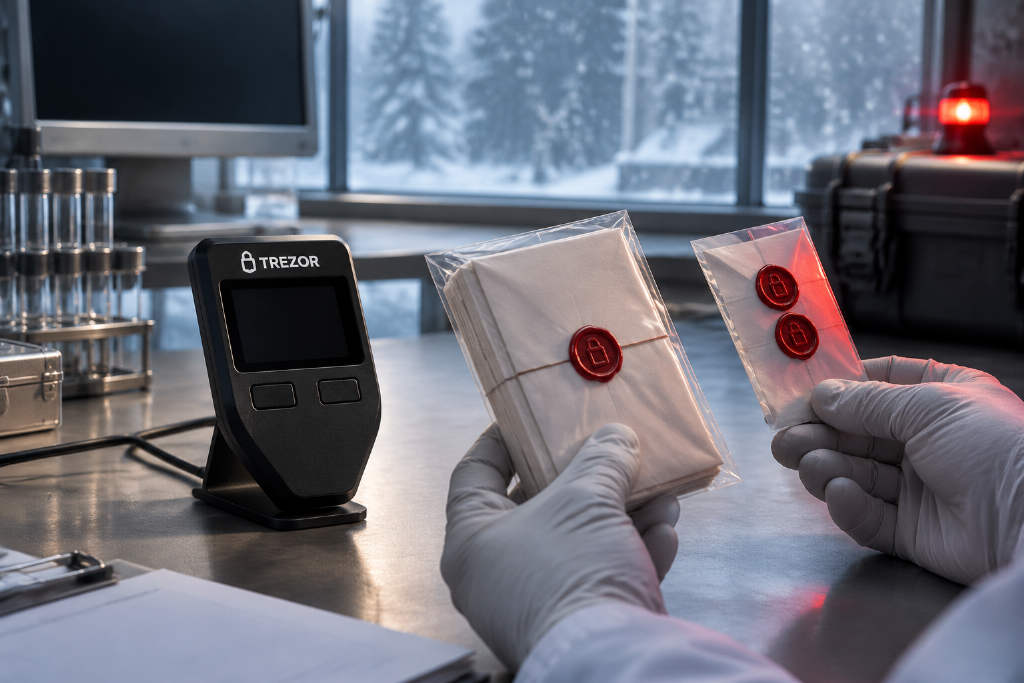
Trezor Chief Technology Officer Sužánka stated that if Bitcoin adopts the post-quantum signature scheme SHRINCS, wallet developers must closely track signature states to prevent fund theft from reused state signatures. Stateless signatures are larger but safely reusable, while state signatures are smaller and more efficient but risk leaking information for forgery if overused beyond budget. Trezor is considering defaulting to stateless signatures with state ones in advanced settings. Hardware wallets also need post-quantum firmware and device authentication support; Safe 7 already enables post-quantum certification. (Source: Techub News via Decrypt)
Trezor Chief Technology Officer Sužánka said Bitcoin's shift to the post-quantum signature scheme SHRINCS would require wallet developers to rigorously monitor signature states and avoid reusing state signatures, which could lead to fund theft.
Trade-offs Between State and Stateless Signatures
Stateless signatures take up more space but allow safe reuse, he noted. State signatures, by contrast, are smaller and more efficient. The catch: exceeding their signature budget through reuse could expose enough data for others to forge signatures.
Trezor's Implementation Plans
The company is weighing a default switch to stateless signatures, relegating state ones to advanced settings. Hardware wallets must also handle post-quantum firmware and device authentication. Safe 7 already supports post-quantum certification.
Techub News cited Decrypt in its report.
This article was originally published by Bit.Fan. For more cryptocurrency news and market insights, visit www.bit.fan. Disclaimer:
The market information, project data, and third-party content displayed on this platform are for industry information sharing only and do not constitute any form of investment advice or return commitment.
Cryptocurrency trading carries high risks. Users should fully assess their risk tolerance and make independent decisions. All profits, losses, and legal responsibilities are borne by the users themselves.