
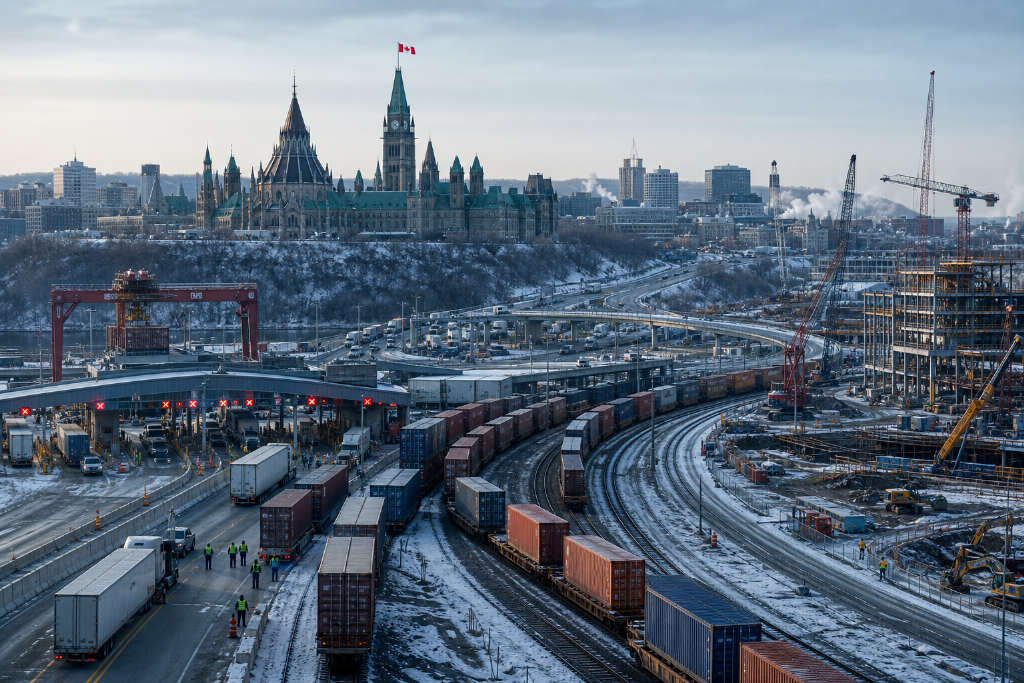
Reuters? No. BlockBeats reported on August 22 that a 50% tariff imposed by U.S. President Donald Trump on some Canadian goods took effect this week, renewing trade tension between the two countries. Ottawa is now moving faster to find alternative markets, expand domestic trade and push ahead with large infrastructure projects as it tries to reduce dependence on the U.S. economy.
About 70% of Canada’s exports go to the United States, leaving the two economies tightly linked. Earlier U.S. tariffs on autos, steel, aluminum and lumber have already put pressure on Canadian manufacturing, with some job losses and slower growth. Canada also contracted for two straight quarters this year, entering a technical recession.
The latest 50% tariff covers about C$20 billion in Canadian exports to the U.S., or roughly 5.5% of Canada’s total exports to the country. The targeted goods include hockey sticks and cement.
Prime Minister Mark Carney said Canada will respond with “equal tariffs” to protect domestic companies and jobs. The move comes as Trump declined to renew the USMCA exemption arrangement, sending the trade pact into its annual review stage.
Canada has spent years trying to diversify. It has deepened trade with China, India, Saudi Arabia and European countries, while also pushing more exports to non-U.S. markets. In 2025, Canada’s exports to non-U.S. markets rose 11% and at one point reached 33%, the highest level in more than 40 years.
Ottawa is also strengthening the domestic economy by reducing interprovincial trade barriers, expanding ports, developing critical minerals and supporting energy infrastructure. The government plans to invest C$115 billion, or about $83 billion, in infrastructure over the coming years, along with a C$82 billion defense budget.