
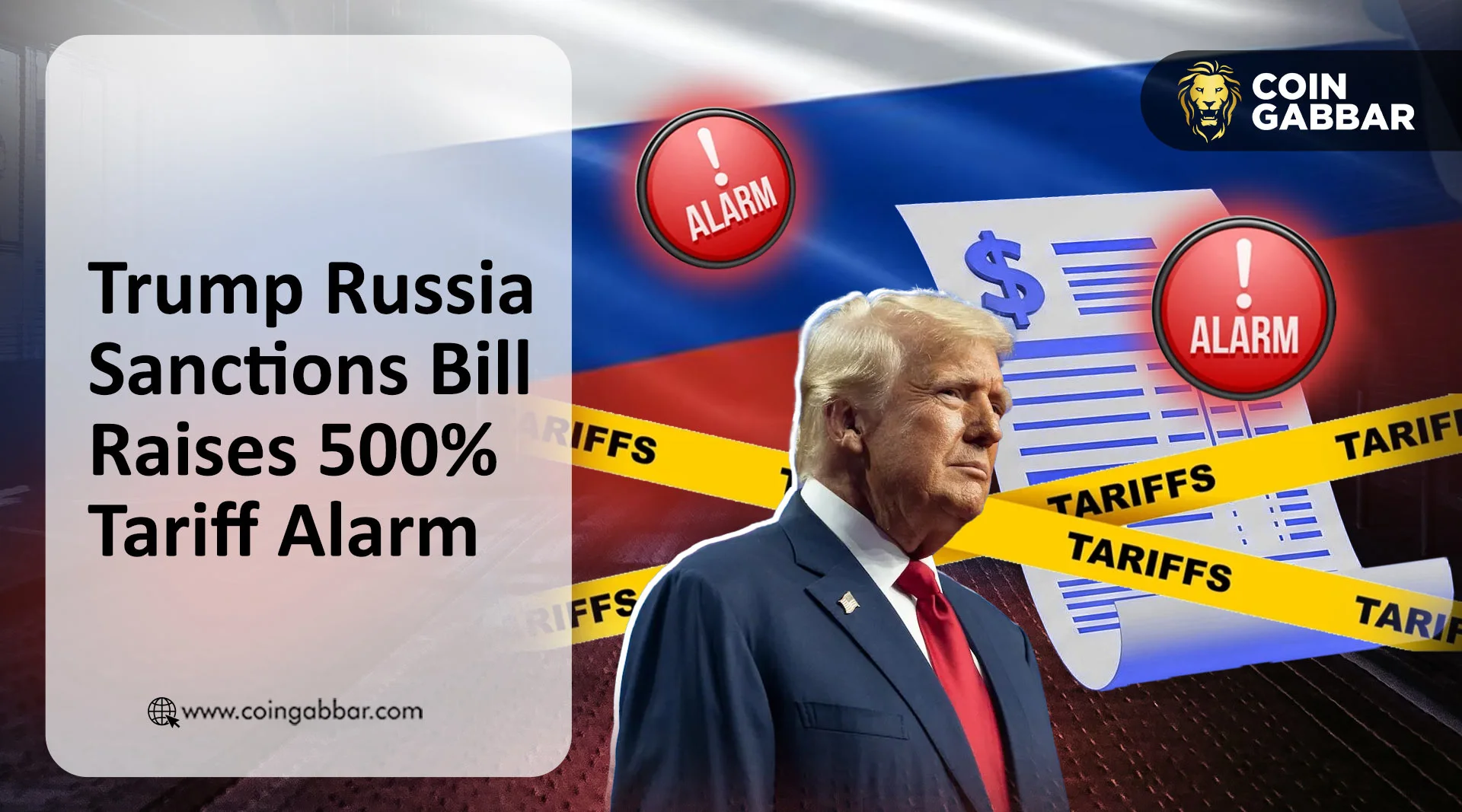
Donald Trump has agreed to advance a new Russia sanctions bill, and markets are already reacting to the geopolitical risk. Under the proposal, the US could impose tariffs of up to 500% on countries that continue purchasing Russian oil, gas, uranium, and other energy products. India, China, and Brazil are named as major countries exposed to that risk because of their Russian oil imports.
The bill is still a draft, but Trump’s backing changed market odds
The measure is a bipartisan proposal from US Senators Lindsey Graham and Richard Blumenthal. It would give the US president authority to apply heavy tariffs and secondary sanctions on buyers of Russian energy. The key point is simple: it has not become law yet. The bill still needs approval from Congress. Still, Trump’s public support has increased the probability that traders now assign to its progress.
The report also notes that Trump had recently threatened India with higher tariffs over trade tied to Russian oil. Markets are not waiting for final passage before repricing. Oil costs, trade flows, exchange rates, and inflation expectations are all tied to the same chain of risk, and that pressure quickly spilled into risk assets.
Crypto market posts a classic risk-off move
According to CoinMarketCap, the total crypto market fell 2.87% over the last 24 hours, erasing part of the gains built earlier in the week. That price action matches a standard risk-off shift. When global tensions rise, investors often cut exposure to volatile assets first and move toward cash or assets perceived as safer.
The article frames this selloff as a macro-driven move rather than a response to exchange trouble or blockchain-specific news. For traders, the focus turned away from crypto-native catalysts and toward tariff risk, energy politics, and the possibility of broader trade disruption. That switch was abrupt. Prices adjusted fast.
Bitcoin drops below $90,000 as ETF outflows and liquidations add pressure
Bitcoin fell 2.14% in the past 24 hours to around $89,900, a steeper decline than the broader market. The report lists two immediate drivers. First, roughly $486 million left spot Bitcoin ETFs, the largest single-day outflow since November 2025. Second, a break below the $90,000 level triggered more than $128 million in long liquidations, adding fresh selling pressure.
XRP ETFs also recorded $40.8 million in outflows. The Crypto Fear and Greed Index stands near 43, pointing to a neutral-to-cautious mood rather than full panic. Even so, the reading suggests traders are uneasy as the sanctions bill adds another layer of uncertainty to already sensitive global markets.
Senate action next week could keep volatility elevated
If the proposal moves to a Senate vote next week, the report says volatility may continue. Any new headline tied to Trump, tariff policy, or trade pressure on India and China could affect crypto prices again. Right now, the market is reacting less to token-specific developments and more to a broader mix of trade-war expectations, energy supply concerns, and geopolitical power shifts.