
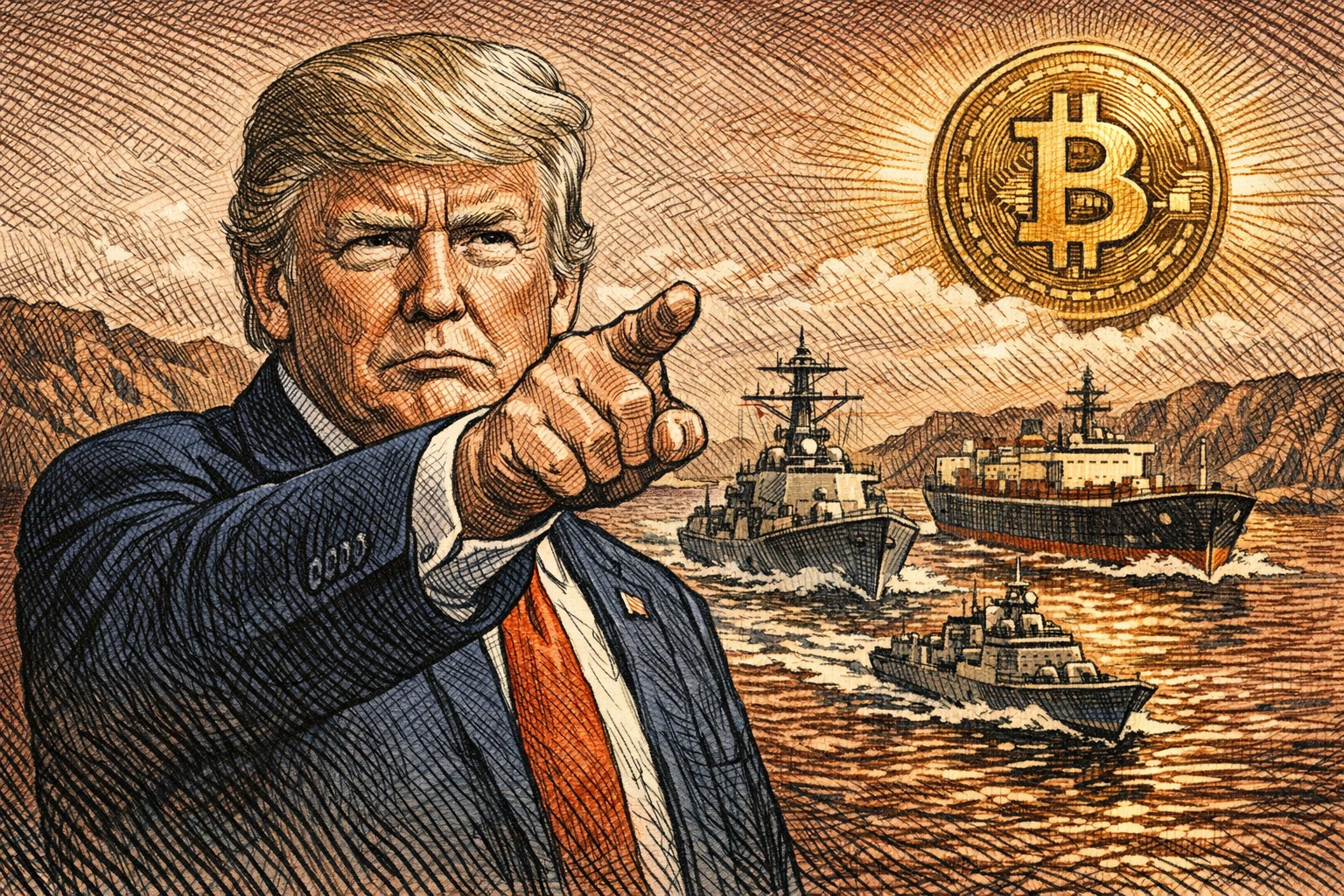
As tensions between the U.S. and Iran strained shipping through the Strait of Hormuz, President Donald Trump said on March 3 that he had ordered the U.S. International Development Finance Corporation, or DFC, to immediately provide political risk insurance and financial guarantees for all trade moving through the Persian Gulf, with energy cargoes singled out as a priority. He also said the U.S. Navy would begin escorting tankers through the strait “at the fastest pace” if required. After the announcement, WTI crude gave back part of an intraday surge of more than 9%, while Bitcoin pushed above $71,000.
DFC move targets shipping finance pressure in the Gulf
Trump wrote on social media that the coverage would be offered at a “very reasonable price.” The policy response came as traffic through the Strait of Hormuz approached paralysis. The waterway carries about 20% of global oil trade, and Iran had earlier declared a closure of the route in retaliation. Reports cited in the source said more than a dozen tankers that ignored navigation warnings were shelled.
In practical terms, the DFC step amounts to U.S. government-backed credit support for private shipping companies operating in a war-risk zone. A White House official said pressure on energy markets was intensifying as military action escalated, with exports of Qatari LNG and Saudi crude facing particular strain.
Escort pledge meets questions over available naval capacity
The source noted that Washington has used a similar model before. During the Iran-Iraq War in the 1980s, the U.S. reflagged Kuwaiti tankers and provided naval escorts after private insurers pulled back sharply from Gulf exposure.
This time, the operational picture looks harder. According to USNI News, the U.S. Navy has privately told shipping industry leaders that it currently does not have enough naval resources to run escort missions. The high-risk zone now stretches from Kuwait to Duqm, Oman, roughly 1,000 nautical miles, far beyond the scope of earlier escort operations. The report also said about one-third of the U.S. fleet is already deployed in the Middle East for strike missions.
Oil retreats from intraday highs as Bitcoin extends rebound
Crude prices jumped earlier in the session on fears of wider conflict and supply disruption. WTI futures briefly approached $77 a barrel after rising more than 9%, and Brent crude moved above $82. After Trump’s statements on DFC guarantees and naval protection, prices fell back in afternoon trading. CNBC data cited by the source showed WTI settling at $74.56 a barrel, up 4.68% on the day, while Brent closed at $81.40, up 4.71%.
Bitcoin moved the other way. On March 4, BTC climbed to $71,000, extending the rebound that began after the conflict broke out. The report said it had recovered steadily from an early low near $63,000, while the total crypto market capitalization returned to $2.36 trillion.
Source frames BTC strength as resilience, not classic safe-haven demand
The article argued that Bitcoin’s rise does not mean the market now broadly treats it as a digital safe haven. Gold, by contrast, hit a record $5,308 per ounce over the same period, showing a more traditional flight-to-safety pattern. Bitcoin’s rebound was described as being driven more by steady institutional inflows and technical momentum.
BitMEX founder Arthur Hayes said a longer U.S.-Iran conflict would increase pressure on the Federal Reserve to cut rates or expand its balance sheet, calling that the “real buying point” for Bitcoin. The source also pointed to BTC’s 60-day volatility, which has fallen below that of the S&P 500, as a sign that the crypto market structure is changing under support from long-term holders and institutional capital.