
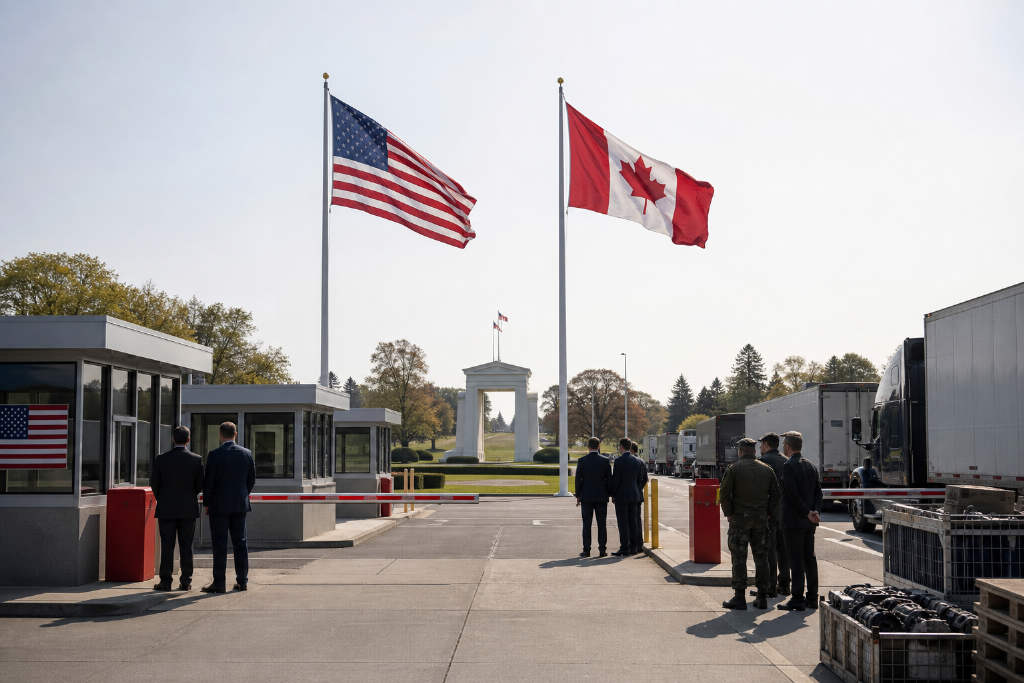
On Aug. 25, criticism inside the U.S. intensified as the Trump administration stepped up both its trade pressure and rhetoric toward Canada. Former U.S. national security officials, retired military figures and Republican lawmakers publicly objected, saying the comments were "embarrassing" the United States and harming ties with a long-standing ally.
Trump escalates rhetoric after trade talks broke down
After U.S.-Canada trade talks collapsed last Friday, Trump renewed his attacks on Canada on Tuesday. He went as far as suggesting that Lake Ontario be renamed "American Lake" and said the United States "does not expect to do much more business with Ontario."
Vice President JD Vance had earlier joked in a speech in Maine that Canada was "a state" of the U.S. and again referred to the idea of Canada becoming the "51st state." Transportation Secretary Duffy also claimed that Canada had "no military," a statement that drew pushback from several retired senior U.S. military officials.
Former military and security officials push back
Ben Hodges, the former commanding general of U.S. Army Europe, said Canadian forces had fought alongside U.S. troops and added, "We are fortunate to have them on our side."
Karen Gibson, former intelligence chief at U.S. Central Command, also said the presence of Canadian forces in operations in Afghanistan, Iraq and Kuwait made the U.S. military "stronger."
Tariff fight keeps expanding
The trade conflict is also moving higher. The U.S. announced new tariffs on about $20 billion of Canadian goods on Saturday, and Trump said Monday that tariffs on Canadian cars and auto parts would be raised to 50%.
Canada responded on Tuesday with matching 50% tariffs on multiple categories of U.S. goods.
Concern emerges inside the Republican Party
The administration’s hard-line trade stance has also triggered concern among Republicans. Senator Susan Collins, who is running for re-election in Maine, said new tariffs on Canada "remain a mistake" because products such as blueberries, potatoes, lobster and lumber in Maine rely heavily on cross-border supply chains. She said the tariffs would ultimately raise costs for U.S. consumers.
Analysts said the U.S.-Canada trade dispute is shifting beyond tariffs and increasingly taking on diplomatic and political dimensions. With only months left before the U.S. midterm elections, the effect of tariffs on prices, jobs and supply chains could also become a new risk for Republican electoral prospects.