
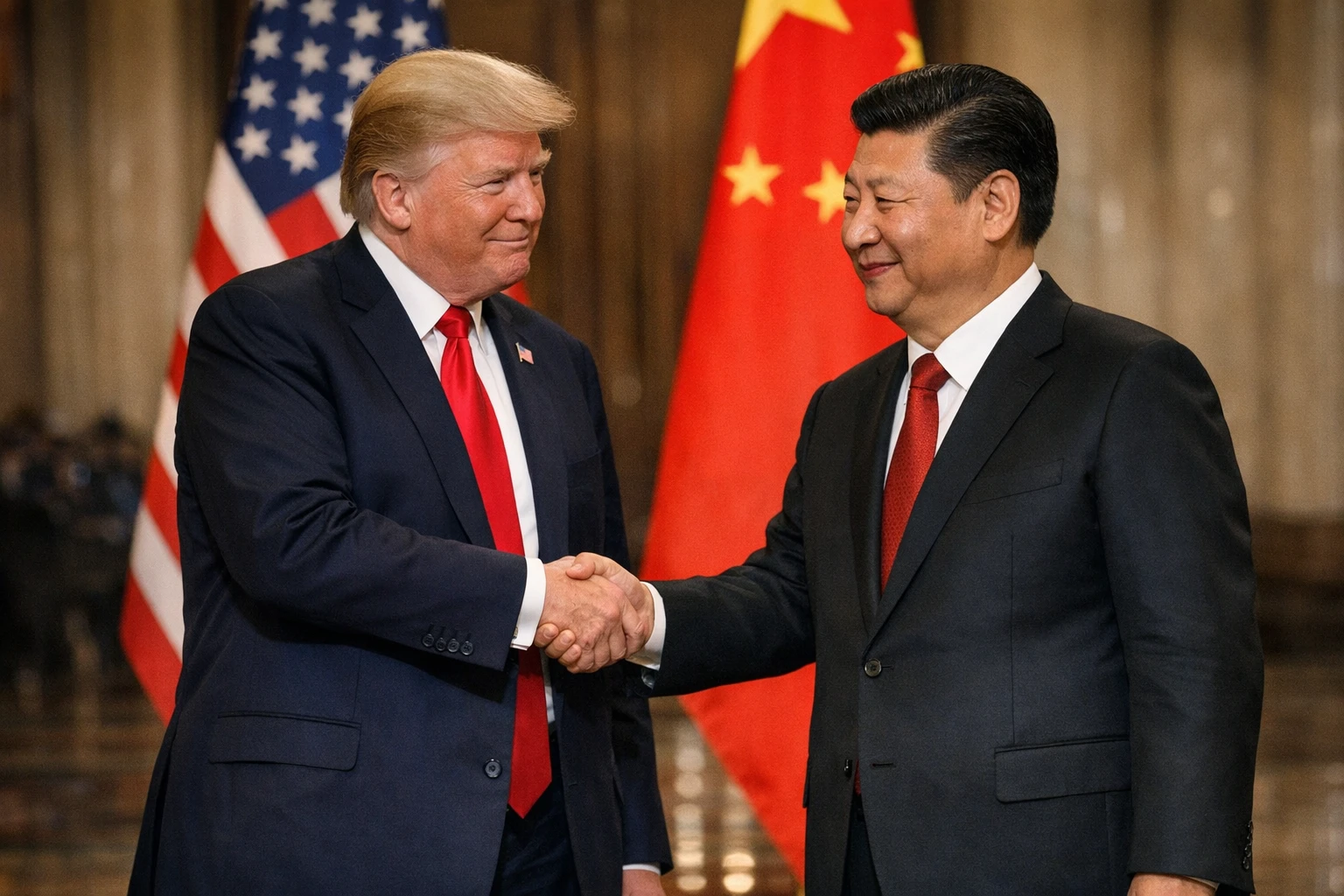
China's Foreign Ministry officially announced on May 11 that US President Donald Trump will make a state visit to China from May 13 to 15 at the invitation of President Xi Jinping. The statement ended weeks of speculation, with Beijing delaying its confirmation by a day after the White House's initial leak. This marks the first visit by a US president to Beijing in over eight years, the last being Barack Obama in 2017.
White House leaks itinerary, Beijing plays the delay game
The White House press office told Japan's Yomiuri Shimbun on May 10 about the "3-day, 2-night" schedule, while Chinese Foreign Ministry spokesperson Lin Jian had repeatedly responded with "no information available" to earlier queries. Analysts see the tactic as Beijing's way of maintaining negotiation leverage before the summit. The confirmed schedule: Trump arrives May 13 evening, with a welcoming ceremony, bilateral talks, a tour of the Temple of Heaven, and a state banquet on May 14, followed by a tea session and lunch on May 15.
Bessent meets He Lifeng in Seoul ahead of the summit
Treasury Secretary Scott Bessent confirmed on X that he will meet Chinese Vice Premier He Lifeng in Seoul on May 13 for trade consultations, setting the stage for the presidential talks. He added: "Let's see if China can play a diplomatic role to get Iran to open the Strait of Hormuz." The US delegation includes CEOs from Boeing and Mastercard, though the size was reportedly trimmed, seen as a signal to Beijing. Trump's son Eric and daughter-in-law Lara are joining in a personal capacity.
Three explosive topics: Iran, tariffs, and AI — which could hit crypto markets?
Iran and the Strait of Hormuz: Bessent demanded China pressure Tehran to reopen the strait. The US recently sanctioned three Chinese firms for allegedly aiding Iran's military operations, injecting noise just before the summit. Any disruption to oil flows through the strait could spur global energy price spikes, dragging down risk assets like Bitcoin.
Trade tariffs and rare earths: The business delegation's core goal is to extend the tariff truce window. China's rare earth export controls have already rattled US defense and tech supply chains. Negotiation outcomes will directly influence global trade sentiment, which in turn shapes demand for Bitcoin as a high-risk asset.
AI rivalry: Trump told media before departure, "I'll tell Xi we're leading in AI." Competition over AI regulation, chip bans, and military applications could escalate into a new tech cold war. Markets fear that heightened trade friction will dampen risk appetite, even as Bitcoin recently rebounded to $103,000, partly linked to Trump's comments on Iran nuclear facilities being "completely destroyed."
First US president in 8 years: symbolism over substance?
Given the pre-summit static — US sanctions, a trimmed delegation, Beijing's delayed announcement — the three-day meeting is unlikely to deliver breakthroughs on every issue. Yet the fact that both sides are still willing to maintain high-level dialogue sends a signal that could matter more to global geopolitics and crypto markets than any specific agreement. The market will closely watch the joint statement expected after May 14 talks, especially any updates on tariffs and AI cooperation.
Note: Related reports also mention Taiwanese police mistakenly freezing accounts of 18 OTC traders and busting a Bitcoin fraud syndicate, highlighting the tightening crypto regulatory environment amid the broader US-China dynamics.