
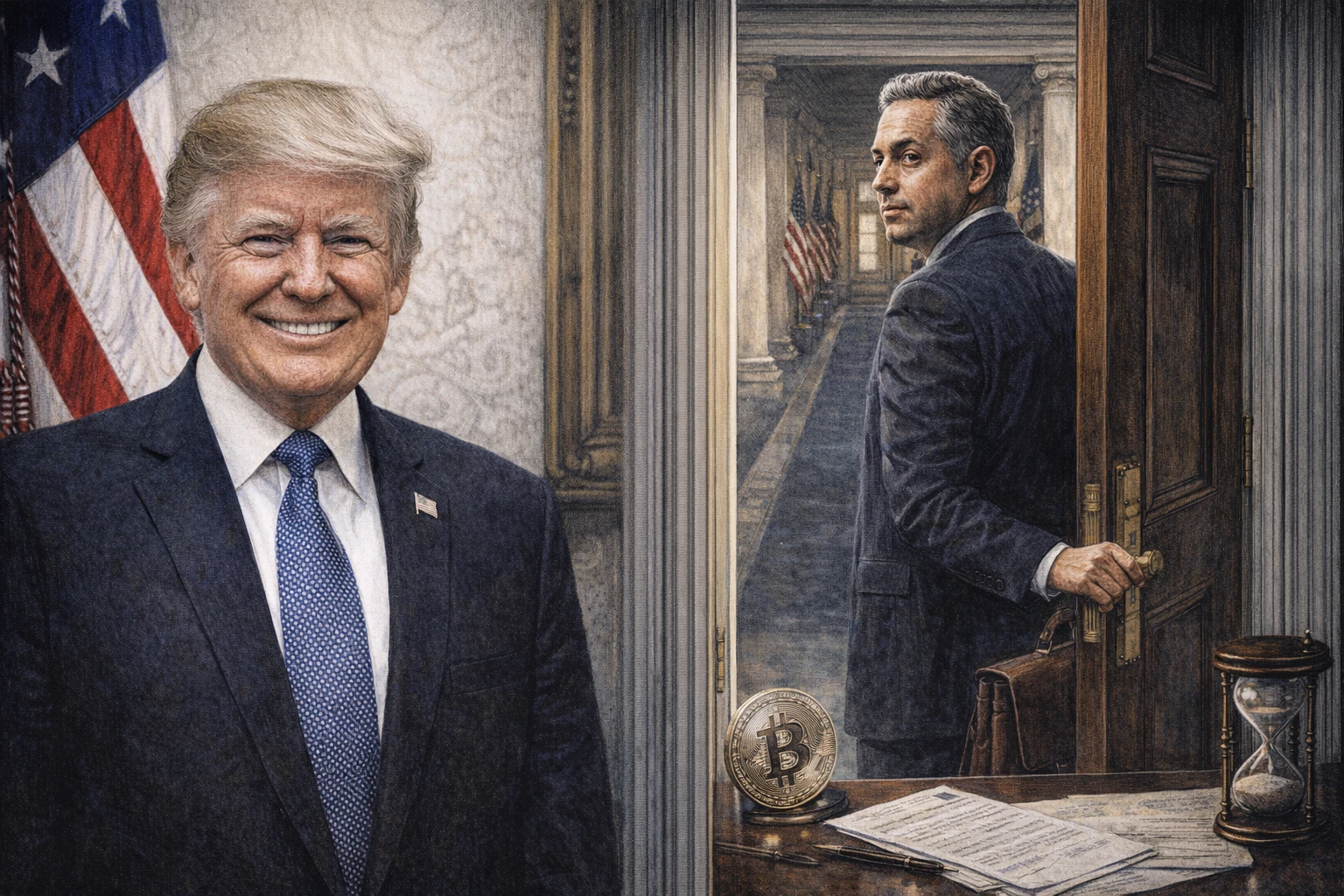
David Sacks, the key architect of the Trump administration's crypto policy, officially left his role as White House AI and Crypto Czar on March 27. His tenure lasted exactly 130 days, the statutory limit for a special government employee (SGE). Sacks confirmed in an interview with Bloomberg that his departure was due to term expiration, not policy differences.
Key Achievements: Bitcoin Reserve, Stablecoin Legislation, Regulatory Shift
Over the past four months, Sacks acted as the de facto executor of Trump's crypto agenda. He pushed for market structure and stablecoin legislation, advocated for a strategic bitcoin reserve, and argued for clear regulatory rules to replace the Biden administration's "enforcement-first" approach. He publicly criticized Biden-era crypto regulation for over-reliance on enforcement and lack of a clear framework, calling it the fundamental obstacle to the growth of U.S. digital assets. Under his watch, the White House shifted from confrontation to active cooperation with the crypto industry, viewed as the biggest policy turnaround in recent years.
Unfinished Agenda: Clarity Act and Strategic Reserve Still in the Pipeline
When Sacks left, several core bills remained unfinished. Crypto journalist Eleanor Terrett disclosed that the Clarity Act and the strategic bitcoin reserve policy are still being drafted. The White House has not indicated whether it will appoint a new crypto czar. Insiders say there are currently no plans to fill the position, meaning U.S. crypto policy may lack a clear White House liaison in the short term.
Moving to PCAST: Will Influence Persist?
Sacks is not completely out of the picture. He will continue to serve as co-chair of the President's Council of Advisors on Science and Technology (PCAST), alongside senior White House tech advisor Michael Kratsios. He noted that the new role lets him "advise on not just AI but broader technology issues." However, PCAST is an advisory body with no executive authority. Industry experts are divided on whether Sacks can maintain his influence compared to directly driving legislation from the White House. Some warn that the momentum for several bills may weaken after his departure.
In the near term, Sacks' exit does not signal a reversal of the Trump administration's pro-crypto stance — the policy direction is set. But without a dedicated White House point person, legislative progress on bills like the Clarity Act could face higher coordination costs. Over the long run, if PCAST allows Sacks to shape tech policy, the impact of his departure may be limited. However, if no successor is named soon, the pace of crypto legislation could slow.