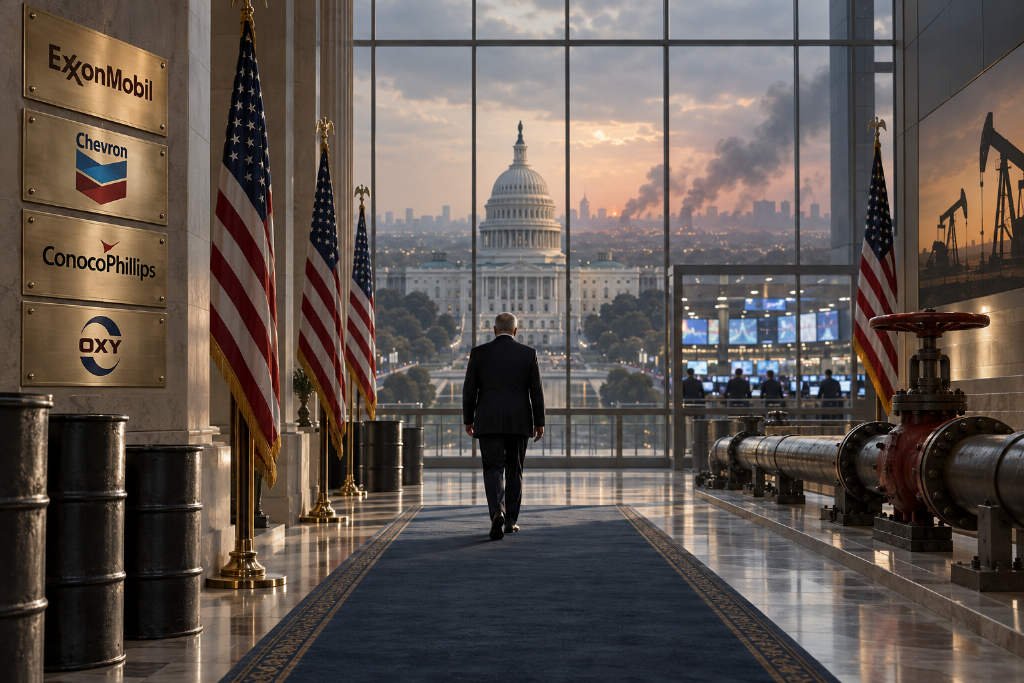
CNBC reported on Sept. 9 that U.S. President Donald Trump’s disclosed stakes in nine of his largest oil and gas holdings were estimated to have risen in value by $1.5 million to $4.4 million between Feb. 27 and Aug. 31, a span covering the eve of the Iran war and the months that followed. The holdings included Exxon Mobil, Chevron, ConocoPhillips, Occidental Petroleum, and several refining and pipeline companies.
The report said Trump’s investment account kept trading energy stocks during the war. As of June 29, the account had disclosed at least 23 related stock sales. On March 2, the first trading day after the first U.S.-Israeli strike on Iran, the account bought shares in eight oil and gas companies, including $100,000 to $250,000 of Exxon Mobil stock. On March 23, after Trump delayed a strike on Iranian energy facilities before the market opened and Brent crude fell nearly 11% that day, the account reported 16 oil and gas stock purchases worth about $163,000 to $570,000 in total.
CNBC said the disclosure forms do not include exact share counts, execution prices, or tax lots sold, so the estimates do not represent actual realized profit or a precise current position. The outlet also said it found no evidence that Trump directed the trades, had advance knowledge of the decisions, or that personal financial interests influenced policy. The White House said the portfolio is managed entirely by an independent manager.
According to CNBC, U.S. President Donald Trump’s disclosed holdings in nine of his largest oil and gas positions were estimated to have increased in value by $1.5 million to $4.4 million between Feb. 27 and Aug. 31, covering the eve of the Iran war and the period that followed.
The positions included Exxon Mobil, Chevron, ConocoPhillips, Occidental Petroleum, along with several refining and pipeline companies. CNBC said Trump’s investment account continued to buy and sell energy stocks during the war.
Energy stock trading continued during the war
As of June 29, the account had reported at least 23 sales of related stocks. On March 2, the first trading day after the first U.S.-Israeli strike on Iran, the account bought shares in eight oil and gas companies, including Exxon Mobil stock valued at $100,000 to $250,000.
On March 23, Trump delayed a strike on Iranian energy facilities before the market opened. Brent crude fell nearly 11% that day. The account then reported 16 purchases of oil and gas stocks on the same day, with a combined value of about $163,000 to $570,000.
Large Exxon Mobil sale disclosed on April 7
On April 7, the account sold Exxon Mobil stock valued at $500,000 to $1 million. About two and a half hours later, Trump announced a ceasefire with Iran, and the stock fell more than 6% at the next day’s open.
CNBC says disclosures are insufficient to calculate actual profit
Because the disclosure forms do not provide exact share counts, execution prices, or the tax lots sold, the estimates do not represent actual realized profit or a precise current holding level.
CNBC also said it found no evidence that Trump directed the trades, had advance knowledge of the relevant decisions, or that personal interests affected policy. The White House said the portfolio is operated entirely by an independent manager.
This article was originally published by Bit.Fan. For more cryptocurrency news and market insights, visit www.bit.fan. Disclaimer:
The market information, project data, and third-party content displayed on this platform are for industry information sharing only and do not constitute any form of investment advice or return commitment.
Cryptocurrency trading carries high risks. Users should fully assess their risk tolerance and make independent decisions. All profits, losses, and legal responsibilities are borne by the users themselves.