
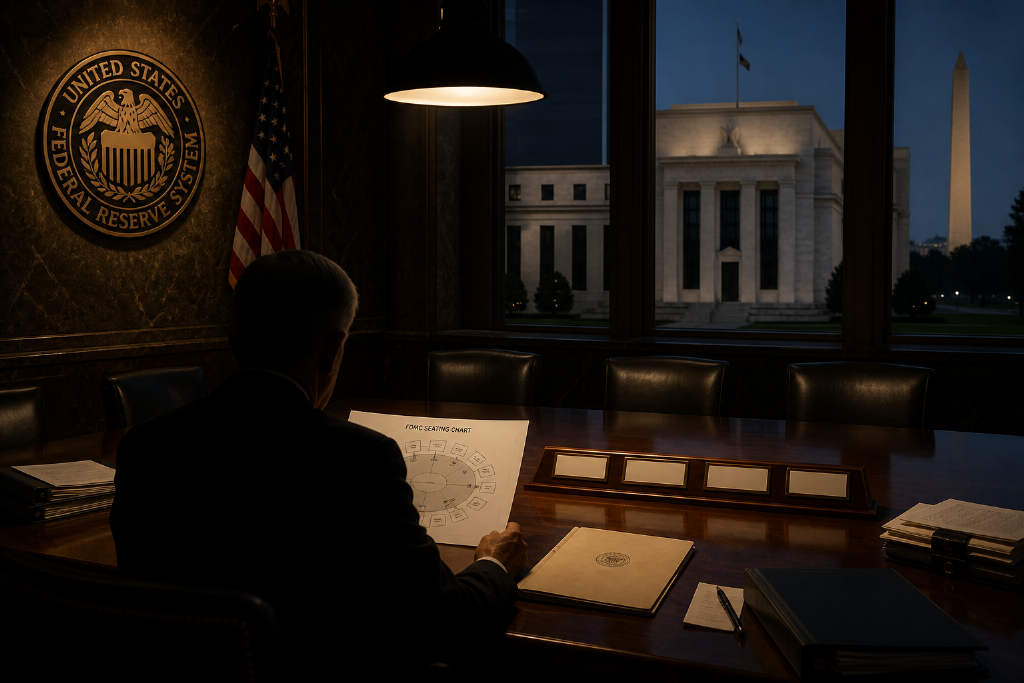
Donald Trump has not managed to quickly reshape the Federal Reserve, but Reuters reported that four personnel-related openings could still give him room to widen his influence over the central bank.
The key issue, according to the report, is not only who may enter the Fed. It is how any changes in those positions could alter the voting structure of the committee that decides interest rates.
So far, Trump’s efforts have been constrained by the courts and by political resistance in the Senate. Reuters said the struggle is not over, and as many as four future openings could still affect the Fed’s personnel layout.
Four possible pressure points
The first is the case tied to Lisa Cook. Reuters said Trump has not given up on the effort involving Fed Governor Lisa Cook’s future at the central bank, making it the most direct battleground.
The second centers on Jerome Powell’s continued presence at the Fed. Reuters described 2028 as the clearer window here. During his previous term, Trump had repeatedly considered removing Powell as Fed chair. Powell has since stepped down as chair, but he chose to remain on the Board of Governors, with his term running into early 2028.
The third involves a possible chain reaction around Philip Jefferson. Reuters said Fed Vice Chair Philip Jefferson will face a key decision next year after his vice chair term expires: whether to leave the Fed or stay on as a governor.
The fourth potential channel is the appointment of the next Atlanta Fed president. Reuters said Trump could also try to influence the Federal Reserve through personnel appointments across the 12 regional Federal Reserve banks.
Why the voting structure matters
Reuters framed the broader question as the eventual effect of those personnel changes on the voting balance behind interest-rate decisions. In that sense, the fight is less about a single appointment and more about whether a set of staffing moves could reshape how the rate-setting body votes.