
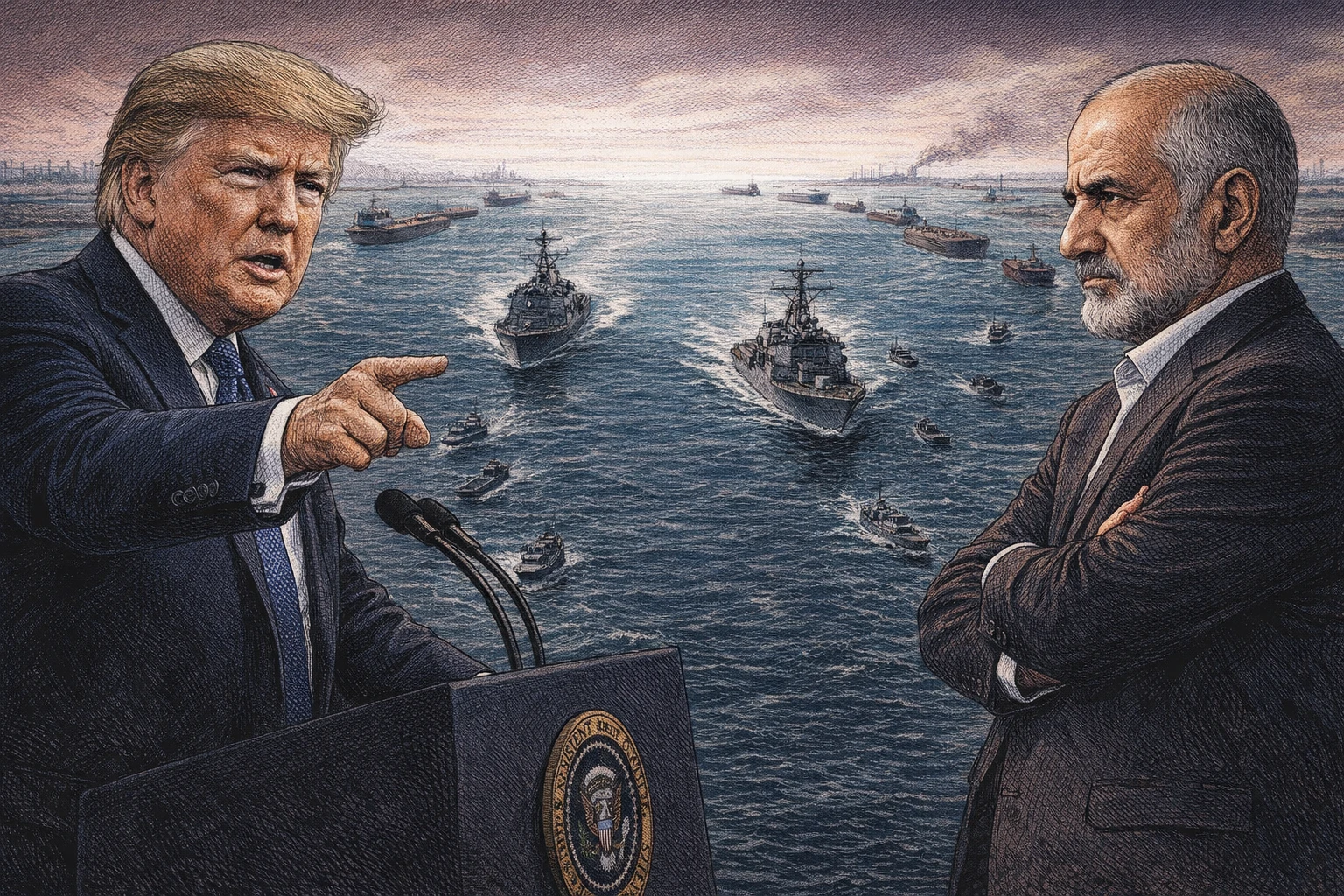
Less than 48 hours after the White House announced via X platform an immediate blockade of all vessels entering and exiting the Strait of Hormuz — triggering oil and crypto market turmoil — Trump's latest remarks on April 13 completely flipped the narrative: from a military clampdown to a US oil marketing show.
Trump: Blockade at 10 AM Tomorrow, But Ships Come to US for Fuel
In his latest speech, Trump stated: "Tomorrow at 10 AM we will impose the blockade. Other countries will cooperate to ensure Iran can't sell oil." But he quickly pivoted: "Many ships are heading to our country. They will refuel, take oil, and leave — so they won't need to go through the Strait of Hormuz." He then touted his "Drill Baby Drill" campaign, claiming: "Because of this policy, our oil reserves are larger than Russia and Saudi Arabia combined. The whole world relies on us."
The speech repackaged a geopolitical crisis as a showcase of US energy dominance — as if the Hormuz blockade was not about sanctioning Iran, but about making the world buy American oil.
White House vs. Pentagon: Blockade Scope Narrowed Sharply
However, a clear gap emerged between the White House's tough stance and the actual execution by US forces. The White House X post claimed a blockade of "all vessels" to and from Hormuz, but CENTCOM later clarified: only Iranian ports (including those on the Persian Gulf and Gulf of Oman) are blocked; ships from non-Iranian ports are not affected. Iran accused US destroyers USS Frank E. Petersen and USS Michael Murphy of trying to masquerade as Omani commercial vessels to infiltrate the strait, but were intercepted and forced back by Iranian Navy. Iran's Revolutionary Guard Corps issued Bulletin No. 59 stressing that non-military ships may pass, but naval vessels approaching will be considered ceasefire violations.
Iranian Foreign Minister Araghchi said negotiations are "one step away" from an agreement, but complained that "the US side demands too much, their conditions keep changing," warning "good will breeds good will, hostility breeds hostility." Iranian President Pezeshkian spoke with Russian President Putin, saying Iran is ready for a "balanced and fair deal." Trump earlier told Fox News: "I won't let Iran make money selling oil. They haven't left the table — I want it all."
Fact Check: Does Trump's Data Hold Up?
Trump's claim that US oil reserves "exceed Russia and Saudi Arabia combined" is barely defensible at the reserve level (if shale is included), but clearly false on daily production. Latest data shows US daily output at roughly 13-13.5 million barrels, while Russia plus Saudi Arabia produce about 18-20 million barrels. More critically, the Strait of Hormuz sees about 17 million barrels of crude transit daily — 20% of global supply — a gap no single nation can fill. Moreover, while the US has become a net crude exporter, most exports are gasoline and light crude; heavy crude must still be imported. In short, the US cannot fully replace Middle East crude in the global supply chain.
Oil analysts warn that if the Strait of Hormuz were truly shut down, the world would face a daily shortfall of 7 million barrels of crude plus 4 million barrels of refined products. The US average gasoline price has jumped from $2.99/gallon before the crisis to $4.13/gallon, a rise of $1.14.
Trump's Philosophy: Packaging Weakness as Strength
This narrative flip is classic Trump: turning a weakness into a selling point. The Hormuz blockade is fundamentally a massive risk to global energy supply, but in Trump's telling it becomes a business opportunity for the world to buy American oil. While this may play well domestically, it does not change market realities: rising oil prices will fuel inflation, compress the Fed's rate-cut room, and exert structural pressure on risk assets including Bitcoin. Bitcoin briefly fell below $70,600 this week, with liquidations exceeding $200 million and 147,000 traders wiped out. Crypto market analysts warn that if oil prices continue climbing, inflation expectations will rise, delaying Fed rate cuts — a long-term bearish factor for risk assets.