
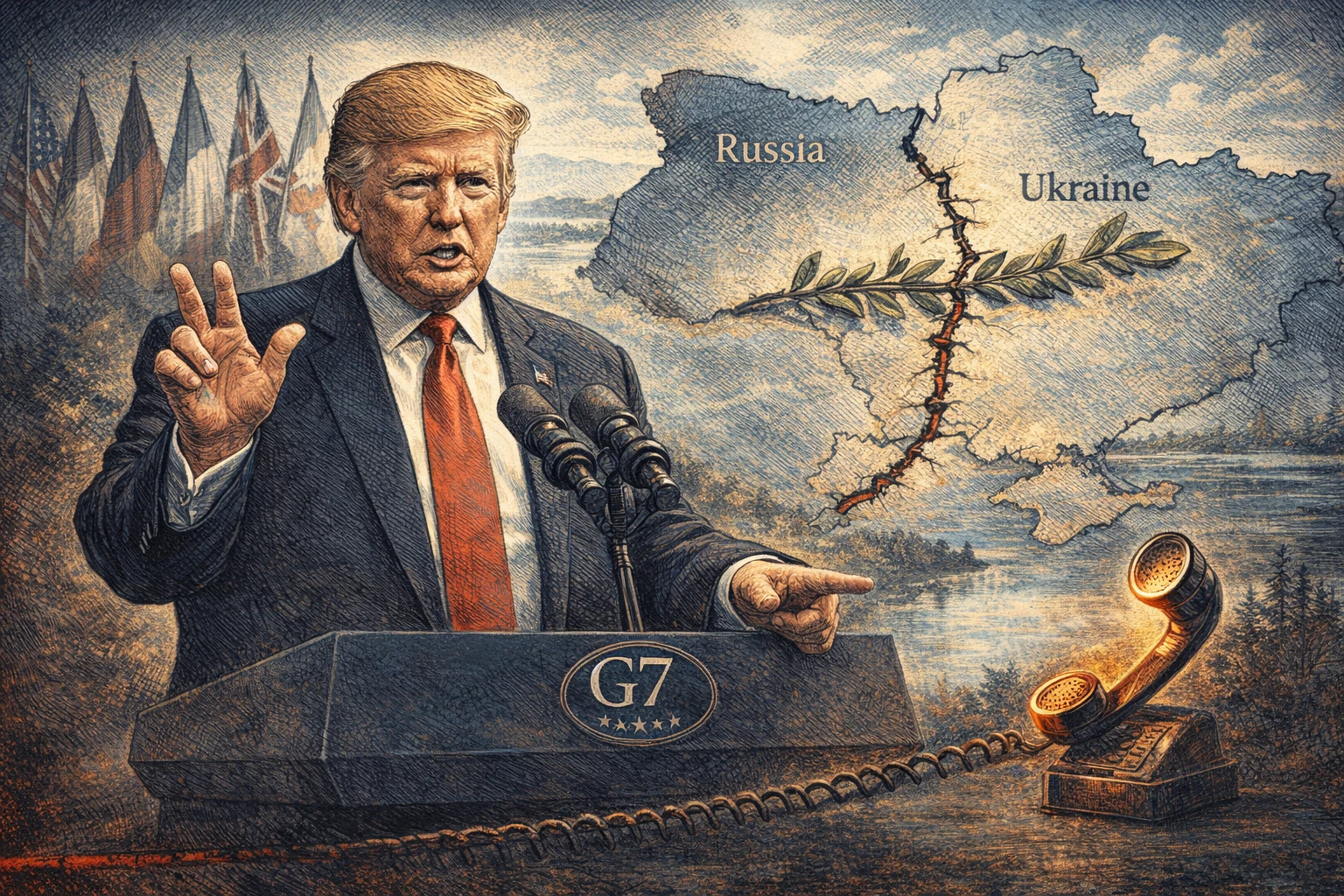
U.S. President Donald Trump told reporters at the G7 summit in France on June 16 that Russia 'should make a deal' to end its war against Ukraine. He revealed he spoke with Russian President Vladimir Putin on Sunday and planned to meet Ukrainian President Volodymyr Zelensky later that day. 'Russia has lost a lot of people, and so has Ukraine,' Trump said. With the Iran agreement finalized, he said his next priority is helping end the Russia-Ukraine war.
After Iran, Russia-Ukraine Takes Center Stage at G7
The G7 summit in France was dominated by the Russia-Ukraine war and Trump’s newly concluded Iran deal. French President Emmanuel Macron pushed for continued U.S. support for Ukraine and tougher lines on Moscow, while Zelensky attended at Macron’s invitation. Reports indicated that Trump has held off on imposing new sanctions on Russia to keep negotiation channels open.
Market implications: The Russia-Ukraine war has been a persistent drag on global risk appetite for nearly three years. Any genuine progress toward peace is typically seen as bullish for risk assets, including Bitcoin. However, Trump’s rhetoric remains aspirational; a formal ceasefire is still far off, limiting short-term market impact.
Speaking on the sidelines of the G7, Trump said: 'I got Iran done, now I need to handle Russia and Ukraine.' He reiterated his preference for a diplomatic solution to stop the bloodshed. The content of his call with Putin was not fully disclosed, but sources say they discussed possible ceasefire frameworks.
Zelensky Meets Trump; Key Sticking Points Remain
Zelensky held a bilateral meeting with Trump during the summit. Ukraine’s position on sovereignty and territorial integrity remains unchanged, though Kyiv expressed willingness to negotiate on the basis of a 'just peace.' Trump’s team is reportedly pushing for a temporary ceasefire to pave the way for formal talks. Several European leaders urged the U.S. to maintain sanctions pressure to prevent Russia from using talks as a stalling tactic.
Market analysts note that any substantial progress in Russia-Ukraine negotiations could boost global risk sentiment, with crypto markets likely to react first. Still, prediction markets give less than a 10% probability of a ceasefire this year. The road from 'should make a deal' to an actual signed agreement is long and fraught with obstacles: Russia demands recognition of annexed territories, while Ukraine insists on full withdrawal of Russian forces. Whether Trump’s deal-making skills can break the deadlock remains uncertain.