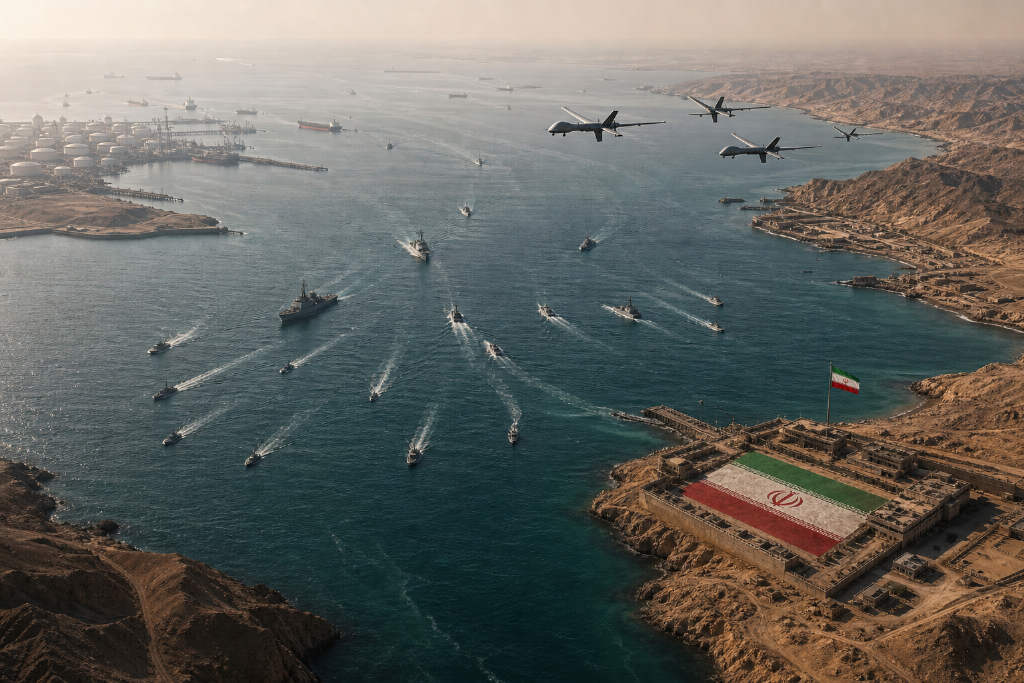
Analysts said on Aug. 22 that U.S. President Donald Trump is trying to force Iran to end the war on Washington’s terms through a new round of sanctions, a maritime blockade, and heavier economic pressure on Iran’s trading partners. They said the strategy aims to achieve what tens of thousands of bombs and missiles failed to deliver. The report also pointed to a major constraint on that approach: Iran’s Islamic Revolutionary Guard Corps has effectively taken control of the Strait of Hormuz and has repeatedly launched large numbers of attack drones toward the Persian Gulf. According to the analysis, the Guard is largely insulated from economic pressure and still has a wide range of retaliatory options. A key moment is expected on Monday, when Treasury Secretary Bessent is set to release details of a new plan. The proposal would shift the conflict from mutual airstrikes in the Middle East to full economic isolation. Analysts added that if the pressure campaign starts to work, Iran could answer with military strikes on energy facilities along the Persian Gulf coast in an effort to push up oil prices, raise the cost of U.S. action, and force Trump to change course again.
BlockBeats reported on Aug. 22 that analysts believe U.S. President Donald Trump is trying to force Iran to end the war on Washington’s terms through a fresh round of sanctions, a maritime blockade, and increased economic pressure on Iran’s trading partners. They said the effort is designed to accomplish what tens of thousands of bombs and missiles did not.
In their view, that pressure campaign faces a serious obstacle. Iran’s Islamic Revolutionary Guard Corps has effectively taken control of the Strait of Hormuz and has repeatedly launched large numbers of attack drones toward the Persian Gulf. The report said the Guard is largely immune to economic pressure and still holds multiple means of retaliation.
According to the report, the next key point comes on Monday, when Treasury Secretary Bessent is expected to unveil details of a new plan. The proposal would shift the mode of conflict from mutual airstrikes in the Middle East to broad economic isolation.
Analysts said that if the new pressure campaign proves effective, Iran could respond with military strikes aimed at energy facilities along the Persian Gulf coast, seeking to lift oil prices, increase the cost of U.S. action, and push Trump to alter course again.
This article was originally published by Bit.Fan. For more cryptocurrency news and market insights, visit www.bit.fan. Disclaimer:
The market information, project data, and third-party content displayed on this platform are for industry information sharing only and do not constitute any form of investment advice or return commitment.
Cryptocurrency trading carries high risks. Users should fully assess their risk tolerance and make independent decisions. All profits, losses, and legal responsibilities are borne by the users themselves.