
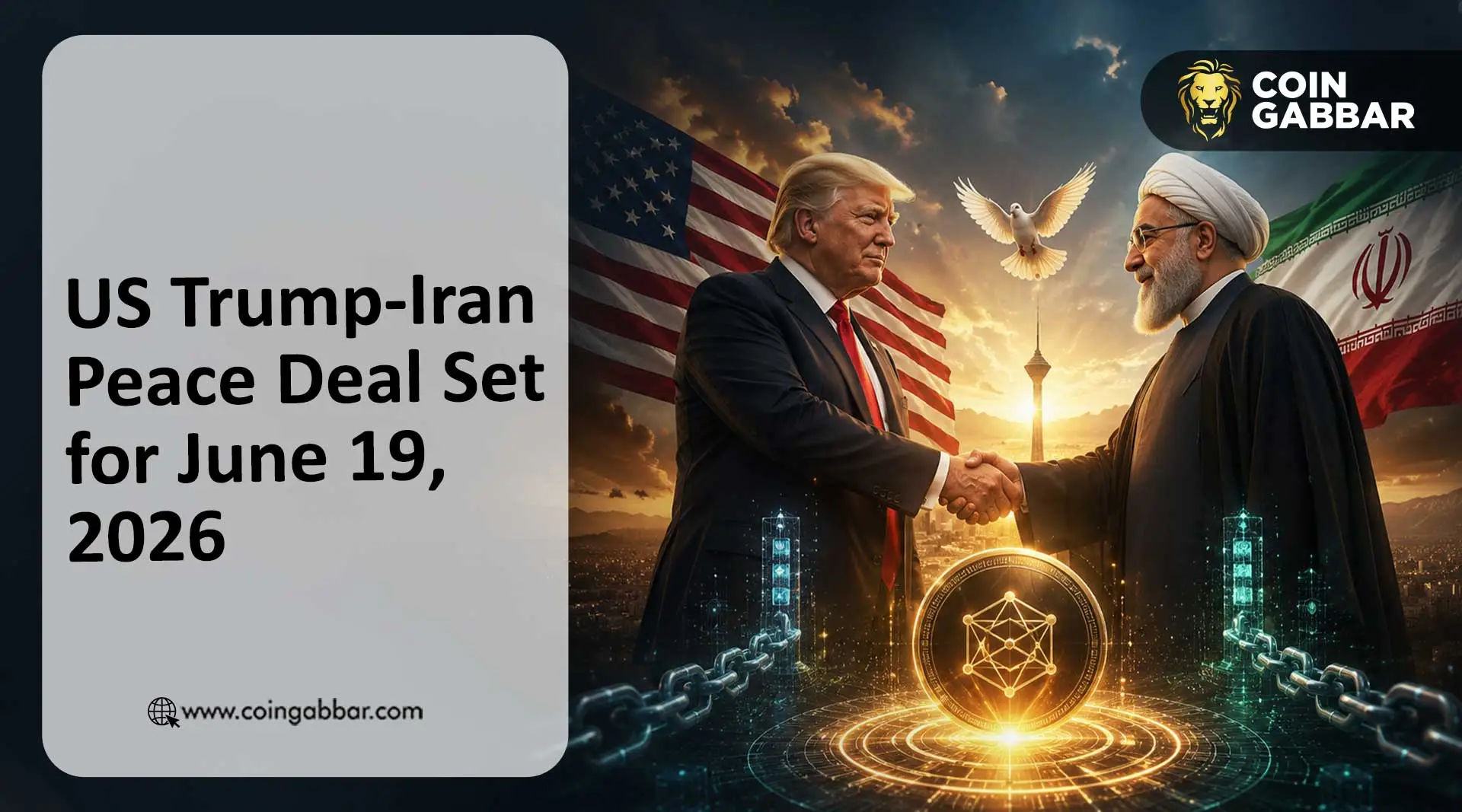
Markets moved fast after news of a US-Iran peace deal. WTI crude fell 5.0%, Brent dropped 4.0%, and US stock index futures turned higher. Crypto joined the move, with Bitcoin reaching an intraday high of $65,641, up about 1.77% over 24 hours. The formal signing ceremony is scheduled for June 19, 2026, in Switzerland.
According to the source material, President Donald Trump said on June 14, 2026 that the deal with Iran was “complete,” writing on Truth Social that he had authorized the toll-free opening of the Strait of Hormuz and the immediate removal of the US naval blockade. Pakistan Prime Minister Shehbaz Sharif announced the agreement first, with mediation from Qatar and support from Saudi Arabia and Turkey. Iran’s Supreme National Security Council later issued its own confirmation.
Frozen funds, sanctions relief, and shipping access are driving attention
The agreement described in the report goes well beyond a ceasefire. The disclosed terms include a permanent halt to military operations across all fronts, including Lebanon; reopening the Strait of Hormuz within 30 days under Iranian arrangements with no US toll; a full removal of the US naval blockade within 30 days; the release of $24 billion in frozen Iranian funds, with half unlocked before final negotiations begin; suspension of oil and petrochemical sanctions with full financial access for Iran; a 60-day nuclear negotiation window under the NPT framework; and a $300 billion reconstruction requirement from the US and its allies.
One detail singled out in the source is that discussions on Iran’s missile program and support for resistance groups were removed from the agenda. That shifts immediate focus toward ceasefire mechanics, shipping lanes, and financial access rather than the more difficult security issues.
Why the Strait of Hormuz matters for crypto traders
The report argues that the biggest market signal is not the political headline alone but the energy channel. Roughly 20% of the world’s oil passes through the Strait of Hormuz. Its closure has weighed on energy markets for months, so any credible reopening plan has direct implications for supply expectations and pricing.
Cross-asset moves reflected that view. S&P 500 futures rose 0.8%, Nasdaq 100 futures gained 1.3%, and Dow Jones futures added 0.6%. Gold climbed 2.0%. Oil futures dropped sharply, with WTI settling near $84.88 per barrel and Brent around $87.33, down from levels above $100 seen during peak supply disruption fears.
For crypto, the logic in the source is straightforward: lower energy prices can ease inflation pressure, and that changes the macro setup for risk assets. In that framework, a reopening of the Strait of Hormuz is not just a sentiment boost for Bitcoin. It affects the broader inflation and policy backdrop that traders watch closely.
June 16-17 FOMC meeting remains the other key event
Before the June 19 signing, markets still have to get through the June 16-17 FOMC meeting. The source stresses that sequencing matters more than the headline itself. A ceasefire extension may buy time, but it does not remove the underlying tensions. Reopening the Strait of Hormuz could have faster economic effects, while nuclear provisions would likely take months or years to implement and verify.
That leaves traders watching two tracks at once: the pace of implementation around the Switzerland signing and any policy signal coming from the Federal Reserve. For now, price action across oil, equities, and Bitcoin suggests markets have already started trading the same theme: lower geopolitical pressure and weaker energy prices.