
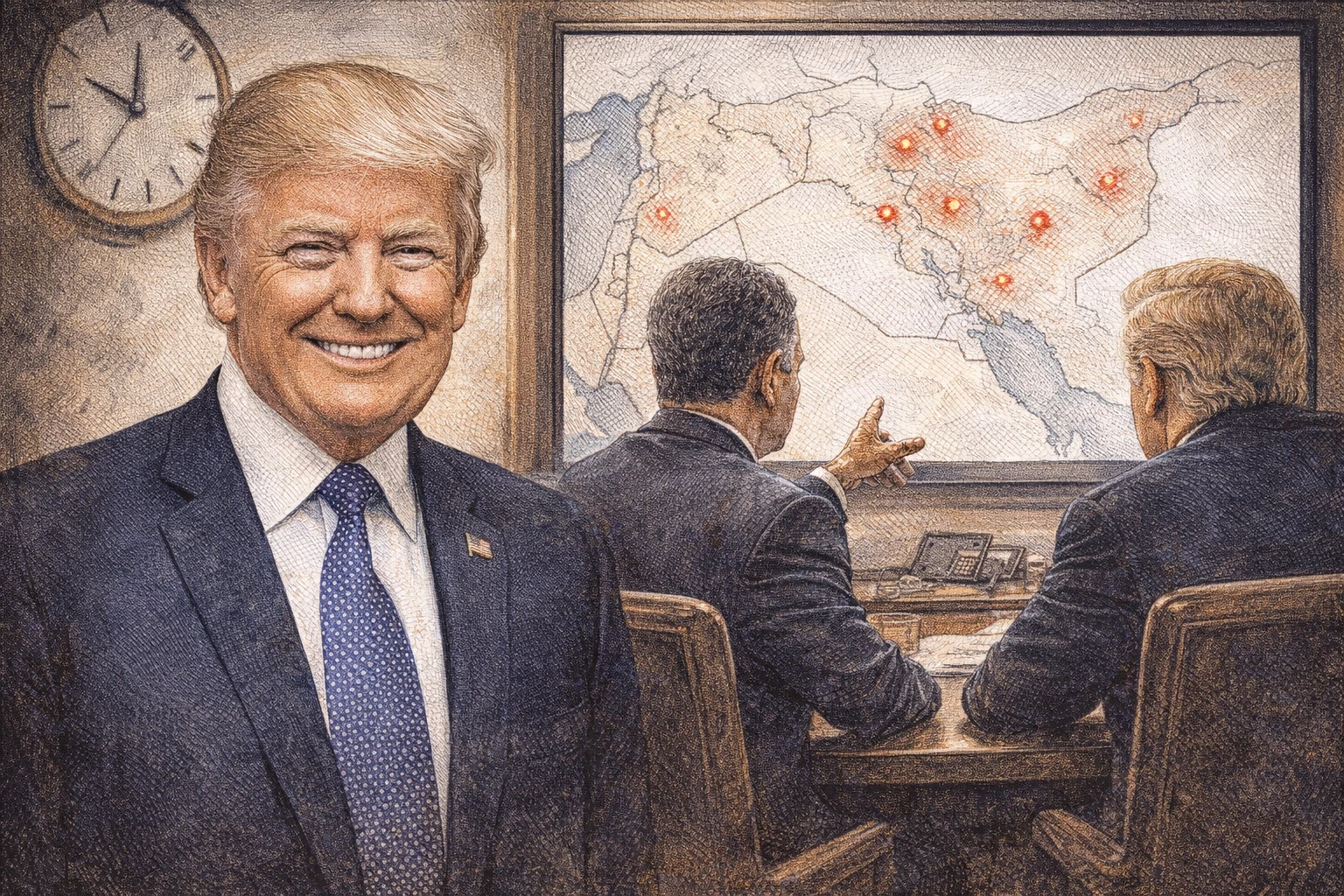
Israeli media reported on the 17th that Prime Minister Benjamin Netanyahu and U.S. President Donald Trump held a phone call lasting about 30 minutes, with one issue at the center: whether military strikes on Iran should resume. According to people cited in the report, if Washington moves ahead, the United States and Israel could carry out joint airstrikes. The discussion has pushed the crisis into a sharper phase, and the White House is preparing to weigh options at the highest level.
Trump says Iran’s clock is running down
In a phone interview with Axios, Trump used unusually direct language, saying Iran’s “clock is ticking down.” He added that if Tehran failed to offer a better deal, it would face attacks “far more severe” than before. U.S. officials, according to the source material, still describe diplomacy as Trump’s preferred route for ending the confrontation. But they also said Iran rejected multiple U.S. demands and made no meaningful concession on its nuclear program, bringing military action back into active consideration.
Situation Room meeting expected Tuesday
Two U.S. officials familiar with the matter said Trump is expected to convene his senior national security team in the White House Situation Room on Tuesday local time, the 19th, to formally review military options on Iran. The meeting would be the highest-level security session since the current crisis began. Preparatory talks were already underway over the weekend. Sources said Trump met members of his national security team on Saturday at his golf club in Virginia, including Vice President JD Vance, White House envoy Steve Witkoff, Secretary of State Marco Rubio, and CIA Director John Ratcliffe.
The list of participants points to a broad policy review spanning diplomacy, intelligence, and military planning. Witkoff’s presence is especially notable. He has been serving as a channel for Iran-related negotiations, yet he is also part of the war-room consultations, a sign that the diplomatic opening is narrowing.
Joint strike scenarios carry larger stakes this time
The source notes that coordinated Western or U.S.-backed military action in the region has precedent. In 2018, the United States, the United Kingdom, and France launched precision strikes on Syrian chemical weapons facilities. In 2024, after Iran launched a large drone and missile attack on Israel, Israel responded in a limited way with U.S. intelligence and defensive support.
This case is different in scale and target set. Iranian nuclear facilities are spread across Natanz, Fordo, and Isfahan, with some sites buried dozens of meters underground. Whether U.S. air power could effectively destroy those facilities remains disputed among military specialists.
Oil flows and wider security calculations are in focus
If the confrontation escalates, the impact would extend well beyond the immediate battlefield. Iran sits on the Strait of Hormuz, a chokepoint through which roughly one-third of global oil shipments pass, according to the source material. Any direct U.S.-Israeli action against Iran could send oil prices sharply higher and place added pressure on economies dependent on imported energy.
The report also points to a broader strategic question: if the United States becomes more deeply involved in a Middle East conflict, its military resource allocation in the Indo-Pacific may have to be adjusted. Iran’s ties with China and Russia add another layer, raising the possibility of responses at the U.N. Security Council and in the economic arena.
Negotiation room appears to be shrinking
According to the source, the Trump administration has paired “maximum pressure” with invitations to negotiate. That approach has faced repeated resistance after Iran’s Supreme Leader Ali Khamenei publicly rejected direct talks with the United States more than once. One U.S. official said Trump’s actual objective is not war itself, but to use the threat of force to push Iran back to the table.
Even so, confidence in a diplomatic track has been fading as both sides remain stuck. If Tuesday’s Situation Room meeting concludes that military action can no longer be avoided, it would mark one of the most serious turning points in Middle East security since the collapse of the 2015 Iran nuclear deal framework.