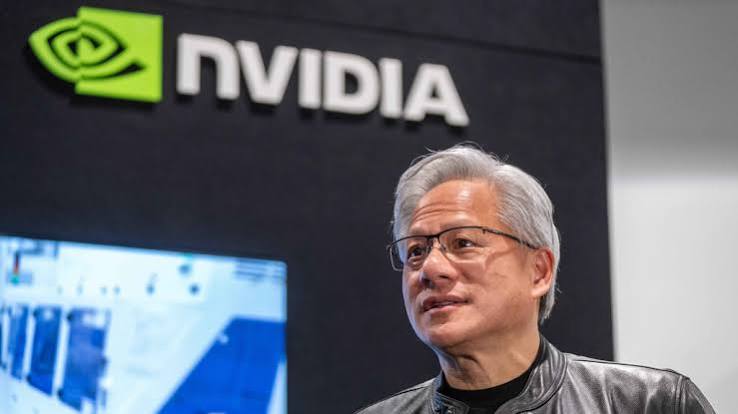
Nvidia shares closed up 31.48% at $165.05 on Nov. 23 in U.S. trading, adding about $952 billion in market value in a record daily gain. The increase amounted to more than three-quarters of the roughly $1.2 trillion in market value the company had lost while Jensen Huang was away. On the same day, Nvidia’s board unanimously approved Huang’s return as CEO. The company said the board had consulted senior U.S. government officials before making its decision.
The board reversed course in six days
On Nov. 12, U.S. time, Huang resigned as CEO, president and director amid a controversy involving an extramarital affair. The board then opened an inquiry into whether he had been targeted by foreign intelligence activity.
Huang publicly said for the first time that he was willing to return on Nov. 17. On the same day, board chair Harvey Jones said during an earnings call that the board had no intention of reinstating him. On the evening of Nov. 22, President Donald Trump posted that Huang’s return would be best for both Nvidia and the United States. Semafor reported that Trump then called directly into a board meeting. CNN reported that he also asked Vice President JD Vance to engage with Huang and the board. The board voted unanimously to reinstate Huang on Nov. 23.
Wall Street analysts shifted their position quickly as well. Bernstein had cut its Nvidia rating 11 days earlier because of Huang’s departure and halved its price target. On the day of his reinstatement, it raised the rating to Outperform. In the same report, Bernstein described the board’s back-and-forth response as 'clownish.'
Governance and the board’s role draw criticism
Corporate-governance experts cited by CNN sharply criticized Nvidia’s board. They said the company had no chair, no succession plan and weak constraints on its CEO before the controversy. Several directors had also supported Huang for a long time. Nell Minow of governance consultancy ValueEdge Advisors offered a straightforward test: Would the company keep a middle manager who had done the same thing?
Semafor separately reported that a group of directors had been pushing for Huang’s return. Nvidia’s announcement said the vote was unanimous, but the timeline described in the reports suggests that unanimity followed negotiations among the parties.
Washington’s interest extends to China chip policy
Huang has long argued that the United States should allow Nvidia to sell more chips to China. His case is that a complete withdrawal by U.S. companies would drive Chinese developers toward domestic chips and software ecosystems. The United States would lose not only revenue, but also influence over technology standards and ecosystems. Huang has estimated that China’s AI-chip market could be worth $50 billion a year.
The U.S. government is divided over the issue. The Washington Post reported that Commerce Secretary Howard Lutnick and Trump favor allowing China to obtain lower-performance U.S. chips, keeping Chinese developers within the U.S. technology system. Secretary of State Marco Rubio and other China hawks place greater emphasis on national security. On Nov. 15, Treasury Secretary Scott Bessent said on Fox News that the board should look outside the company for a new CEO. The Washington Post also reported that Trump and Vance value Huang’s support for an open-model ecosystem.
Huang sits between those two policy positions. He must persuade the U.S. government that Nvidia can control where its chips go, while remaining one of the most prominent voices arguing for continued access to the Chinese market.
The Intel case took the opposite route
This is not the first time the White House has intervened in a company leadership dispute. On Aug. 7, 2025, Trump posted that Intel CEO Lip-Bu Tan should resign immediately, citing his past ties to Chinese companies. Two weeks later, the U.S. government announced that it had acquired about a 10% stake in Intel, mainly by converting grants previously promised to the company under the CHIPS Act. Tan stayed in his job, and the government became one of Intel’s major shareholders.
The two cases moved in opposite directions. Trump first called for Tan to leave and then negotiated terms; in Huang’s case, Trump publicly supported him from the start of the controversy and personally pushed for his reinstatement. Current reports have not said that the government sought an ownership stake in Nvidia.
Silicon Valley has seen other CEO returns
CEOs who leave and later return are not without precedent in Silicon Valley. Steve Jobs took 12 years to return to Apple; Sam Altman was back at OpenAI in less than a week; Huang’s return took 12 days.
The earlier returns were driven by people inside the companies and by business partners. In Altman’s case, hundreds of employees signed a letter, and Microsoft backed him. Huang’s return also drew a petition, whose organizers said it collected more than 200,000 signatures. But the decisive push in this case came from outside the company.
New compliance measures accompany Huang’s return
Nvidia’s governance structure has changed as Huang returns. The board has created a National Security and Export Controls Committee made up entirely of independent directors. The company has also appointed a chief compliance officer who reports directly to the Nominating and Corporate Governance Committee. The independent investigation into Huang will continue until it reaches a conclusion.
China business remains a central open question. Domestic media reported that interim CEO Colette Kress confirmed on Nov. 17 that Nvidia had stopped supplying H200 chips to China, a move expected to affect about $2.4 billion in quarterly revenue. Nvidia’s guidance, however, had already excluded China data-center revenue. Huang’s return has not clarified whether shipments to the Chinese market will resume.
Analysts are divided. Baird maintained a Neutral rating, saying Huang’s reinstatement combined with tight restrictions on AI chips was the worst possible combination for the China market and left medium-term revenue uncertain. Morningstar expects Nvidia’s sales to Southeast Asia to face restrictions because data centers in the region rent computing capacity remotely to Chinese AI labs.
Prediction-market odds jumped in five minutes
Before the reinstatement, few prediction-market traders expected Huang to return. On Polymarket, traders put the odds of his return by Nov. 30 at 6% on Nov. 16. The figure stood at about 3% minutes before the announcement and reached 99% five minutes later. Four related contracts recorded a combined trading volume of about $12.42 million. Even on Sunday night, Huang ranked second in a market on Nvidia’s next CEO, with odds of about 11%.
Questions about trading timing followed. Reports said a roughly $3.4 million purchase of Nvidia call options was placed before Friday’s market close. Social media users estimated that the potential return could approach 90 times the amount invested. On-chain data platform Santiment cautioned that suspicious timing alone is not evidence; without substantiation, the claims cannot be treated as confirmed insider trading.
Congressional questioning is scheduled for December
The Hill reported that Huang is due to give closed-door testimony to a relevant House committee on Dec. 1. On Dec. 3, he is scheduled to appear as the sole witness at a public hearing of the Senate Banking Committee. Democratic Senator Elizabeth Warren called his reinstatement 'reckless.' Representative Jim Himes, the Democratic member of the House Intelligence Committee, said the decision did not change the fact that Congress would question Huang the following week.
Analysts also say the investigations remain an unresolved issue for Nvidia shares. KeyBanc said it would reassess its rating after there was progress in the board’s investigation and the accounting inquiry by the U.S. Securities and Exchange Commission (SEC). Bullish firm Stifel also acknowledged that the investigation remained an overhang on the stock. The article’s assessment is that part of the $952 billion market-value increase reflects a bet that the investigations will not produce bad news.
This article is for informational purposes only and does not constitute investment advice. Markets involve risk; investors are responsible for their own decisions.