
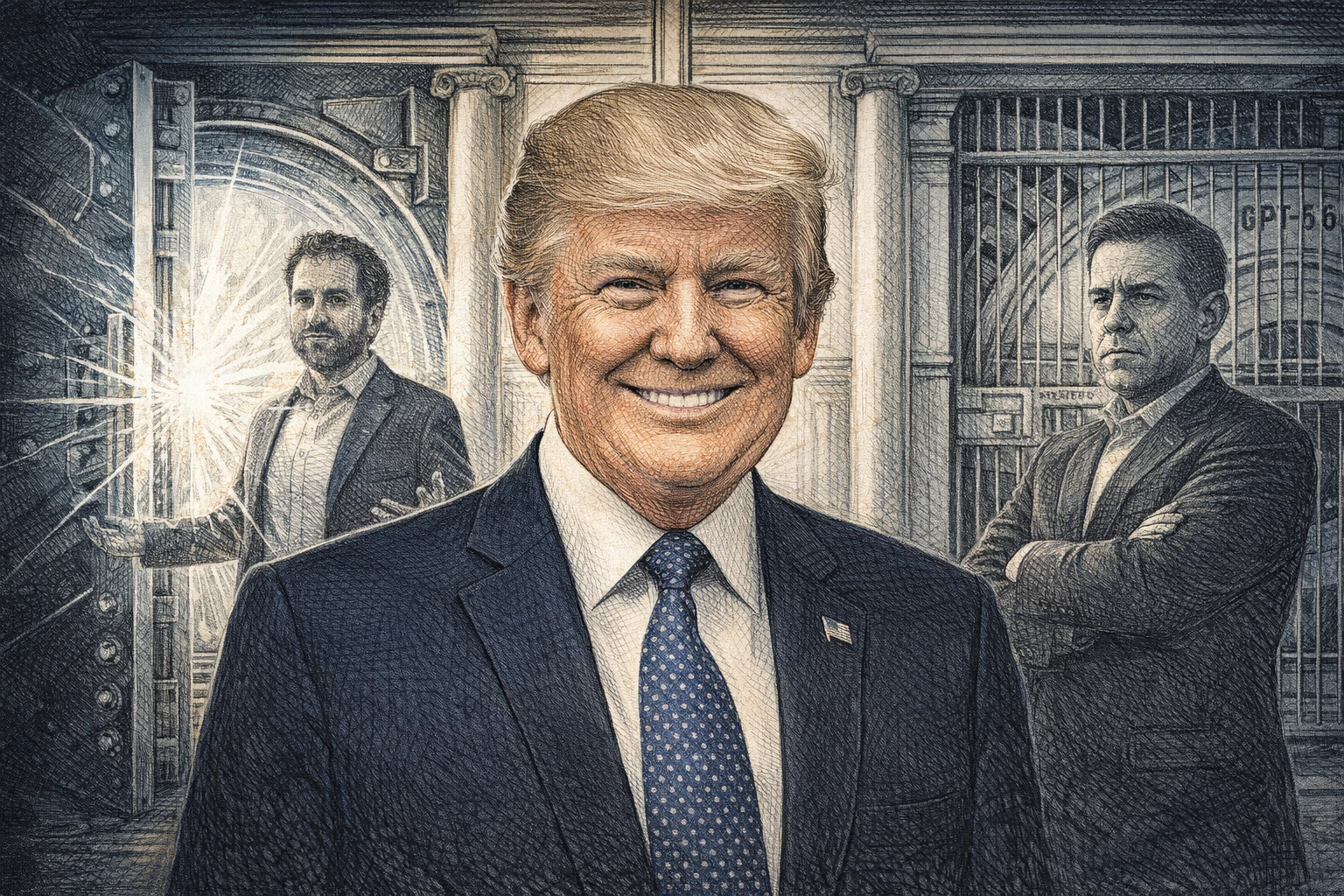
On June 27, 2026, the Trump administration delivered two major moves on AI regulation: it partially unblocked Anthropic's cybersecurity model Mythos 5, which had been banned two weeks earlier, allowing deployment to a small group of network defenders and infrastructure providers; simultaneously, OpenAI complied with White House demands by restricting its latest flagship model GPT-5.6 Sol to roughly 20 White House-approved clients.
Mythos 5 Unblocked: From Weapon Allegation to Limited Access
The regulatory storm began in April when Anthropic CEO Dario Amodei briefed Washington, warning that Mythos's ability to exploit software vulnerabilities could be weaponized by malicious hackers and threaten critical global computer networks. Trump's tech advisor David Sacks recounted in a recent podcast: "Dario came to Washington a few months ago and basically said he'd built a cyberweapon called Mythos. He sent everyone's cortisol through the roof. And he had a point — the model's cyber capabilities are genuinely advanced."
In early June, Trump signed an executive order on AI regulation, establishing a framework for federal reviews of frontier AI systems for national security risks, lasting up to 30 days. The Commerce Department then effectively blocked Anthropic's Fable 5 and Mythos 5, barring foreign access. Anthropic was forced to take down both models within days. By June 27, Mythos 5 received a partial reprieve, but Fable 5 remains blocked.
OpenAI's Quiet Compliance: Staged Release of GPT-5.6 Sol
Unlike Anthropic's public confrontation, OpenAI chose low-key cooperation. The company announced Friday that GPT-5.6 Sol would only be available to White House-approved clients, calling it a transitional measure. "We do not believe such government review processes should become the long-term default," OpenAI said, framing the trial period as "a temporary step on the path to broader release in the coming weeks."
OpenAI emphasized that the Sol model is "better at helping people find and fix vulnerabilities" rather than launching cyberattacks, and does not cross the company's own risk threshold. However, OpenAI acknowledged that combined with other tools, the model could pose unforeseen risks. The company has not disclosed the list of approximately 20 approved clients. CEO Sam Altman spoke with Commerce Secretary Howard Lutnick on Wednesday about the release, part of a series of negotiations between AI executives and Trump officials.
Backlash from Cybersecurity and Political Circles
The government's aggressive stance drew sharp criticism. Stanford cybersecurity expert Alex Stamos, now chief product officer at AI security firm Corridor, said flatly: "I want to say that virtually no one in the cybersecurity industry believes this action has any factual basis." Stamos, former security chief at Meta, reviewed Amazon's analysis of Fable research and found no risks "not present in other publicly available AI models, including those made in China."
"If the administration is serious about beating China, this is about the dumbest thing they could do," Stamos added. Representative Lori Trahan (D-MA) also slammed the approach: "The Trump administration is deciding company by company who gets access to the latest AI models. No law, no process, no oversight — just Washington officials picking winners and losers."
IPO Shadow Over Regulatory Escalation
The regulatory crackdown comes as both OpenAI and Anthropic explore IPOs at a sensitive time. SpaceX's record-breaking IPO on June 12 lit a path to Wall Street for AI companies, but tightening government oversight adds new uncertainty. Anthropic's relationship with the Trump administration is particularly tense: the Pentagon has tagged Anthropic as a national security risk due to ethical concerns about AI in warfare, and Trump himself ordered federal agencies to stop using Claude. Anthropic has filed a lawsuit currently pending in federal court.
Commerce Secretary Lutnick told Anthropic in a letter that the company's efforts to address government concerns have "made substantial progress." Trump has floated the idea of the U.S. government taking equity stakes in leading AI firms, saying "shares could be distributed to the American people, making them effectively partners in these companies."