
Donald Trump moved the global tariff rate from 10% to 15% just hours after the U.S. Supreme Court ruled that IEEPA does not give the president unilateral authority to impose tariffs. Even with the legal and political shift, Bitcoin stayed relatively steady and continued trading around $68,000.
Supreme Court ruling forced a rapid legal pivot
The U.S. Supreme Court voted 6-3 on the evening of the 20th, finding that the International Emergency Economic Powers Act, or IEEPA, does not authorize the president to impose tariffs on his own. The decision said tariffs collected by U.S. Customs under IEEPA since 2025 were unlawful, with the estimated amount reaching as much as $175 billion.
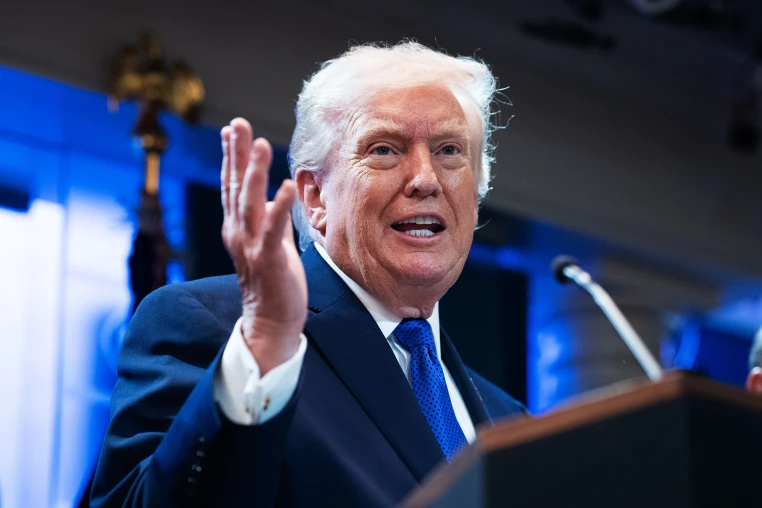
Trump responded by attacking the ruling in a press conference. Within hours, he signed an executive order at the White House and invoked Section 122 of the Trade Act of 1974, adding a 10% global tariff on top of existing duties. Later that night, he posted on Truth Social that the rate would be raised again, this time to 15%.
Section 122 allows broad tariffs, but only for 150 days
Section 122 was created in 1974 as a response to the international balance-of-payments pressures of the Nixon era. It allows a president to impose tariffs of up to 15% on all imports without prior congressional approval. The authority is narrow in one sense, though. It can only run for 150 days unless Congress agrees to extend it, and it must be applied uniformly rather than targeted at selected economies.
According to the source material, no U.S. president has actually used this provision before. At the same time, White House trade advisers are reviewing other legal tools, including Section 301, while the administration works to set out a new tariff structure that it believes can survive legal scrutiny.
Exemption list sharply narrows the real scope
The White House exemption list suggests the practical coverage of the new 15% tariff is much narrower than the headline number implies. The source says more than 90% of the exclusions were carried over from the earlier IEEPA-based reciprocal tariff framework.
Exempted goods include energy and natural resources, critical minerals, agricultural products, pharmaceuticals and active pharmaceutical ingredients, smartphones, laptops, memory chips, flat-panel displays, semiconductors and chipmaking equipment, selected autos and transport items, certain aerospace products, and precious metals such as gold and silver used for currency and bullion. Goods that qualify under USMCA, along with duty-free textiles and apparel under DR-CAFTA, are also excluded.
There is another limit. Steel and aluminum already subject to Section 232 tariffs, as well as products that may later fall under Section 232, are not stacked with the new 15% rate under Section 122.
Bitcoin briefly jumped, then settled back near $68,000
Crypto markets reacted with restraint. After the court ruling, Bitcoin briefly rose to $68,000 before slipping back toward $67,000. Over the past 24 hours, the asset continued to move in a choppy upward range.
After Trump announced the revised tariff level, the source notes that Bitcoin did not extend its decline and remained stable around $68,000. In the short term, price action suggested traders were watching the legal route behind the tariff move and the broad exemption list, which may reduce the direct economic impact of the headline measure.
The source also cited core PCE inflation at 3%, above the Federal Reserve's target. That context matches the structure of the exemptions, where energy, food, and pharmaceuticals — categories closely tied to consumer prices — were largely left outside the new tariff net.