
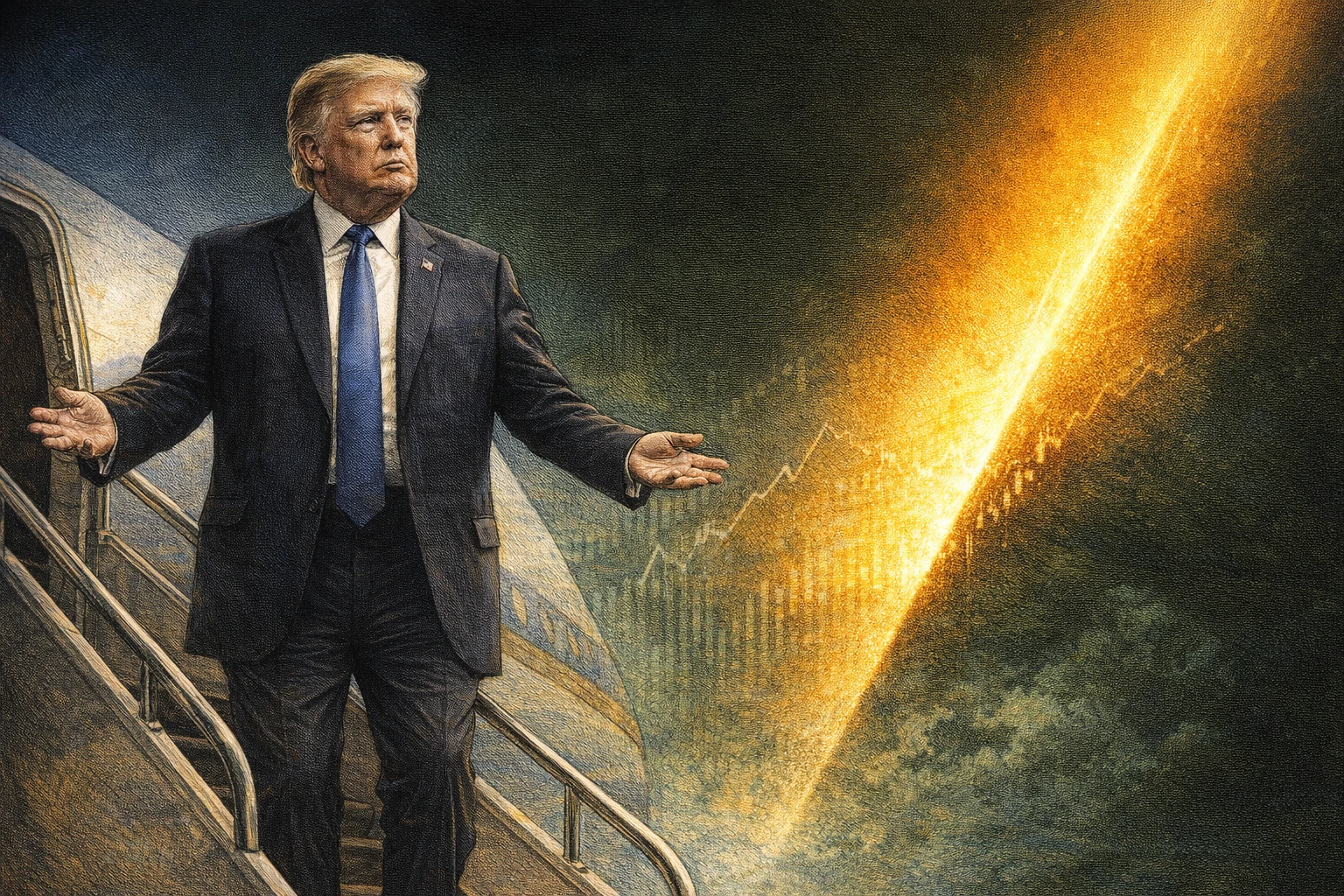
Donald Trump said aboard Air Force One that he wants interest rates to move lower, but the decision will be left to Federal Reserve Chair Kevin Warsh. Markets are looking past the political message and focusing on the data in front of the new chair: April CPI rose 3.8% year over year, the highest reading since May 2023, while May nonfarm payrolls increased by 172,000, far above the 85,000 expected by Wall Street.
Trump leaves the call to Warsh
Trump said the country is in good shape and markets should rise. He added that he would not mind if Warsh chose to cut rates at the October meeting. He also spoke about Iran, oil prices and planned talks with artificial intelligence companies, but rate policy drew the main reaction because Warsh has been in the job for only two weeks and his first FOMC meeting is scheduled for June 16-17.
Inflation and labor data point the other way
The latest economic reports leave little room for an easing move. Core CPI for April came in at 2.8%, while producer prices rose 6% from a year earlier, the largest increase since December 2022. The labor market also remained firm. The Bureau of Labor Statistics reported on June 5 that May payrolls rose by 172,000. March and April were revised up to 214,000 and 179,000, adding 93,000 jobs in total. The unemployment rate held at 4.3%, with average hourly earnings up 0.3% month over month and 3.4% year over year.
The minutes from the April FOMC meeting also showed a stronger hawkish tilt. Most officials supported removing the easing bias, and most members said a rate hike would be appropriate if inflation stayed above the 2% target. Those minutes were released before Warsh took office, but they set the tone for the policy debate he is inheriting.
Bond and rates markets are already pricing a firmer path
Market pricing is clearer than the rhetoric. On Polymarket, more than $42 million was placed on the June 16-17 FOMC meeting ending with no change in rates, implying a 98% probability. Looking to December, CME FedWatch showed a 96% chance that the federal funds rate would stand above the current 3.50% to 3.75% range.
Longer-dated expectations have moved up as well. Some 61% of traders are betting that rates at the end of 2026 will be above current levels, and the first rate cut is now seen as not arriving until September 2027. Treasury yields have already adjusted: the 30-year yield moved above 5%, the 10-year touched 4.5%, and the 2-year climbed above 4%.
Yardeni sees a possible move in July
Strategist Ed Yardeni told CNBC that he expects the FOMC to raise rates in July. His argument is that Warsh may need a hawkish move to calm the bond market. Based on the data and current pricing, the debate has shifted away from whether cuts are close and toward how long restrictive policy may stay in place.