
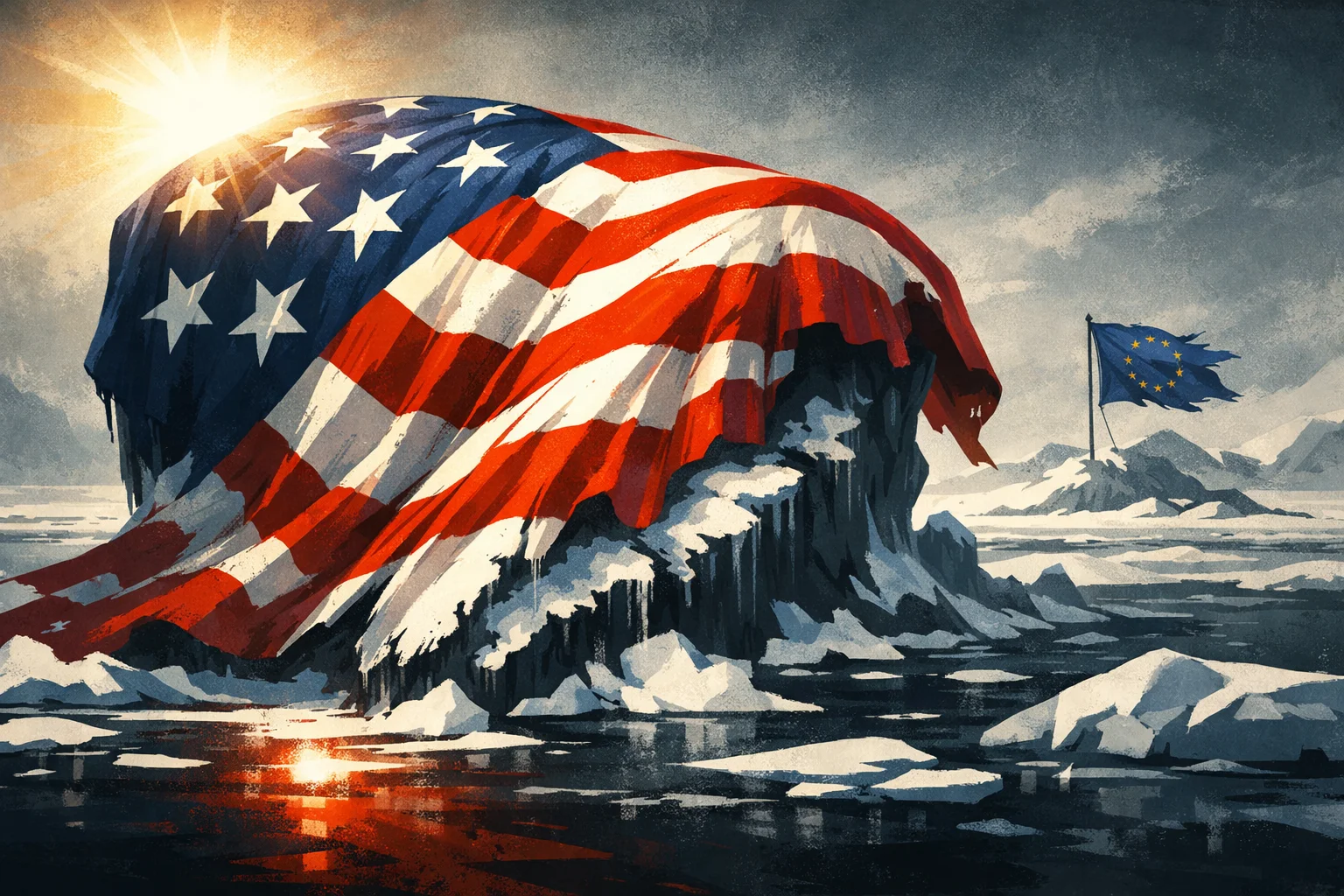
President Trump has turned tariffs into a geopolitical bargaining chip. He announced on Wednesday that a 10% tariff will be imposed from February 1 on eight NATO members—Denmark, Norway, Sweden, France, Germany, the United Kingdom, the Netherlands, and Finland—that have stationed troops in Greenland. If they do not facilitate the U.S. acquisition of the territory, the tariff will jump to 25% on June 1. The White House statement said the levy will remain in place "until the deal is done," accusing Europe of playing "dangerous games" in Greenland.
Tariffs Tied to Arctic Ambitions
The move directly targets core U.S. allies. The eight nations exported hundreds of billions of dollars worth of goods to the U.S. in 2025, with Denmark hit hardest. Trump's team explicitly linked trade measures with territorial demands, requiring Copenhagen to "fully and completely" transfer Greenland. Analysts say this breaks the post-war norm of not using tariffs against allies.
EU Strikes Back
Hours after the tariff threat, the EU presidency—held by Cyprus—called an emergency meeting of all 27 ambassadors. The UK, France, and Denmark issued joint statements calling the punitive tariffs "completely unacceptable" against a NATO ally. European Commission President Ursula von der Leyen warned that a retaliation cycle could severely damage transatlantic supply chains and "ultimately benefit China and Russia." Analysts noted that if February talks fail, nearly $700 billion worth of annual trade flows between the U.S. and Europe could be disrupted, pushing the alliance to a historic low.
Cash Buyout Plan Falls Flat
Earlier this month, reports emerged that the White House was considering direct payments of $10,000 to $100,000 to each of Greenland's 57,000 residents in exchange for the island leaving Denmark and joining the U.S. Greenland's Prime Minister Jens-Frederik Nielsen quickly responded: "We are tired of this absurd annexation fantasy. Greenland is not for sale, and cannot be bought with cash." Copenhagen and its European allies issued a joint statement reaffirming that national borders are not for sale. A Danish foreign ministry official said any attempt to use money to buy sovereignty would undermine the international order. White House officials privately argued that Greenlandic families heavily rely on Danish subsidies, and a one-time cash injection could smooth the fiscal gap after separation. For Trump's team, Greenland—rich in rare earth minerals and controlling Arctic shipping routes—remains a low-cost, high-expected-value strategic acquisition.