
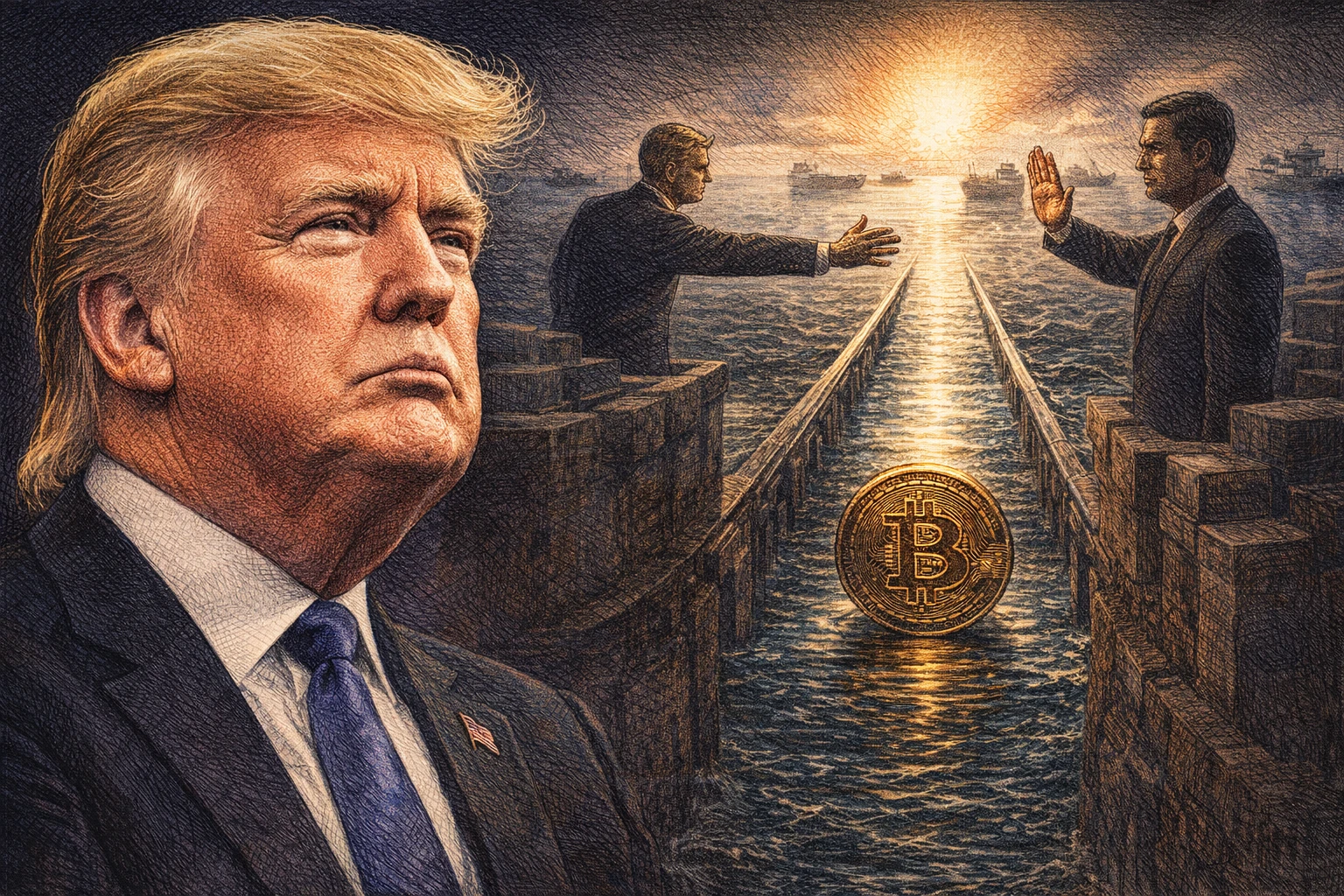
Just as US-Iran nuclear talks get underway, President Trump fired a fresh salvo on Truth Social. On June 20, he declared: “During the 60-day ceasefire with Iran, no tolls will be collected on the Hormuz Strait. When the 60 days expire and no agreement is reached, those fees will be collected by the United States.” He framed the levy as a “guardian angel service fee to compensate for past, present and future costs.”
The MOU’s Gray Zone
The US and Iran earlier this week signed a memorandum of understanding (MOU) establishing a 60-day ceasefire framework. The core terms include free passage through the Hormuz Strait during that period and the US lifting its naval blockade on Iranian ports. But the document conspicuously sidesteps a pivotal question: Will Iran retain de facto control over the strait after the ceasefire? This leaves the door open for Tehran to claim legal authority to charge vessels once the truce ends.
Iran’s lead negotiator, Ghalibaf, has already stated publicly that “the Hormuz Strait will not return to its pre-war status” and that Tehran intends to collect service fees from transiting ships. Trump’s Truth Social post is a direct counter to that stance.
Geopolitical Risks and Crypto Markets
The Hormuz Strait is a chokepoint for global oil shipments, and past escalations have sent crude prices soaring. While today’s news hasn’t yet moved crypto prices, history shows that when the US seized an Iranian vessel and Trump threatened to bomb Iranian power plants, oil jumped 8% in a single day and Bitcoin slumped below $62,000. Any shift in the strait’s status is watched closely by digital asset traders.
The MOU’s deliberate ambiguity leaves the next 60 days wide open. Trump’s “guardian angel” threat adds a new layer of uncertainty to negotiations, and crypto investors would be wise to keep an eye on this flashpoint.