
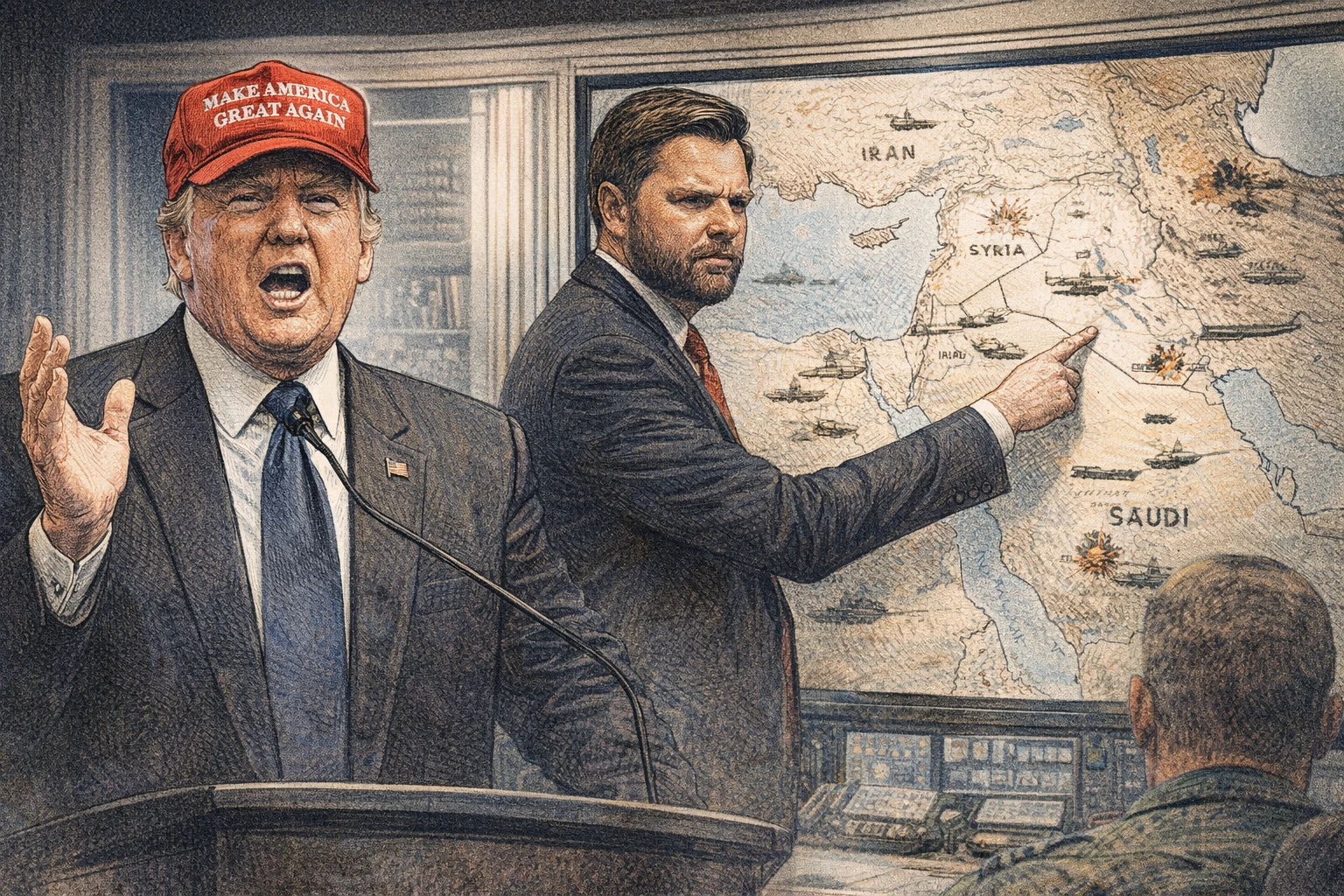
Donald Trump issued a fresh threat over Iran from the White House Situation Room, saying on June 11 that if Tehran refuses to sign a ceasefire agreement, the US will strike the following night. He described the ceasefire as “the most violated agreement in the history of the world,” according to the source material.
Vice President J.D. Vance outlined a more layered negotiating approach at the same time. He said Washington is dealing simultaneously with moderate and hardline factions inside Iran during the talks. The remarks suggest the US is combining military pressure with parallel diplomatic outreach rather than treating Iran as a single unified decision-making bloc.
Conflicting Claims Over Direct Contact
Trump also said he had spoken directly with Iranian officials. Iran denied that any such communication took place. That gap in public messaging leaves the status of the talks unclear, especially on whether the two sides have established a mutually recognized channel for direct engagement.
The source also cites a live CBS News report saying Trump was issuing instructions to multiple aides from the Situation Room, a sign that the final draft of any agreement was still being revised. Items still under discussion reportedly include enriched uranium and navigation through the strait.
Strait Closure and Retaliatory Strikes Raise the Stakes
Reuters was cited as reporting that Iran announced the closure of the Strait of Hormuz on Wednesday and halted all vessel traffic. The US then launched a new round of bombing, targeting Qeshm Island, Bandar Abbas, and the port of Sirik in southern Iran. Iran’s Revolutionary Guard responded with drone attacks aimed at US military bases in Bahrain and Kuwait, along with two ships in the Strait of Hormuz.
Markets remain highly reactive to every signal tied to a possible deal. CNBC data cited in the material says Trump has claimed at least 30 times in the past three months that an agreement was close. Even without a finalized deal, stocks and oil have moved on each of those statements. One Point BFG chief investment officer Boockvar said markets keep hoping the conflict will end at any moment.
IAEA Resolution Puts Uranium Stockpiles Back in Focus
Military developments are running in parallel with nuclear concerns. On June 10 Eastern Time, the IAEA board passed a resolution requiring Iran to report its enriched uranium stockpile. The material says a joint position by the US, UK, France, and Japan, cited through a UK government statement, argued that Iran’s uranium inventory had risen to a level equivalent to nuclear-weapons grade, an issue expected to shape the final terms of any peace agreement.
Oil prices have already reflected the risk tied to the strait. The source says the closure pushed Brent crude above $89 per barrel, up about 15% from the ceasefire period in early April. It also notes that South Korea and Japan began increasing crude imports from outside the Middle East in early June, while CPC in Taiwan adjusted its stockpile strategy and redirected part of its sourcing to North America and the North Sea.