
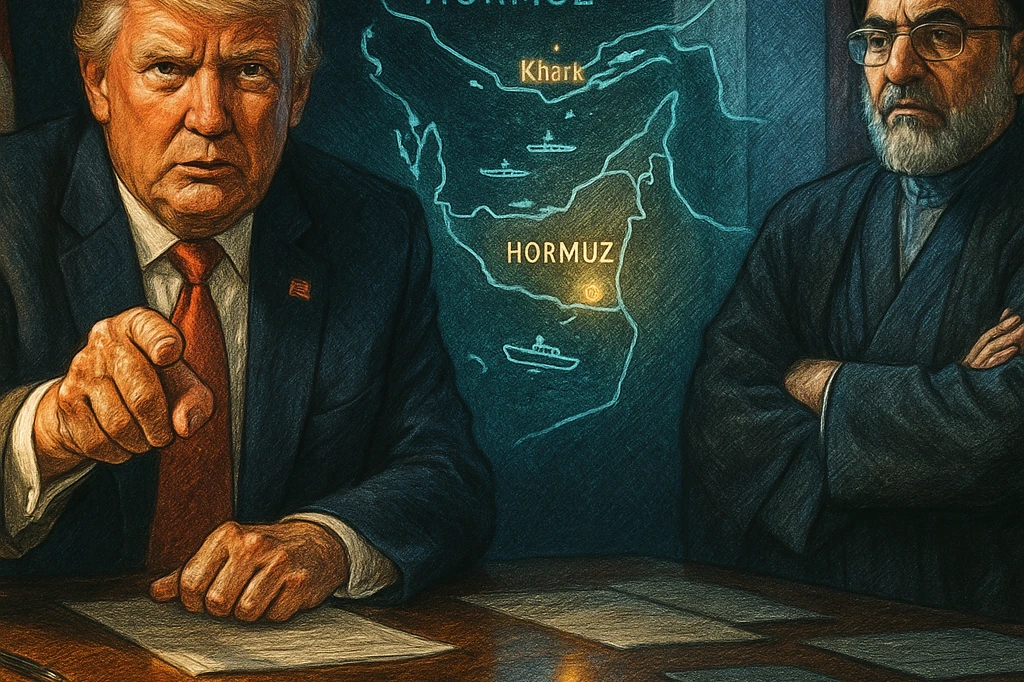
Donald Trump said on March 23 that the United States would delay strikes on Iranian energy facilities by five days, saying talks with Iran had been “very good and effective” and that several key issues had reached “major consensus.” He also floated the idea that the Strait of Hormuz could be “jointly controlled” by Washington and Tehran and said the waterway would reopen soon.
Trump tied that message to hard conditions. He said Iran must fully abandon its nuclear weapons program and its existing stockpile of enriched uranium. At the same time, he warned that if talks collapsed, the US would continue large-scale bombing and said regime change in Iran was inevitable. Diplomatic language and direct military pressure appeared side by side.
Islamabad meeting reports clash with Tehran's public denial
According to the report, Egypt, Turkey and Pakistan have been working to arrange direct US-Iran talks in Islamabad this week. Possible US participants include Middle East envoy Steve Witkoff, Jared Kushner and Vice President JD Vance.
Iranian parliament speaker Mohammad Bagher Ghalibaf had been seen by outside observers as a possible representative for those talks, but he publicly rejected that idea on X, saying he had no plan to take part in any negotiation. He then went further, stating that Iran had held no talks with the United States at all and calling the reports fake news used to manipulate financial and oil markets. Iranian officials also denied any direct or indirect communication with the Trump administration.
Oil market reacts as Washington and Tehran tell different stories
The split in messaging is stark. Washington says talks are moving well; Tehran says there are no talks to discuss. That gap has left the reported “major consensus” impossible to verify from public statements alone.
The market response was immediate. The report says that on the same day Trump announced the delay, Brent crude fell from an earlier high of $119 to $81. The move showed how quickly traders were responding to signals tied to diplomacy and military risk around Iran and the Strait of Hormuz.
Pentagon also studies a Kharg Island military option
While the diplomatic message was being pushed publicly, Axios reported that the Trump administration was also evaluating military contingencies involving Kharg Island. The options under review include a ground assault to seize the island or a naval blockade. Kharg Island lies about 15 miles off the Iranian coast and handles as much as 90% of Iran’s crude exports, making it a central point in the country’s oil revenue system.
The report adds that three US Marine expeditionary units are moving toward the Middle East, with more than 2,500 troops expected to arrive within days. Retired Major General Mark Montgomery suggested an alternative approach: spend about two weeks degrading Iranian military capability, then use destroyers and fighter aircraft to escort commercial tankers through the Strait of Hormuz instead of attempting a landing. A White House official said that if Trump chose an amphibious assault, it would be carried out, but no final decision had been made. Pentagon assessments said any ground operation would require about one month of sustained airstrikes first.
That leaves the five-day pause looking like two countdowns running at once. One points to a deal Trump says could come quickly. The other points to military planning that is already being discussed in detail. With Iran openly denying the existence of talks, the meaning of this window remains unresolved.