
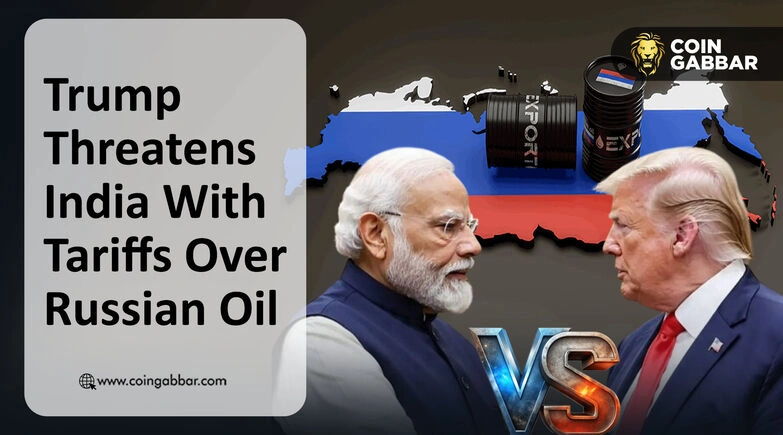
US President Donald Trump said Washington is prepared to intensify trade pressure on India, with the dispute centered on India’s continued purchases of Russian crude oil. Speaking to reporters, Trump described Prime Minister Narendra Modi as “a good man,” but made clear that India’s oil trade remains a major source of tension between the two sides.
Russian crude remains at the center of the dispute
The issue is straightforward: India is still buying Russian oil and remains one of its biggest buyers. The US argues that such trade indirectly helps fund the conflict in Ukraine. According to the source material, Trump had already doubled import tariffs to 50% in August 2025, and he is now signaling that more punitive steps could follow. He told reporters, “They wanted to make me happy... He knew I was not happy,” suggesting that personal ties between the two leaders are not enough to remove the threat of fresh penalties.
Trade talks between Washington and New Delhi are described as fragile. The report, citing the Economic Times, says India has cut its intake of Russian oil to a three-year low of 1.2 million barrels per day, while the US is pressing for a full break. Once tensions reach this stage, the effect rarely stays limited to energy and tariffs alone.
Crypto market holds steady as traders watch for spillover
For now, the digital asset market is stable. Total crypto market capitalization stands at $3.15 trillion, up 1.02% over the past 24 hours, while Bitcoin trades at $92,520, a 1.34% daily gain. That price action shows no immediate shock response, yet geopolitical stress and trade barriers are still being tracked by market participants looking at fiat volatility and cross-border settlement risk.
The source also points to $93,500 as the near-term level in focus for BTC. At this point, large institutional players do not appear to be moving in panic. They are watching whether India’s stance on energy sovereignty leads to broader changes in settlement behavior, especially in relation to BRICS trade flows.
India keeps its energy sovereignty stance
New Delhi has not shifted its position. India continues to place domestic energy security and consumer demand ahead of outside pressure, framing its trade decisions as a matter of supply availability and economic necessity. Even with Washington openly expressing dissatisfaction, that position remains intact.
If Trump moves quickly on new tariff hikes, exporters in South Asia could face a sharp jump in costs when selling into the US market. The report says that if the US eventually imposes 50% or even 100% tariffs, pressure on the Indian rupee could intensify and drive a localized move toward Bitcoin. For now, that remains a scenario the market is monitoring rather than one already reflected in a major price break.