
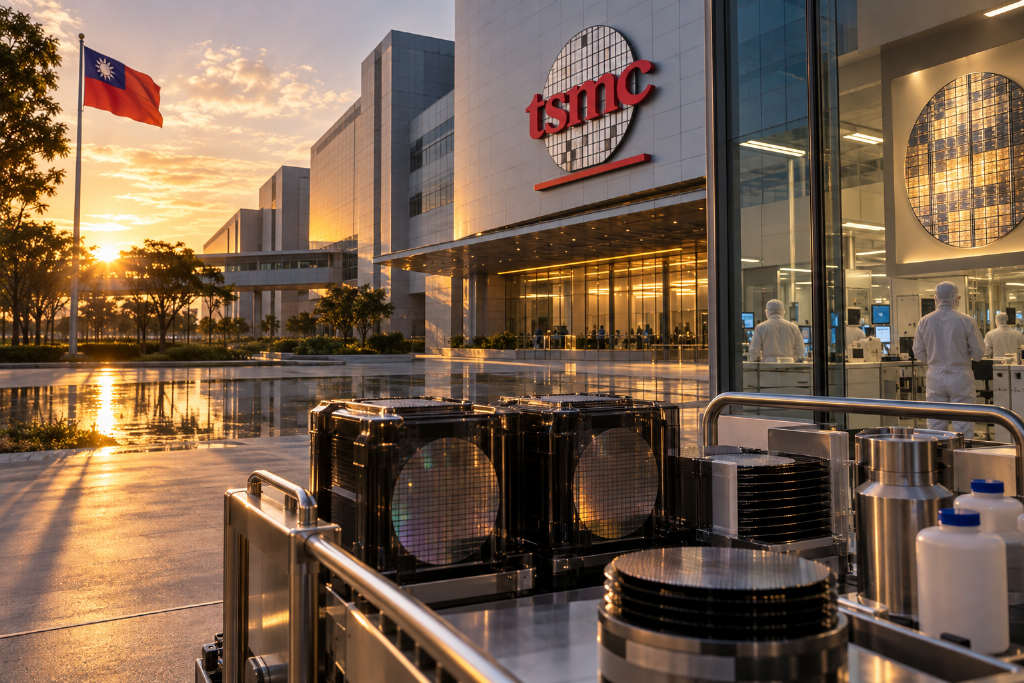
TSMC has started mass production of its 2-nanometer N2 process, according to a ChainCatcher report. The move marks the transition in advanced semiconductor manufacturing from FinFET to the gate-all-around, or GAA, era.
The report cited institutional investors as saying that rising process complexity, a higher number of chemical mechanical planarization, or CMP, steps, more frequent wafer monitoring, and tighter material specifications are all pushing up demand for equipment, CMP consumables, reclaimed wafers, and advanced materials. It named C Sun, Phoenix Silicon International, Advanced Echem Materials, and Topco Scientific as suppliers positioned to benefit.
N2 process metrics
TSMC’s N2 uses nanosheet GAA technology. Compared with N3E, the process can improve performance by 10% to 15% at the same power level. At the same speed, it can reduce power consumption by 25% to 30%. Chip density is also more than 15% higher.
Supplier figures in focus
For C Sun, advanced processes account for 63% of its diamond disc business with its largest customer. Within that share, N3 and N2 each account for 22%, while 1.4nm products have already begun small-volume shipments. As production moves from N3 to N2, the value of CMP-related content rises by 10% to 15%.
Phoenix Silicon International has adjusted its monthly reclaimed wafer capacity target for the end of 2026 to 1.1 million to 1.2 million wafers. Its 2026 capital expenditure budget is set at NT$4.82 billion. The company estimates the compound annual growth rate of reclaimed wafer capacity expansion at 25% to 30% from 2025 to 2029.
Advanced Echem Materials is expected to see shipments of its three core products — Rinse, BARC, and EBR — rise quarter by quarter as N2 capacity ramps up.
At Topco Scientific, semiconductor revenue accounted for 66% of first-half revenue, up about 25% year over year. Revenue tied to TSMC grew about 170% from a year earlier.