
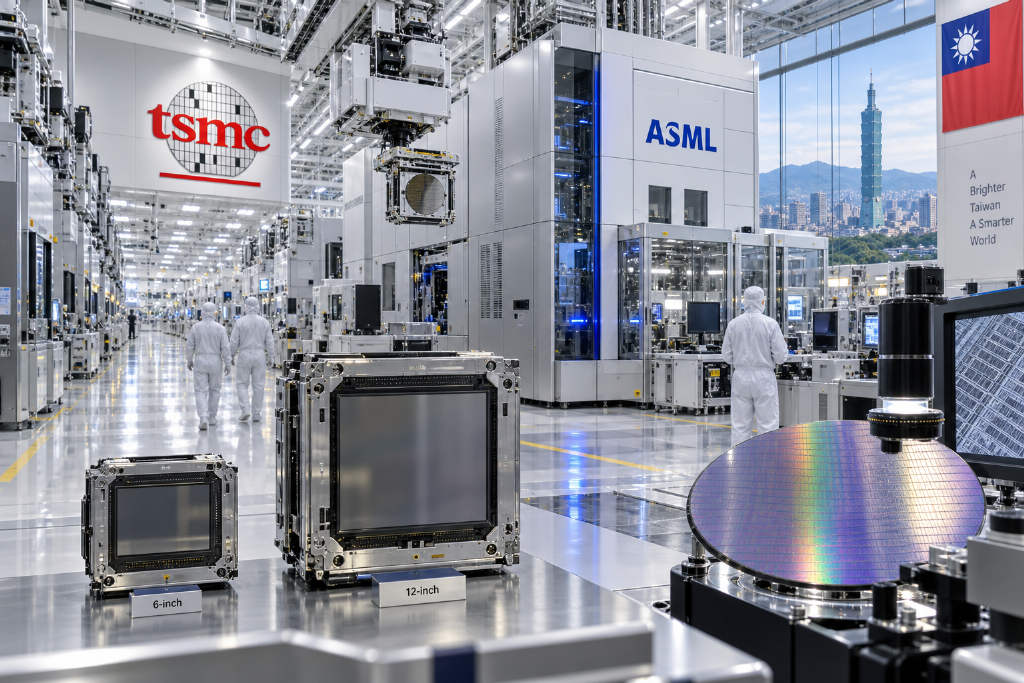
Taiwan Semiconductor Manufacturing Co. (TSMC) and lithography equipment supplier ASML have formally announced a deeper strategic partnership, confirming that TSMC plans to bring high numerical aperture extreme ultraviolet lithography, or High-NA EUV, into advanced process mass production starting in 2030.
The two companies also plan to push a major format change in mask specifications, moving from the current 6-inch standard to 12-inch masks. According to the report, they aim to build a 12-inch mask pilot line by 2031 and reach full system readiness for mass production in 2033.
High-NA EUV rollout tied to larger mask format
ABMedia said one long-running market concern around High-NA EUV has been tool pricing, with a single machine costing about 350 million to 400 million euros. That has raised questions about depreciation pressure for foundries.
The report said the more critical issue is technical. As numerical aperture rises, the reticle field is cut in half. Under that constraint, large compute chips designed by customers including NVIDIA and Advanced Micro Devices have to rely on stitching with two 6-inch masks, hurting productivity and suppressing yield.
Analysts say the roadmap addresses the reticle field limit
ABMedia cited market analyst Huang Shih-tsung as saying TSMC has now set a clear timetable and decided to confront the halved-field issue head-on. Instead of using a compromise workaround, Huang said, TSMC is working with ASML to define a 12-inch large-format mask standard, creating what he described as a hard-to-shake technology moat for the coming decade.
Analyst Feng Kai-ping said Intel may have received the first batch of High-NA tools earlier, but without support for larger masks it still faces high exposure costs and stitching bottlenecks. In Feng’s view, as cited by the report, TSMC’s decision to enter when scale economics and architecture are more mature could help it secure stronger pricing power in foundry manufacturing and advanced packaging.
The same report said Samsung and Intel may also need to follow the standards and validation system pushed by TSMC if they want to secure process yield and compatibility.
Gudeng Precision and Marketech named as direct beneficiaries
The report said expanding mask size from 6 inches to 12 inches would affect the entire ecosystem, including mask substrates, exposure, transport pods, cleaning, automated handling and wafer testing. Much of the installed equipment base would not be reusable as is.
Feng specifically named two Taiwanese companies. One is Gudeng Precision, listed in the report as 3680. ABMedia said Gudeng holds more than 80% of the global EUV mask pod market. If the format shifts to 6 by 12 inches, existing pods would no longer be compatible, requiring new molds and fresh certification for the micro-environment system. The report said that could lift both average selling prices and gross margins.
The other is Marketech International, listed as 6196. The report described Marketech as a long-term core partner for ASML in optical subsystem modules and equipment manufacturing. If ASML adjusts the internal chamber and transport structure of lithography tools to support 12-inch masks, Marketech could take related modification and module manufacturing orders. Fab cleanroom automated material handling system, or AMHS, upgrades could also add engineering demand.
Timeline points to 2031 pilot line and 2033 mass production
ABMedia added that while the 12-inch mask theme has already improved market views on equipment and inspection names, the pilot line is expected in 2031 and mass production in 2033. The report said investors should focus on companies that can secure early project-development and validation orders.