
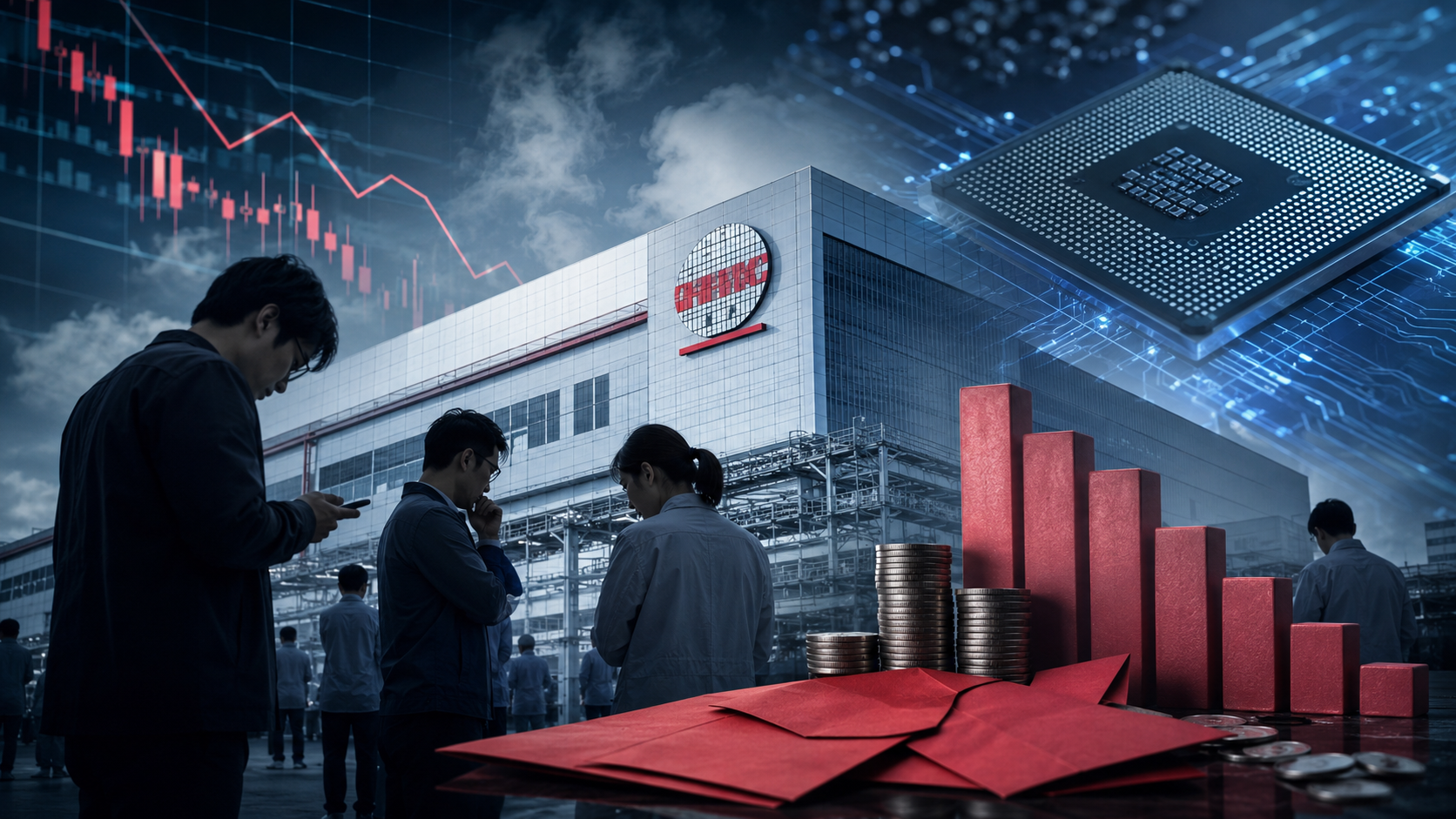
A rumor that TSMC may permanently decouple employee bonuses from EPS has triggered intense discussion inside employee circles, with the hashtag campaign calling for workers to stop answering work calls after hours gaining traction in the Facebook group “TSMC Big and Small Matters.” The dispute quickly moved beyond pay and into questions of workload, loyalty, and how much workers should be expected to give back once they leave the office.
An anonymous post that gathered more than 900 likes traced what the author described as a long decline in TSMC’s bonus structure. According to the post, employee bonuses as a share of salary were once set at 15%, later reduced to 13%, and then to 11%. The latest rumor points to a more fundamental shift: bonuses would no longer be tied to EPS, meaning stronger company earnings would no longer automatically lift employee payouts.
Post links compensation concerns to competitive pressure
The same post also referenced a list of pressures facing the company, including the “Luo Ba” leak incident, the departure of a procurement vice president, policy pressure from the United States, and Nvidia being forced by geopolitical factors to give up the China market. It also mentioned Intel’s renewed push for Apple orders and Samsung’s close pursuit. The writer argued that the semiconductor lead is no longer comfortably wide, but only “one step” ahead.
That message struck a nerve. Much of the reaction focused less on the specific percentages and more on the gap between what employees contribute and what they receive in return. For some commenters, if company growth no longer translates into larger bonuses, then staying constantly reachable after work no longer makes sense.
“No on-call after work” campaign gains attention
One slogan spreading through the discussion said that without a union, workers may not be able to strike, but they can start by turning off their phones after work. The logic was simple: if future business growth does not raise bonuses, then personal time after work should stay with family. Another commenter used sarcasm to make the same point, saying that if an earthquake hits during a holiday, people should finish the holiday first and deal with it on a workday.
The debate also widened into cross-border comparisons. Taiwan-born engineer Cheng Xiaobai, who works in the United States, wrote that in the U.S. it is common to hear that Taiwanese people work overtime without pay while Americans are paid for overtime. Another commenter compared the situation to gradual erosion of benefits and said workers would need to fight for their interests, as seen in South Korea, or risk losing more over time.
No official response from TSMC so far
Not every voice in the thread was sympathetic. Some argued that even if bonuses are reduced, many people would still compete for a job at TSMC because the company offers more than salary alone. In that view, it also represents an industrial platform built from Taiwan’s broader resources, and complaints from inside can be hard for outsiders to accept.
TSMC has not issued an official response to the rumor. Even so, the discussion has already expanded well beyond compensation. Bonus policy, after-hours expectations, employee cohesion, and rising external competition are now being argued together in the same conversation.