
MarsBit published a report by Kuri of DeepFlow Tech on Nov. 12 describing an alleged data sale involving Taiwan Semiconductor Manufacturing Co. (TSMC). Hackers posted on underground forums including DarkForums and BreachForums, claiming to hold internal TSMC data totaling 6.9GB. The files allegedly contain about 46,000 employee records.
The sellers set the price at three bitcoin, which the report converted to about NT$7.4 million, or roughly $220,000. They also set a one-week deadline, threatening to release the full data set for free if no buyer takes the offer.
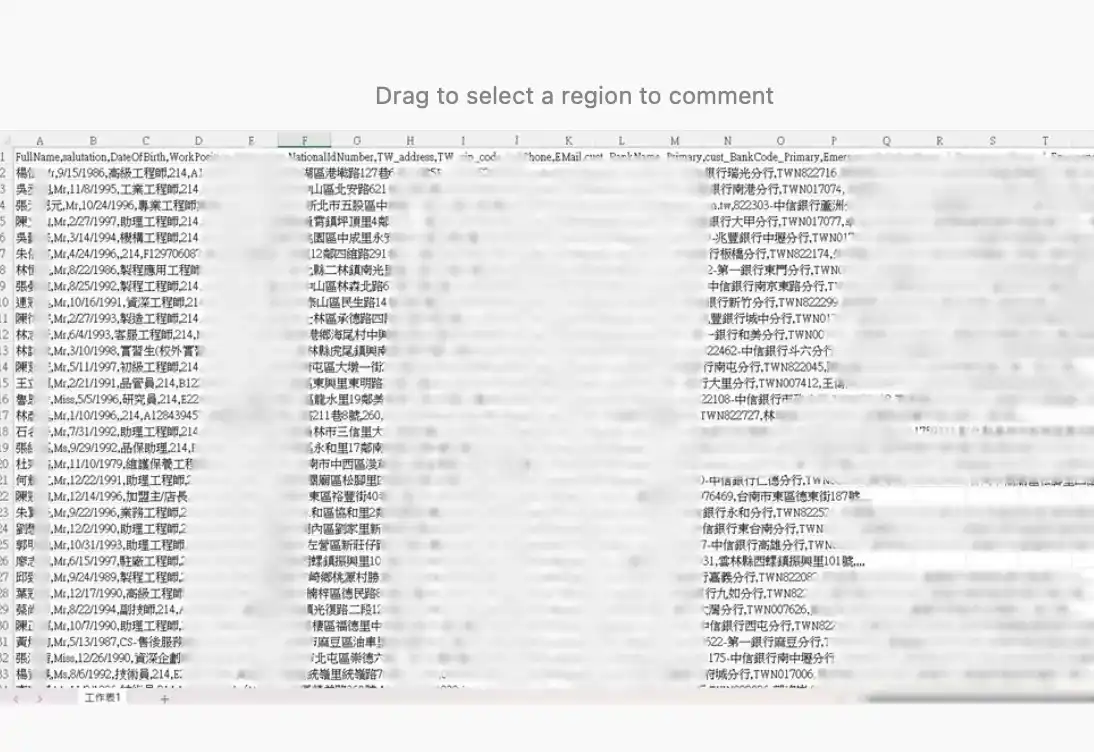
The sample file contains 499 records
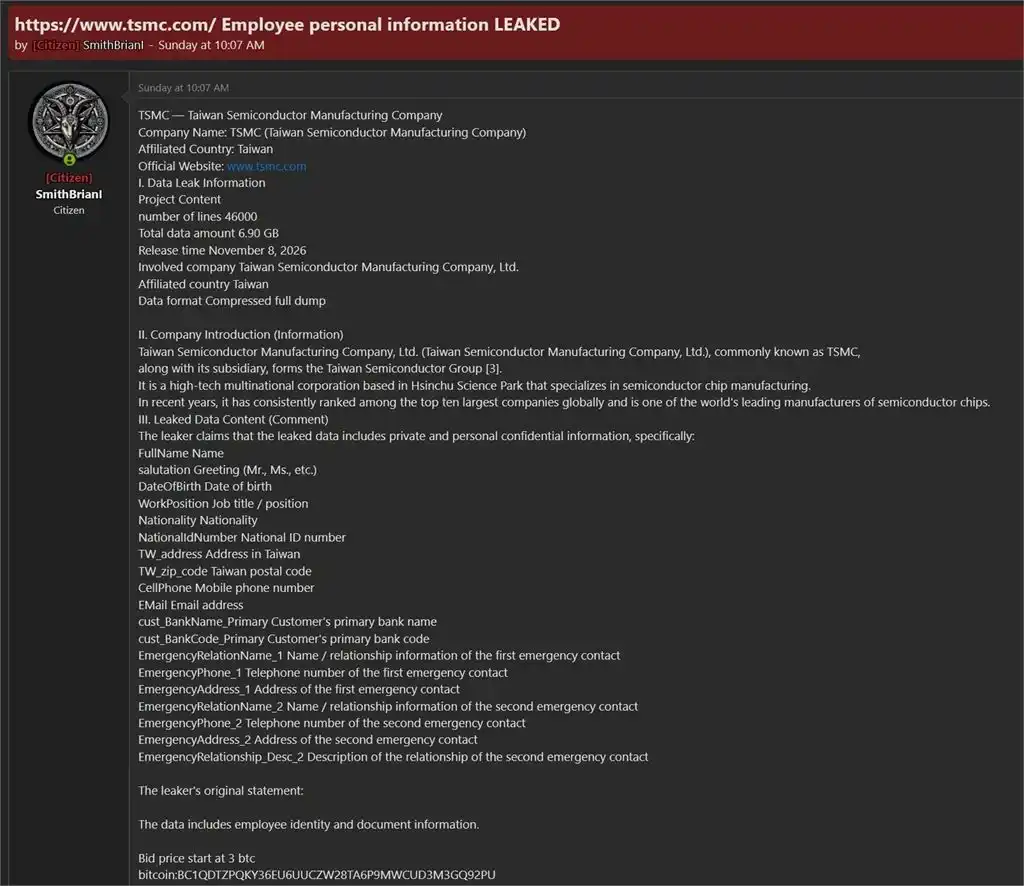
To support the claim that the data is genuine, the hackers posted a sample file called “tsmc.txt.” The Liberty Times Net, cited in the report, said the sample contains 499 personnel records. Each record includes 19 fields.
The listed information includes employee names, dates of birth, job titles, nationalities, identification numbers, home addresses, private mobile numbers, email addresses and bank account details. The sample also contains the names, phone numbers and addresses of emergency contacts.
An expert from the Taiwan Information Security Association (TWISA), speaking to Business Weekly, said leaked organizational and personal information could be used for targeted phishing and social-engineering fraud. Criminals could impersonate human-resources staff or managers when contacting employees’ family members. The report also linked the exposure of information about advanced-process semiconductor personnel to possible intelligence gathering and recruitment efforts.
TSMC says its internal systems were not breached
TSMC issued a statement on the afternoon of Nov. 12 after discovering that information belonging to some current and former employees had been placed on an external website without authorization. The company said it immediately activated its incident-response process.
TSMC said there was no evidence, as of the statement, that its internal IT systems or wafer-manufacturing equipment had been breached. A preliminary comparison indicated that the exposed material matched data held in the systems of a cooperating cloud-service provider.
The company said the data did not involve chip-production operations or customer-related information. TSMC has been providing assistance to affected employees and is investigating with the cloud provider, judicial authorities and third-party cybersecurity specialists.
Business Weekly said TSMC maintains strict physical network separation between its operational technology systems at manufacturing sites and its enterprise IT network. In the third quarter of 2026, TSMC reported quarterly net profit of NT$763.064 billion, while advanced processes accounted for 79% of revenue. The report said the company’s core manufacturing operations did not suffer direct damage in the incident.
The attack path again leads to an outside partner
This is not the first extortion case in which TSMC was linked to an incident involving an outside partner. Public records show that the ransomware group LockBit listed TSMC as a victim on its dark-web site in June 2023 and demanded $70 million.
A subsequent investigation found that the actual target was Kinmax Technology, a TSMC hardware-equipment supplier. The leaked material consisted of initial configuration files from a shipment-testing environment, while TSMC’s own network was not compromised.
The current case shifts the alleged target from a hardware subcontractor to a cloud application provider. The report said large multinational companies generally spend heavily on security around their own network boundaries, making attacks on core facilities difficult. Hackers have consequently turned to outsourced human-resources systems, third-party collaboration tools, and API or configuration weaknesses in external cloud platforms.
For current and former TSMC employees, the exposed information creates a risk of impersonation-based phishing and targeted fraud. For the semiconductor industry, the offer of the data for three bitcoin puts the security of third-party service providers back in focus.



