Korean report ties TSMC’s rise to broader social change in Taiwan
Korea Economic Daily said after in-depth reporting in Taiwan that Taiwan Semiconductor Manufacturing Co. (TSMC, 2330) is influencing far more than the chip industry. Its report focused on highly paid engineers, fast-rising property prices near science parks, and students at top universities shifting from medicine to electrical engineering.
The paper framed Taiwan and South Korea as mirrors of each other in how wages, consumption and class structure are changing.
TSMC accounts for about 47% of Taiwan’s stock market value
The report put TSMC’s market capitalization at NT$63.53 trillion, equal to about 47% of the total value of Taiwan’s stock market.
Korea Economic Daily cited Chao Hsiang-ko, a professor in the Department of Economics at National Tsing Hua University, as saying Taiwan’s semiconductor success cannot be credited to TSMC alone. He described it as the product of an integrated ecosystem that includes the government, universities, science parks, equipment and materials suppliers, and customers. The report said that close supply-chain structure has helped speed up development, improve yields and strengthen customer response.
Engineer pay outpaces doctors, with stock plans adding to wealth gains
The report said TSMC employees earned NT$4.072 million on average last year, 5.4 times the NT$760,000 average for all salaried workers in Taiwan. Entry-level semiconductor engineers were said to start at NT$1 million to NT$2 million, above the NT$500,000 to NT$700,000 national average for university graduates. Stock bonuses and performance pay widen the gap further, according to the story.
One engineer, identified as 34-year-old Liu Chun-hung, a pseudonym, said he had worked at TSMC for four years and earned about NT$3.8 million last year including performance bonuses. He also said he has been accumulating TSMC shares through the employee stock purchase plan at a 15% discount. “The faster the company grows, the more my assets increase with it,” he said, adding that he expects to buy property within three years.
Interviewees cited in the report said low medical fees in Taiwan and higher comprehensive income tax rates have effectively capped disposable income for full-time doctors. Korea Economic Daily wrote that senior semiconductor engineers now commonly earn more than doctors on average.
The report also pointed to widening inequality. It cited the World Inequality Report 2026, released in December last year by the Paris School of Economics, which said the top 10% of Taiwan’s population takes 48.1% of total income, while the bottom 50% accounts for 11.8%. That is about four times as much, compared with a two-times gap in South Korea, according to the report.
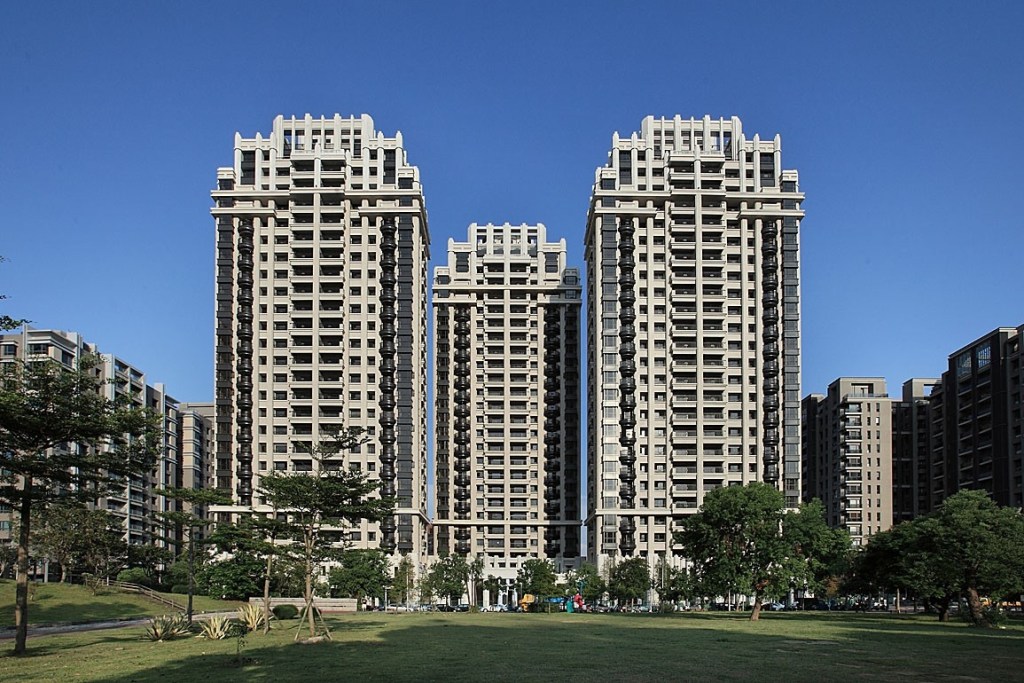
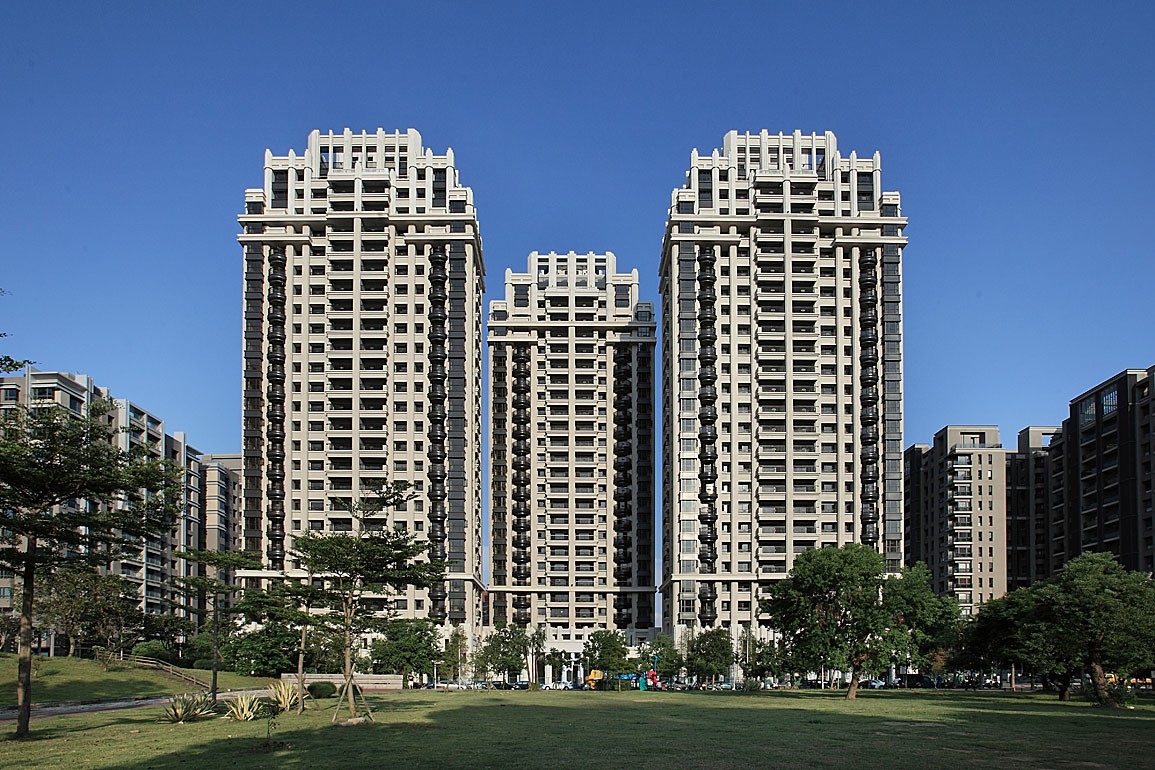
Housing near Hsinchu Science Park rose 88.1% in five years
Korea Economic Daily said housing prices around Hsinchu Science Park, where TSMC is headquartered, climbed 88.1% over the past five years. That is more than three times Taipei’s 26.1% increase over the same period and more than double the national average rise.

Recent transactions reached NT$450,000 per ping, compared with a national average of NT$250,000 per ping. At the luxury project “Fongyi 1 Ji,” the average transaction price over one year reached NT$652,400 per ping.
The report compared the roughly 35-kilometer distance from Gangnam to Dongtan in South Korea with the roughly 84-kilometer distance between Hsinchu and central Taipei, using that contrast to highlight the scale of semiconductor-driven real estate appreciation in Taiwan.
“Science-and-engineering men” and “Hsinchu tech moms” emerge
The report said TSMC’s pay structure and the wealth effect tied to asset appreciation have given rise to two visible social groups. One is the semiconductor engineer, presented as the archetypal “science-and-engineering man,” whose appeal in the marriage market has risen sharply. One interviewee said he sometimes avoids mentioning that he works at TSMC during matchmaking meetings so the other side will not “look only at the company name.”
The other group is described as “Hsinchu tech moms,” referring to spouses in households supported by stable, high income from the tech sector. The report said they often drive premium consumption and make decisions on children’s tutoring and overseas study, and are widely seen as one of the fastest groups in Taiwan in passing wealth to the next generation.
Chang Chih-hao, a pseudonym for a 28-year-old who had just completed a master’s degree in engineering, was quoted as saying: “Most of my classmates’ parents worked in Hsinchu Science Park. In our class, 15 became engineers and 13 got into medicine. Of the six classes in high school, five were science-track classes. In Hsinchu, choosing the science track is normal.”
Medicine loses ground as top students turn to engineering
The report said the shift is now visible in education. Taipei cram school Rulin Review Center told the Korean outlet that in recent years, a noticeably larger share of top students have asked about electrical engineering, electronics and semiconductor-related majors. Its recruitment ads have also moved away from highlighting medical school admission rates and toward science and engineering programs.
Korea Economic Daily wrote that engineers who join TSMC or MediaTek after earning a master’s degree can reach a high-income, middle-class path around age 30. Doctors, by contrast, face longer residency training, medical litigation risk, lower National Health Insurance fee rates and higher comprehensive income tax rates, leaving after-tax income below what many expect.
One Taiwanese parent with a child in the fourth grade of elementary school said, “Performance bonuses for senior engineers are getting higher and higher. It is normal for annual pay to exceed that of doctors.” The report said that view has helped give science and engineering a clear edge in perceived return on educational investment, while engineers increasingly steer their children toward the same track and, eventually, the semiconductor industry.