Taiwan Semiconductor Manufacturing Co. (TSMC) will hold its second-quarter 2026 earnings call on July 16 at 14:00 Taiwan time, following a quiet period from July 6 to 15. As the world's largest pure-play foundry, TSMC serves not only mobile chip clients like Apple and Qualcomm but is also a critical supplier for AI accelerators, cloud custom chips, and high-performance computing (HPC). It indirectly provides advanced nodes for cryptocurrency mining ASICs (e.g., Bitcoin miners). This earnings release will test three key questions: whether AI orders remain robust, whether the 2nm (N2) process ramp is on track, and whether the ~66% gross margin can be sustained.
Strong Q1 Results, High Q2 Guidance
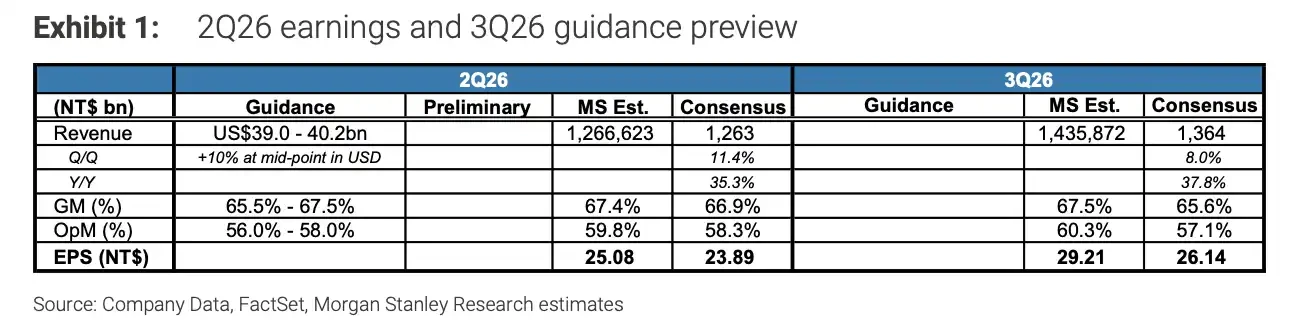
TSMC's Q1 performance was impressive: revenue of $35.9 billion, gross margin of 66.2%, operating margin of 58.1%; in NT dollar terms, revenue reached NT$1.1341 trillion, net profit NT$572.48 billion, EPS NT$22.08, with revenue growing 35.1% YoY and net profit surging 58.3% YoY. Q2 guidance calls for revenue of $39.0-40.2 billion and gross margin of 65.5%-67.5%. Morgan Stanley forecasts actual gross margin of 67.4%, near the high end. Monthly revenue data already signals strong demand: May revenue was NT$416.975 billion (+30.1% YoY), and cumulative January-May revenue reached NT$1.9618 trillion (+30.0% YoY).
AI/HPC Demand Drives Revenue Mix, CapEx Is a Double-Edged Sword
TSMC's current growth engine is AI and HPC. Management described AI demand as "extremely robust" during the Q1 call and raised the full-year USD revenue growth expectation to over 30%. Revenue mix: HPC contributed 61% of Q1 revenue, and advanced nodes (7nm and below) accounted for 74% of wafer revenue. AI chips (GPUs for training, inference accelerators) are larger and more complex, boosting order value and keeping high-end capacity tight. However, capital expenditure is guided at $52-56 billion, near the upper end. While this helps secure future orders, it also brings equipment depreciation and costs from overseas fabs in the US, Japan, and Germany. If demand slows, high CapEx could quickly pressure gross margins.

2nm Ramp and Gross Margin Outlook Are Key Variables
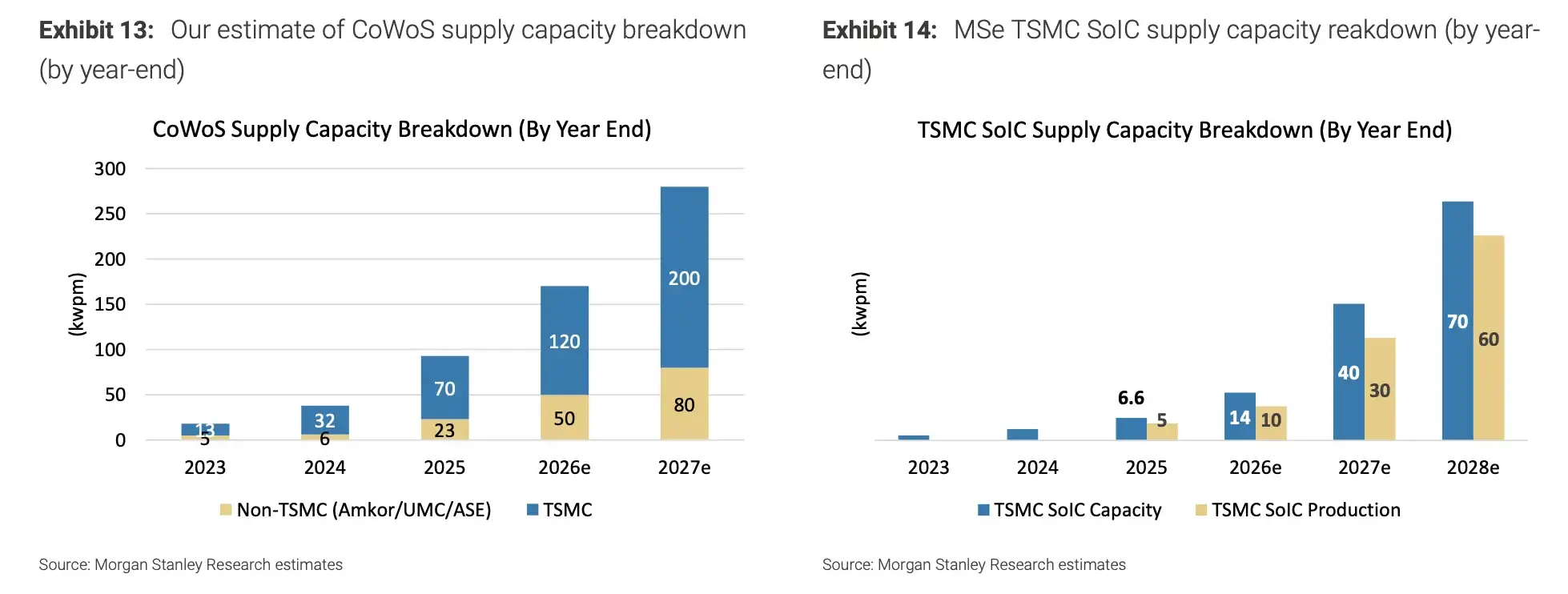
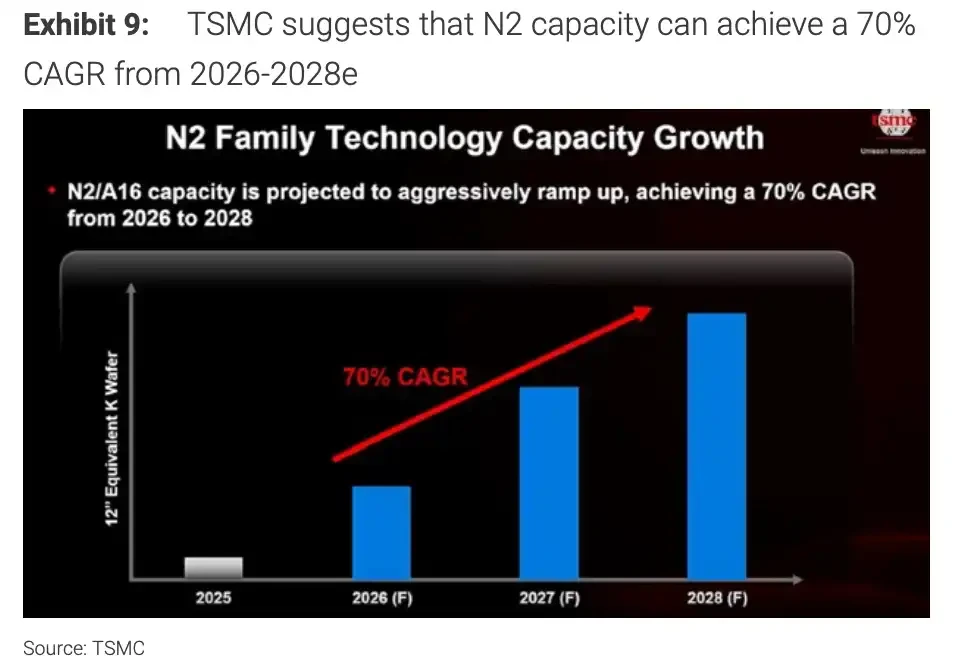
TSMC's 2nm (N2) process is the most critical technology node for the coming years. Management confirmed N2 entered high-volume production in Q4 2025, with multiple-stage ramping at Hsinchu and Kaohsiung, targeting smartphones and HPC/AI applications. The market focus is not whether N2 is in production but how fast yields improve, capacity scales, and whether customer demand covers high upfront costs. TSMC expects N2/A16 capacity to grow at a CAGR of ~70% from 2026 to 2028. For crypto mining chip makers (e.g., Bitmain), 2nm could significantly reduce power consumption and boost hashrate, but initial yield costs may raise foundry prices. During the July 16 call, management's comments on H2 AI/HPC demand, advanced packaging (CoWoS/SoIC) capacity, 2nm ramp progress, and gross margin outlook will directly influence confidence in the AI hardware and mining supply chains.

Investment Implications: Margin Is the Litmus Test
Current TSMC valuation already prices in sustained AI demand, tight advanced-node supply, and high utilization. If Q2 actual gross margin lands in the mid-to-high range (e.g., ~67%) and management maintains an optimistic outlook, the AI hardware chain will be supported. Conversely, cautious remarks about customer inventory or cost pressures could trigger a reassessment of growth sustainability. The crypto mining industry also relies on TSMC's advanced nodes—Bitmain's miners use 7nm/5nm processes, and a future move to 2nm could deliver a leap in performance but at a higher cost. Therefore, TSMC's gross margin trajectory affects not only its own stock but also the broader AI and crypto mining ecosystem.