TSMC Q2 Earnings: Key Dates, Guidance, and Market Expectations
TSMC will hold its Q2 2026 earnings call on July 16 at 14:00 Taiwan time, with a quiet period from July 6 to 15. The market is no longer focused solely on revenue growth. As the world's largest pure-play foundry, TSMC serves mobile chip clients like Apple and Qualcomm while also addressing demand from AI accelerators, cloud custom chips, and high-performance computing (HPC). The Q2 report will directly verify three questions: whether AI orders remain robust, whether 2nm ramp is on schedule, and whether gross margin near 66% is sustainable.
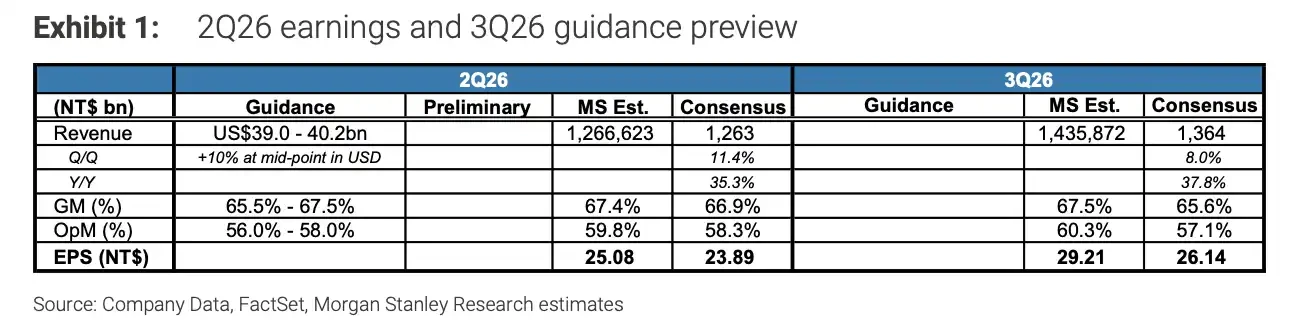
TSMC delivered a strong Q1: dollar revenue of $35.9 billion, gross margin of 66.2%, and operating margin of 58.1%. In NT dollar terms, Q1 revenue was NT$1.134103 trillion, net profit NT$572.48 billion, EPS NT$22.08, with revenue up 35.1% YoY and net profit up 58.3% YoY. Q2 guidance remains high: dollar revenue between $39.0 billion and $40.2 billion, and gross margin between 65.5% and 67.5%. Morgan Stanley expects TSMC's Q2 gross margin to reach 67.4%, near the high end of guidance.
AI/HPC Driving Revenue: The Margin Challenge
TSMC's revenue structure has shifted decisively toward HPC: in Q1 2026, HPC accounted for 61% of revenue, and 7nm and below advanced nodes contributed 74% of wafer revenue. AI chips not only boost order volumes but also increase value per wafer due to larger die sizes and higher complexity. As long as AI capital spending continues to expand, TSMC can maintain capacity utilization and pricing power. However, revenue growth does not automatically translate into profit growth. Expansion of advanced nodes requires heavy equipment investment, depreciation, and yield learning costs. The market reaction will depend on actual Q2 gross margin and management's commentary on second-half margins.
Monthly revenue data already hints at sustained demand: May 2026 revenue was NT$416.975 billion, up 30.1% YoY; cumulative January-May revenue was NT$1.961804 trillion, up 30.0% YoY. Yet overseas fabs (US, Japan, Germany) bring higher operational costs and supply chain complexity. Hence, the market keeps questioning whether gross margin can consistently stay above 65%.

2nm Ramp and Capex: A Double-Edged Sword for Future Margins
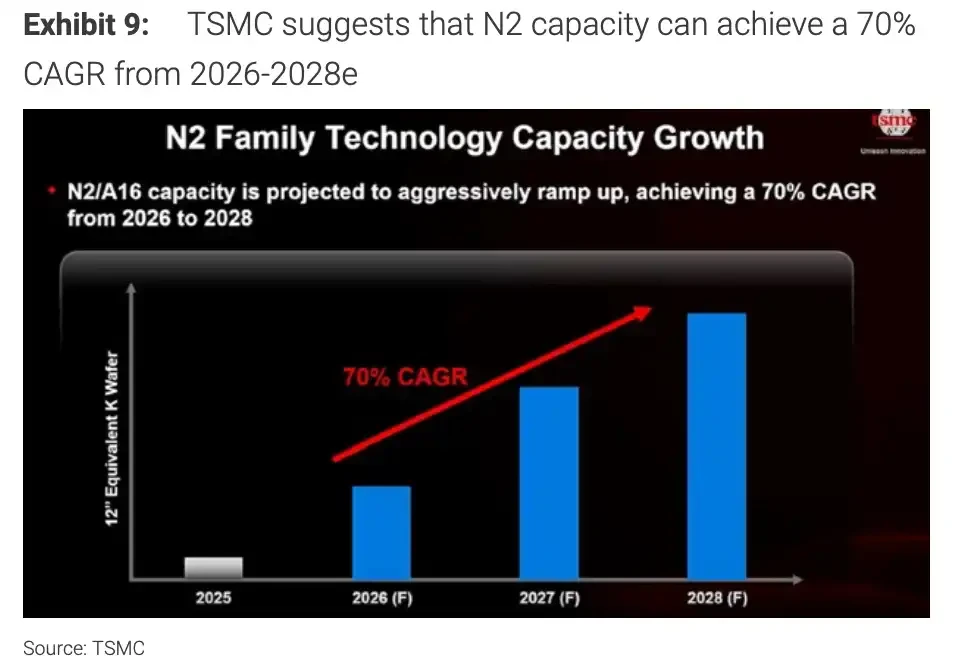
Beyond Q2 results, 2nm is TSMC's critical variable for coming years. Management indicated that N2 entered high-volume manufacturing in Q4 2025, with multi-stage ramp in Hsinchu and Kaohsiung, driven by smartphones and HPC/AI. For the crypto mining hardware supply chain (though not directly mentioned), advanced nodes could influence next-gen ASIC miner performance and power efficiency. TSMC expects N2/A16 capacity to ramp rapidly from 2026-2028 with a CAGR of about 70%.

On capital expenditure, TSMC pointed its 2026 full-year guidance to the high end of $52-56 billion. This suggests management sees a long-term capacity gap driven by AI/HPC, not short-term fluctuations. Higher capex can lock in future orders but also brings higher costs: advanced node lines require huge investment, and depreciation gradually flows into the P&L. If demand remains strong, capex expands TSMC's lead; if demand softens, gross margin will face faster pressure. The real question is whether these orders can continue to translate into high margins.
Key Variables for the Earnings Call: Management Tone and H2 Outlook
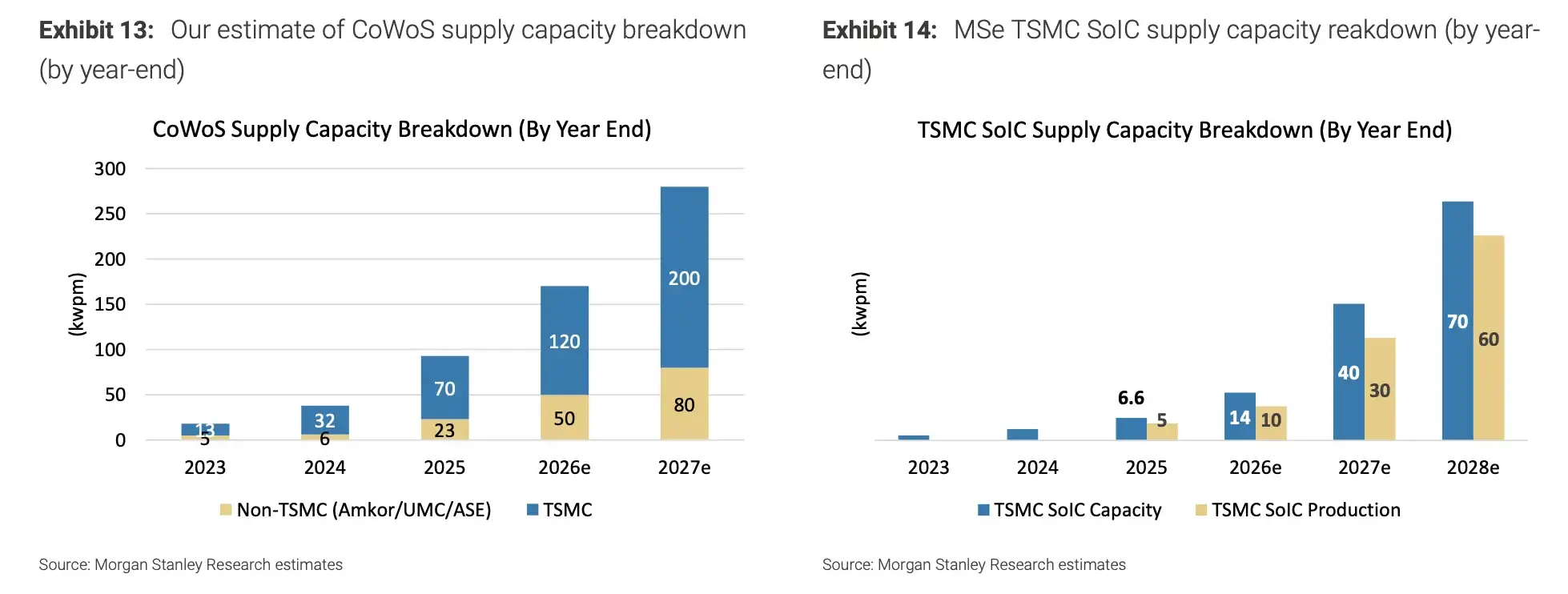
The July 16 call is not just about quarterly data. It is about management's description of H2 AI/HPC demand, advanced packaging capacity (CoWoS, SoIC), 2nm ramp progress, capital expenditure plans, and gross margin outlook. If TSMC maintains its 'extremely robust' demand assessment and gross margin stays within guidance, confidence in the AI hardware chain will be reinforced. If management signals caution (e.g., customer inventory adjustments, cost pressures), investors will reassess how long the high growth of AI supply chains can last. TSMC's strength and risks come from the same sources: demand, pricing, yield, depreciation, and overseas execution. Any weakness in one link will first test the near-66% gross margin.