Key Highlights of Q2 Earnings: AI Demand, Gross Margin, and 2nm Ramp
TSMC will host its Q2 2026 earnings call on July 16 at 14:00 Taiwan time, preceded by a quiet period from July 6–15. The call goes beyond revenue growth to address three critical questions: whether AI orders remain robust, whether the 2nm process ramp is on track, and whether gross margins near 66% can be maintained. Over the past year, AI demand has consistently lifted TSMC's revenue, margins, and capex. The market now focuses on whether high growth from AI/HPC can translate into sustained high margins.
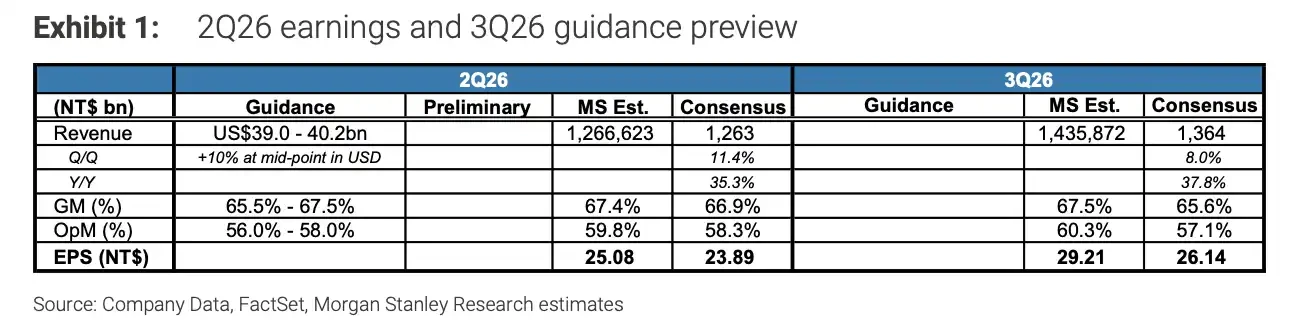
TSMC delivered strong Q1 results: dollar revenue of $35.9 billion, gross margin of 66.2%, and operating margin of 58.1%. In New Taiwan dollar terms, Q1 revenue was NT$1.1341 trillion, net profit NT$572.48 billion, EPS NT$22.08, with YoY revenue growth of 35.1% and net profit growth of 58.3%. Q2 guidance calls for dollar revenue of $39.0–$40.2 billion and gross margin of 65.5%–67.5%. Morgan Stanley projects actual gross margin of 67.4%, at the high end of company guidance. Monthly revenue data also signals sustained demand: May 2026 revenue reached NT$416.975 billion, up 30.1% YoY; cumulative Jan-May revenue was NT$1.9618 trillion, up 30.0% YoY.
AI/HPC Drives Revenue Mix, but Margin Growth Faces Depreciation Headwinds
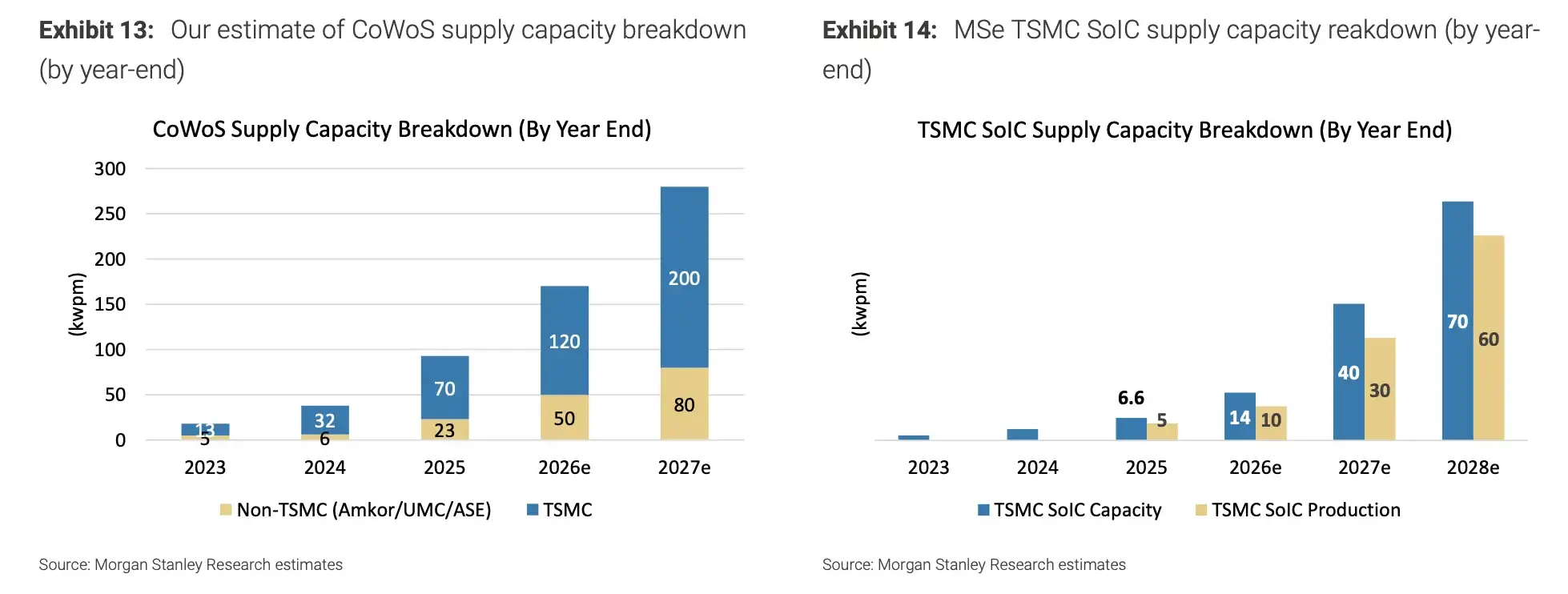
TSMC's strongest growth driver remains AI and high-performance computing (HPC). In the Q1 call, management described AI demand as "extremely robust" and raised 2026 dollar revenue growth guidance to over 30%. The revenue mix reinforces this: Q1 HPC accounted for 61% of revenue, while 7nm and below advanced nodes represented 74% of wafer revenue. AI chips require advanced packaging such as CoWoS and SoIC, pushing up per-chip value and keeping high-end capacity tight. As long as AI capex continues to expand, TSMC can maintain high utilization and pricing power.

Capex, however, is a double-edged sword. TSMC guided full-year 2026 capex toward the upper end of $52–$56 billion, reflecting a long-term capacity gap driven by AI/HPC demand. But higher capex brings equipment depreciation and overseas fab costs (in the US, Japan, and Germany). In a strong demand environment, capex extends TSMC's lead; in a slowdown, it quickly pressures margins. This is why the market repeatedly questions gross margin sustainability—demand is not the issue, but whether orders can be fulfilled at high profit levels.

2nm Node: The Next Growth Milestone and Risk
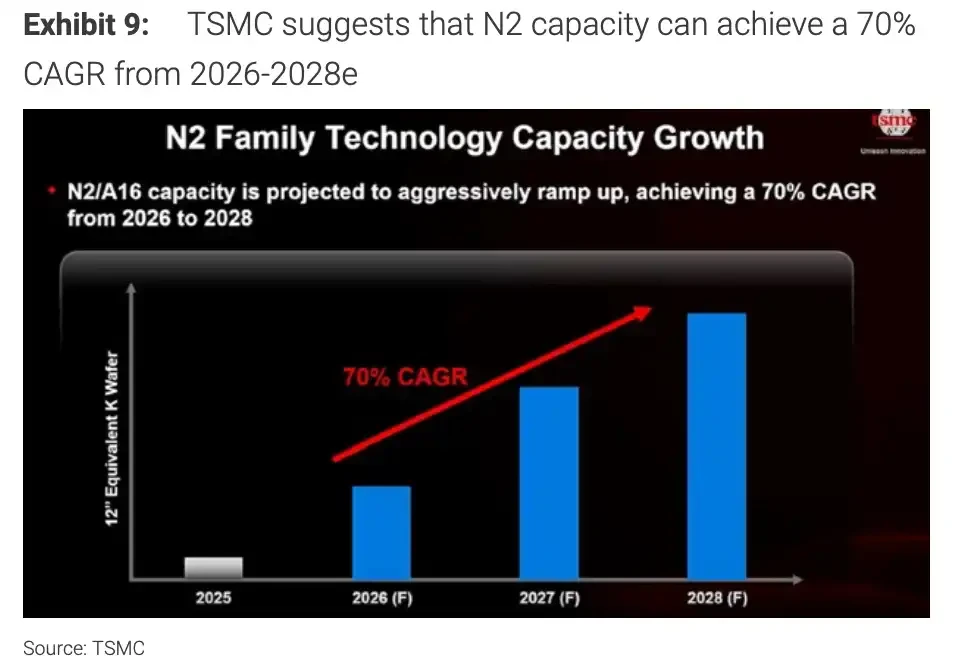
Beyond Q2 results, the 2nm node (N2) is the most important variable for TSMC in the coming years. Management confirmed that N2 entered high-volume production in Q4 2025, with multi-phase ramps in Hsinchu and Kaohsiung, driven by demand from smartphones and HPC/AI. For customers, 2nm determines the performance of next-generation flagship chips; for TSMC, it shapes pricing, capacity allocation, and gross margin over the next several years. The market is not questioning whether 2nm is in mass production, but rather the speed of capacity expansion, yield improvement, and whether initial customer demand can absorb the high capital outlay. TSMC expects N2/A16 capacity to ramp at a CAGR of approximately 70% from 2026 to 2028. A smooth ramp will allow TSMC to maintain advanced-node supply leverage during the AI demand peak; yield or cost surprises could drag margins even if revenue grows.
Outlook for H2: The Risk That Gross Margin Fails to Hold 66%
The July 16 earnings call is not just about hitting Q2 guidance—the key is how management describes H2 AI/HPC demand, advanced packaging capacity, 2nm ramp progress, capex plans, and gross margin outlook. If TSMC maintains a strong demand thesis and gross margin stays within the 65.5%–67.5% range, market confidence in the AI hardware chain will be reinforced. If management signals caution on orders, inventory, or cost pressure, investors will reassess how long the high-growth AI supply chain can last. TSMC's current strength rests on AI/HPC demand, advanced-node scarcity, and high capex expansion. The risks lie on the same chain: demand, pricing, yield, depreciation, and overseas execution. If any link falls short, the ~66% gross margin will be the first to be tested.