TSMC Q2 Earnings Call: Three Core Focus Points
TSMC will hold its Q2 2026 earnings conference on July 16, 2026 at 14:00 Taiwan time. The company enters a quiet period from July 6 to 15. As the world’s largest pure-play foundry, TSMC serves mobile chip clients such as Apple and Qualcomm while also addressing demand for AI accelerators, cloud custom chips, and high-performance computing (HPC). This earnings release will directly test three propositions: whether AI orders remain robust, whether the 2nm ramp-up is on schedule, and whether the gross margin close to 66% can be defended.
Q1 Review: Strong Revenue and Profit Growth
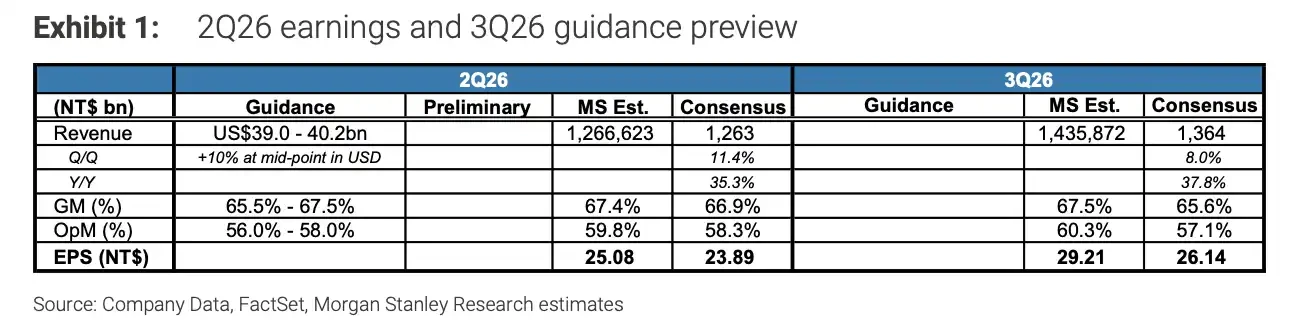
TSMC delivered an impressive Q1 result: dollar revenue of $35.9 billion, gross margin of 66.2%, and operating margin of 58.1%. In NT dollar terms, revenue reached NT$1.134 trillion, net profit NT$572.48 billion, and EPS NT$22.08. Revenue grew 35.1% YoY and net profit surged 58.3%. Q2 guidance remains elevated: expected dollar revenue of $39.0–$40.2 billion and gross margin of 65.5%–67.5%. The market cares not only about whether revenue falls within guidance but also whether gross margin can stay above 65%.
Monthly Revenue and AI Demand: Sustained Growth Signals
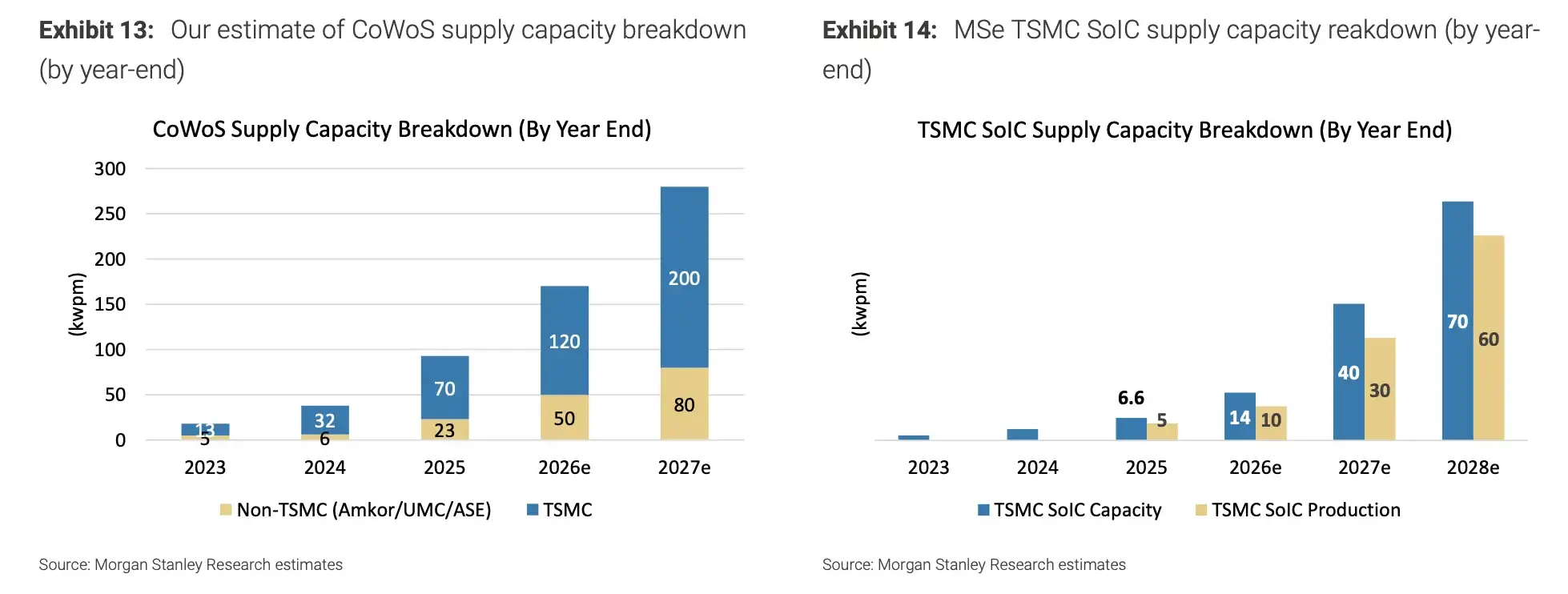
Monthly revenue data released early indicates continued strong demand. May 2026 revenue was NT$416.975 billion, up 30.1% YoY; cumulative revenue for January–May hit NT$1.962 trillion, up 30.0% YoY. In terms of revenue mix, HPC accounted for 61% of Q1 revenue, and advanced nodes (7nm and below) contributed 74% of wafer revenue. While not directly equivalent to AI revenue share, these figures demonstrate that high-performance computing and advanced nodes are the main growth drivers. AI chip demand has also boosted advanced packaging capacity, with CoWoS and SoIC remaining expansion priorities. Morgan Stanley expects TSMC’s Q2 gross margin to reach 67.4%, at the high end of the company’s guidance range.

CapEx vs. Gross Margin: A Delicate Balance
TSMC’s 2026 full-year capital expenditure is trending toward the upper end of the $52–$56 billion range, as management sees a long-term capacity gap driven by AI/HPC demand. However, higher CapEx brings increased equipment depreciation and overseas fab costs (US, Japan, Germany), which will gradually pressure the income statement. In a strong demand environment, higher CapEx extends TSMC's competitive moat; if demand slows, it could rapidly translate into gross margin headwinds. This is why the market keeps asking about gross margin: the real debate is whether these orders can continue to be monetized at high profitability.

2nm Ramp-Up: A Multi-Year Margin Lever
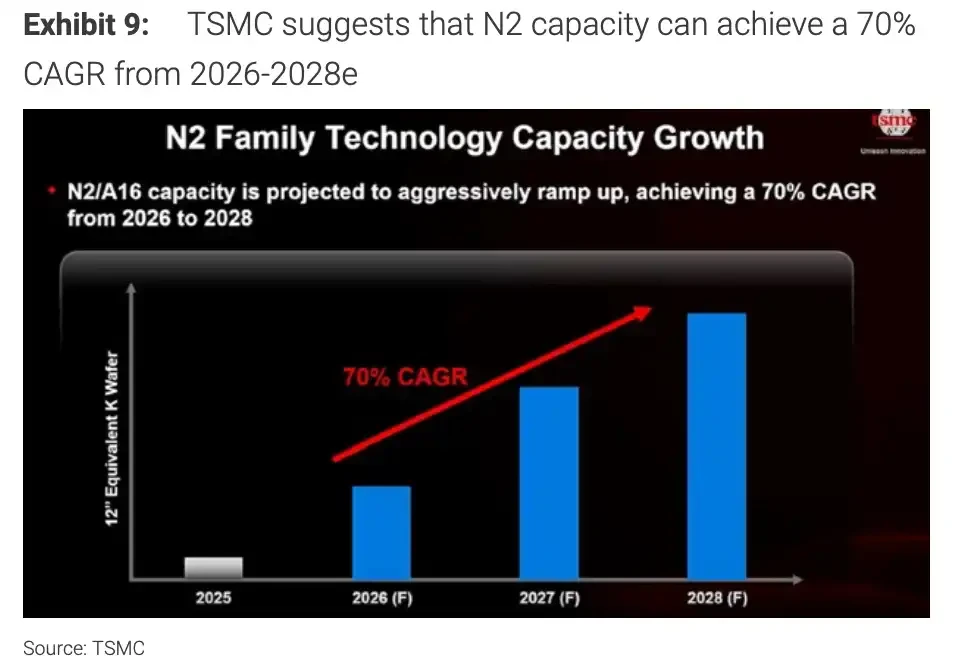
Beyond Q2 results, the 2nm node is a longer-term variable for TSMC. N2 entered high-volume manufacturing in Q4 2025, with multi-phase ramp-ups in Hsinchu and Kaohsiung, driven by demand from both smartphones and HPC/AI. The market is watching how quickly output can expand, whether yield improves on schedule, and whether early customer demand can absorb the huge capital outlay. TSMC expects N2/A16 capacity to ramp rapidly from 2026 to 2028, with a CAGR of about 70%. Management’s commentary on 2nm will directly affect expectations for TSMC’s pricing power and gross margin trajectory over the next few years.
The July 16 earnings call is not just about whether TSMC hits its Q2 guidance. More importantly, it will reveal management’s view on H2 AI/HPC demand, advanced packaging capacity, 2nm progress, CapEx plans, and gross margin outlook. If TSMC maintains a strong demand thesis and defends the gross margin guidance range, confidence in the AI hardware chain will be reinforced. If management signals caution on customer orders, inventory, or cost pressure, investors will reassess how long the high growth in AI supply chains can last.