
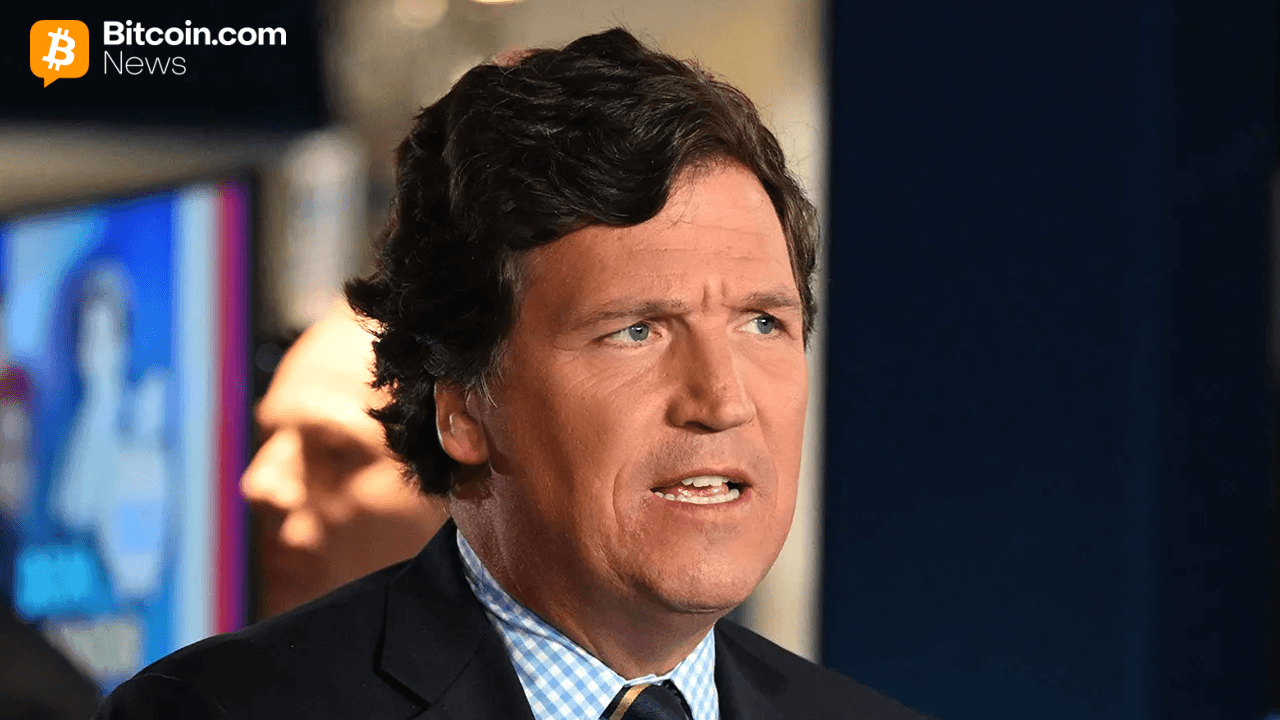
Tucker Carlson told his audience financial markets are no longer free or open, calling their behavior during the ongoing Iran conflict deliberately manufactured. Since February 28, 2026, Operation Epic Fury — the U.S.-Israel military campaign against Iran — has hit Iranian leadership and infrastructure. Tehran retaliated with missiles, drones, and disruptions to the Strait of Hormuz, through which roughly 20% of global oil flows. A fragile ceasefire in early April failed to hold; brinkmanship, ship strikes, and intermittent violence continued into May. Despite this, equities climbed. The S&P 500 dropped about 10% initially then staged a sharp recovery, closing above 7,000 in mid-April and trading near 7,389 by May 8. The Nasdaq 100 logged a 13-day winning streak, its longest in over a decade, and the Dow approached 50,000.
Oil Below $100: 'Bizarre and Fake'
Carlson pointed to oil prices as the clearest sign of manipulation. “The Strait of Hormuz has been closed for months now, in effect,” he said, “And yet oil, as of airtime tonight, was under 100 bucks a barrel. Much lower than it was in, say, 2008. That is bizarre. But it’s more than bizarre. It’s fake.” Brent crude did spike above $116 per barrel on May 5 amid Hormuz threats, but fell back below $100 on any de-escalation signal. The whipsaw pattern repeated throughout the conflict as traders priced in rapid resolution each time.
Gold Falters, Bitcoin Surfside
Gold climbed to the $4,500–$4,700 range overall but failed to deliver the sustained safe-haven rally many expected, constrained by inflation fears, a stronger dollar, and doubts about rate cuts. Bitcoin moved differently: it climbed to $80,000 and then near $83,000, pulling in a record $2 billion in ETF inflows during April, outperforming both the S&P 500 and gold in several stretches. Observers called it a digital hedge that absorbed geopolitical risk better than traditional alternatives.
Wall Street vs. Central Bankers
Carlson saw the divergence as evidence of rigging. “Markets are doing things you would not expect them to do if they were behaving rationally in a free way,” he said. JPMorgan asked why stocks hit record highs without an Iran resolution, then attributed it to corporate earnings strength — roughly 83% of S&P 500 companies beat estimates in recent quarters. Barclays analyst Stefano Pascale told the NYT that “the market is trading assuming we have seen the worst of the conflict.” ECB President Christine Lagarde called the tendency to assume “business as usual” simply strange. Carlson added: “Some people are getting rich from this, and most people aren’t.” The debate over market rationality versus manipulation remains unresolved as the Strait of Hormuz stays contested and ceasefire terms unfinished.