
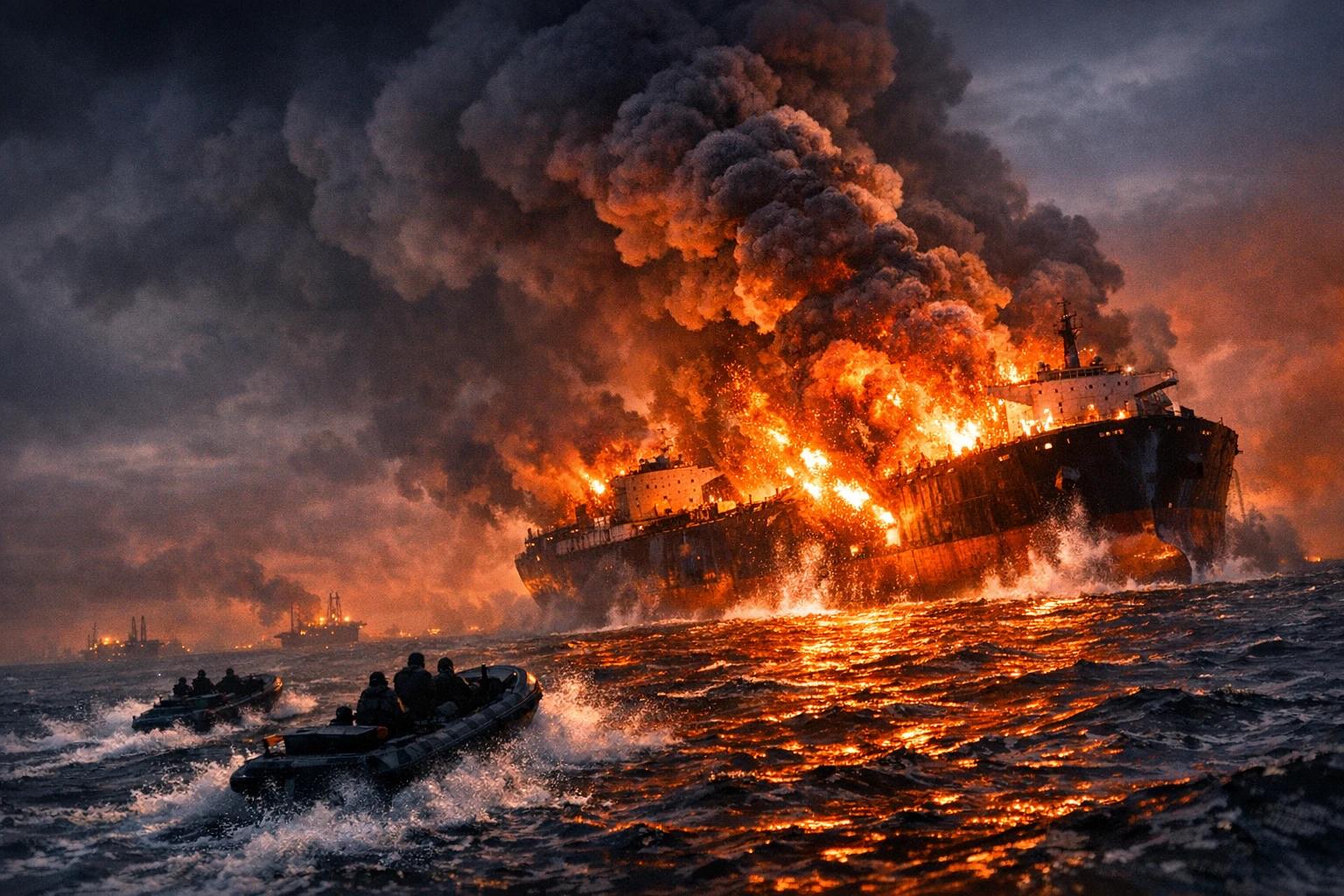
Tensions in the Persian Gulf rose again after two foreign tankers carrying Iraqi fuel oil were attacked and set on fire inside Iraqi territorial waters. At least 25 crew members were evacuated and rescued. After the reports emerged, Brent crude climbed back to around $98, putting the market close to the $100 threshold once more.
The incident was reported near Umm Qasr port and the Basra area in Iraq. Footage from the scene showed the vessels engulfed in flames during the night. Fartusi, an official from Iraq’s state ports company, told the Iraqi News Agency that rescue teams pulled the crew to safety. Of the confirmed 25 evacuees, 20 came from the vessel that was directly attacked.
A third maritime incident was also reported near Basra
Separate reports said a third event took place in the same area. A boat carrying explosives allegedly rammed and attacked another tanker near Basra. The nature of that assault has not yet been confirmed, and no group or country has claimed responsibility for any of the incidents so far.
The timing drew immediate attention. The conflict involving the United States and Iran is still ongoing, and shipping traffic through the Strait of Hormuz remains well below normal levels. That combination pushed supply security in the Gulf back to the center of oil market concerns.
Brent nears $100 again despite the IEA reserve release
Brent crude has gained more than 50% this year and briefly approached $120 in early March, its highest level in nearly four years. Prices had eased earlier after the IEA announced what the source described as the largest emergency stock release on record, with 32 member countries agreeing to release 400 million barrels from strategic petroleum reserves.
That relief proved fragile. News of the tanker attacks quickly reminded traders that supply routes in the Gulf remain exposed. Even with the reserve release still weighing on prices, Brent moved back to roughly $98, showing how quickly geopolitical risk can reset the market’s focus.
Export routes through Umm Qasr remain a key watch point
Most Iraqi crude exports are loaded through the Persian Gulf, and Umm Qasr is one of the country’s main export gateways. If instability around that corridor persists, pressure on global supply could intensify. The market is now watching not only the tanker fires themselves, but also whether disruption around the Strait of Hormuz and nearby shipping lanes spreads further.