
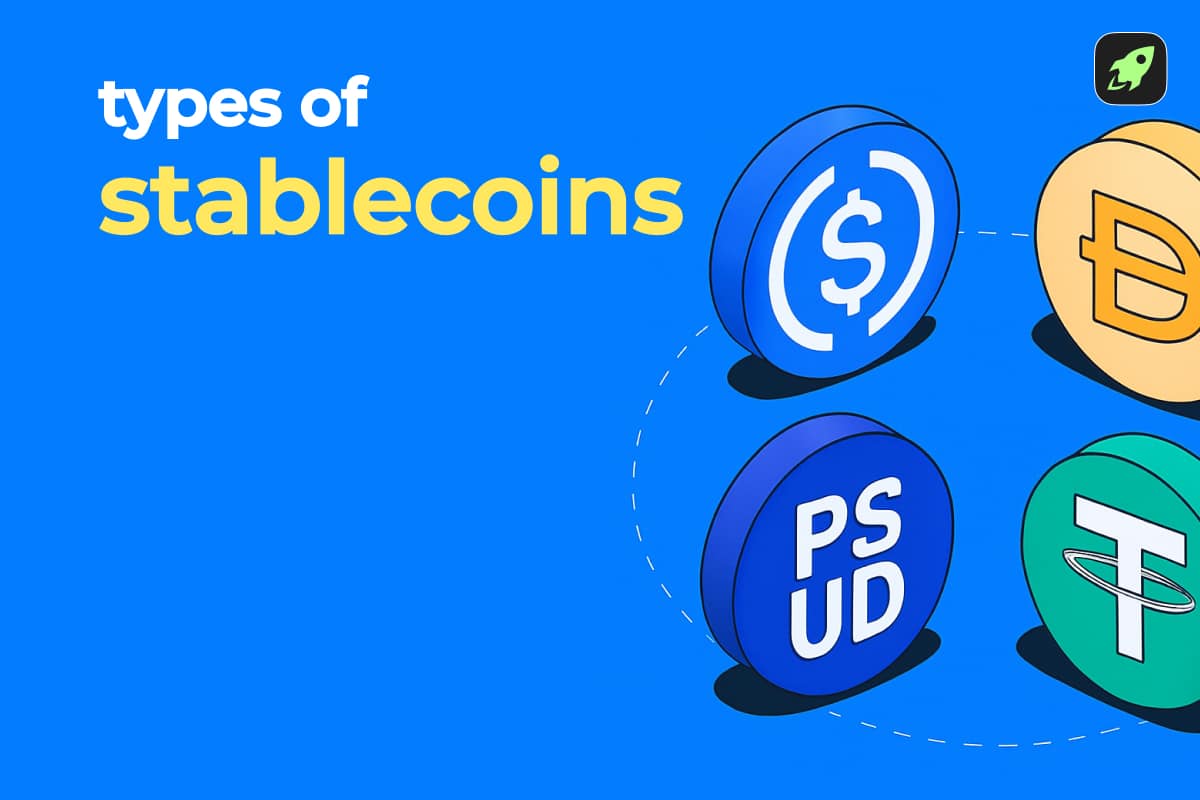
The crypto market is notorious for its volatility. Bitcoin and Ether see constant price swings. Stablecoins—tokens pegged to external assets—offer a refuge. USDT now holds the third-largest market cap among all cryptocurrencies, making it crucial to understand how stablecoins work.
What Is a Stablecoin?
A stablecoin maintains a stable price by being collateralized with assets like fiat currency (USD, EUR) or commodities (gold, T-bills). Issuers guarantee sufficient reserves to back every coin in circulation. Unlike volatile cryptocurrencies, stablecoins derive stability from the backing assets.
Fiat-Backed Stablecoins
Issued by centralized entities, each token is directly backed by an equivalent amount of fiat held in bank accounts. Prominent examples are USDT (Tether) and USDC (Circle), both typically trading near 1 USD. The issuer must be transparent about reserves, with audits performed by independent firms. Key roles: issuer (minting), custodian (storage), and auditor (code/reserve verification). These stablecoins are easy to understand and widely used, but they rely on trust in the issuer's solvency.
Commodity-Backed Stablecoins
Backed by physical assets like gold. PAX Gold (PAXG) and Tether Gold (XAUT) represent ownership of gold bullion; each PAXG token claims to be backed by one fine troy ounce of gold, with serial numbers for verification. Advantages include exposure to commodities and potential for price appreciation. Risks: the commodity itself can lose value, and reserves must be stored securely.
Crypto-Collateralized Stablecoins
Backed by other cryptocurrencies, often overcollateralized to absorb volatility. DAI by MakerDAO is pegged to 1 USD but requires at least 150% collateral in Ethereum and other cryptos. Smart contracts manage issuance, liquidation, and oracle data. This preserves decentralization and transparency, but market crashes can trigger cascading liquidations and oracle manipulation.
Algorithmic Stablecoins
No traditional collateral; instead, algorithmic supply adjustments (seigniorage, dual-token systems) stabilize price. The collapse of TerraUSD demonstrated the high risk: reflexive failures and loss of trust caused catastrophic de–pegging.
Hybrid Stablecoins
Combine features of multiple types, e.g., partial fiat reserves plus burn-mint logic, aiming for capital efficiency without compromising decentralization.
Which Stablecoin Is Safest Today?
USDC is widely regarded as the safest. Circle undergoes regular independent audits and fully backs USDC with cash and short-term U.S. Treasuries. USDT remains the most used by volume but has faced transparency criticism. Even fiat-pegged stablecoins carry risks: if collateral drops, the coin loses peg; fraudsters also create fake stablecoins (FBI warning in 2024).
How to Choose a Stablecoin
1. Popularity: Start with fiat-backed coins from reputable projects. Check historical price stability on exchanges.2. Regulatory Framework: Verify the issuer's jurisdiction—Hong Kong's HKMA, EU's MiCA, or U.S. GENIUS Act (from 2027) all have specific requirements.3. Underlying Assets: Only trust audits by reputable firms; no audit means higher risk.4. Security: Assess smart contract risk, liquidation safeguards, and oracle integrity.5. Adoption: Choose coins widely used in DeFi, payments, and dApps.