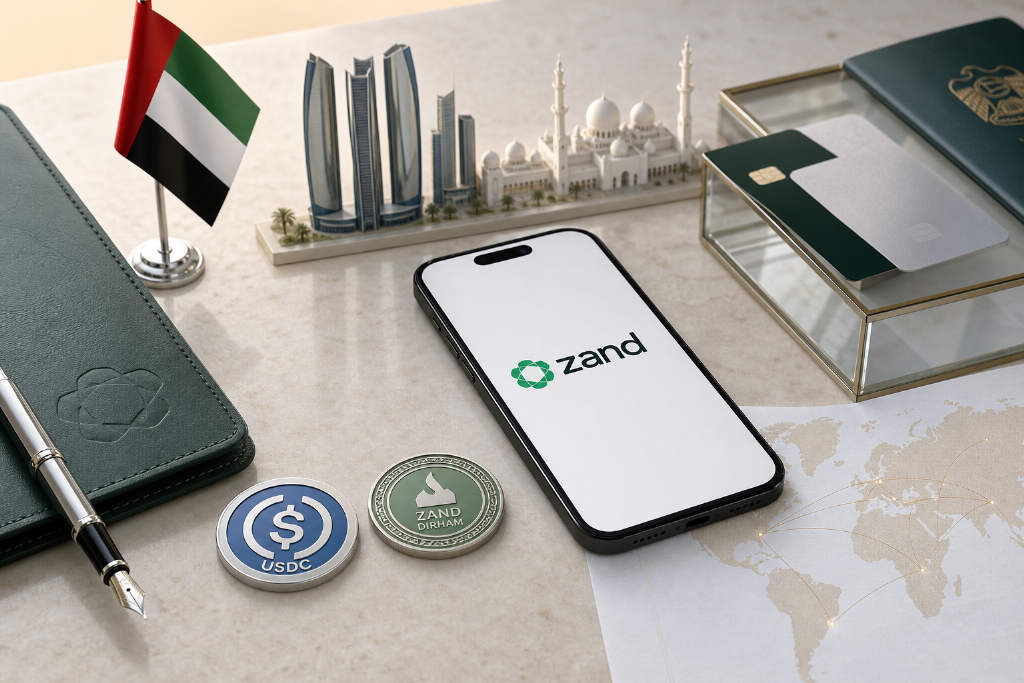
UAE digital bank Zand has integrated Circle-issued USD Coin (USDC) into its stablecoin infrastructure, opening the door for eligible corporate clients to use both the bank’s Zand Dirham stablecoin and USDC for payments, settlements, and cross-border transactions. The announcement links a local dirham-based stablecoin setup with one of the most widely used dollar-pegged digital assets in the market.
Zand said its Dirham stablecoin is a fully reserved, multichain token. The bank is backed by Abu Dhabi royal investment institutions and Franklin Templeton, according to the report. With the USDC integration, the bank said it aims to create a direct channel between the UAE and the broader global digital finance ecosystem.
The move also ties into a national economic target cited by the bank: supporting the UAE’s goal of doubling the digital economy’s contribution to non-oil GDP by 2032. The report was carried by Techub and attributed to CryptoBriefing.
UAE digital bank Zand said it has integrated Circle-issued USD Coin (USDC) into its stablecoin infrastructure.
The bank said eligible businesses can use both the Zand Dirham stablecoin and USDC for payments, settlements, and cross-border transactions.
Zand is backed by Abu Dhabi royal investment institutions and Franklin Templeton, according to the report. Its Dirham stablecoin is described as a fully reserved, multichain token.
The bank said the integration is designed to create a direct link between the UAE and the global digital finance ecosystem, while supporting the country’s goal of doubling the digital economy’s contribution to non-oil GDP by 2032.
The item was published by Techub, citing CryptoBriefing.
This article was originally published by Bit.Fan. For more cryptocurrency news and market insights, visit www.bit.fan. Disclaimer:
The market information, project data, and third-party content displayed on this platform are for industry information sharing only and do not constitute any form of investment advice or return commitment.
Cryptocurrency trading carries high risks. Users should fully assess their risk tolerance and make independent decisions. All profits, losses, and legal responsibilities are borne by the users themselves.