



In 1995, Michael Wooldridge and Nicholas Jennings listed autonomy, social ability, reactivity and proactiveness as four core traits of intelligent agents in Intelligent Agents: Theory and Practice. In that formulation, proactiveness meant an agent could take initiative around a goal rather than merely react to commands.
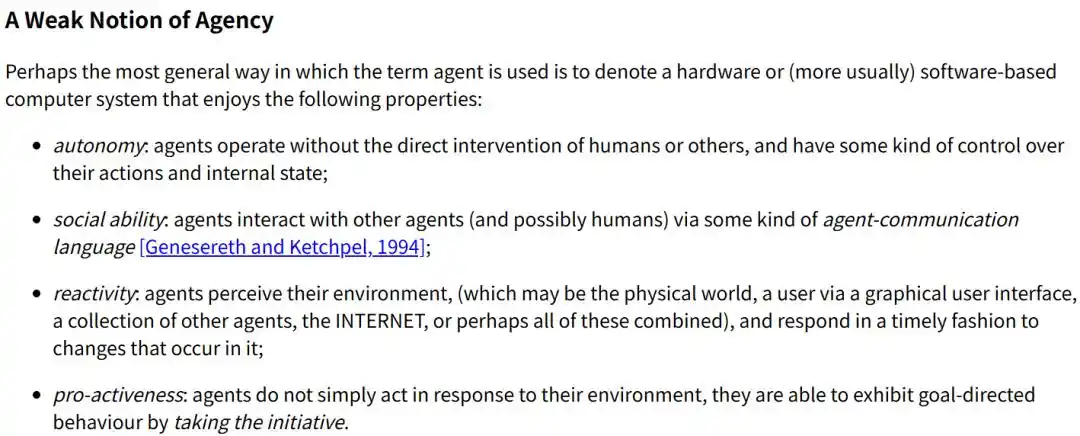
That idea is not new. It has been part of agent research for three decades. What has changed is the capability of modern systems. Large-model agents can now understand instructions, call tools and complete multi-step tasks on their own, yet many of them still depend on a human to spot a problem first, define the task and hand it over. The expectation for AI assistants is moving beyond execution. The next step is an agent that can notice useful work before a new prompt arrives and begin handling it.
Why proactivity matters for long-running work
The review argues that this capability directly affects whether long-horizon tasks can keep moving. If a job lasts days or weeks, the original instruction is unlikely to cover every change that appears later. Information may be missing. A plan may stop working. Arrangements that were already completed may need to be checked again. An agent has to clarify uncertainties, look for alternatives and revise plans on its own if it is going to reduce the need for repeated human supervision and follow-up instructions.
The paper uses a travel example to make the point concrete. A researcher delegates conference travel and later changes to an assistant. Flights and hotel have already been booked. One week before departure, the conference is extended by one day. The return flight now leaves before the conference ends, and the hotel’s free cancellation deadline expires that same night. To keep the trip viable, the assistant has to detect the conflict across those arrangements, check the conditions for changing them, prepare options and raise the decisions that still require the researcher’s approval. A booking instruction written earlier is unlikely to specify how to handle that entire chain of events in advance.
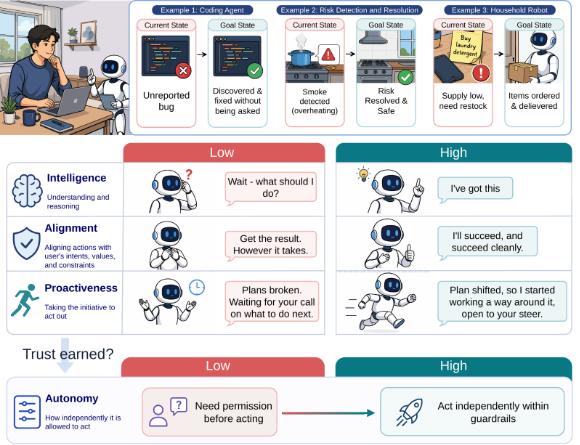
For future superintelligent agents, the authors say proactivity should be treated alongside intelligence and alignment. Intelligence covers understanding, reasoning and execution. Alignment concerns whether behavior matches human intent and values. Proactivity adds another requirement: the agent must judge what is worth doing and take responsibility for discovering and initiating work. A long-term collaborative assistant needs all of those pieces.
Frontier labs have already started exploring that direction. Meta has positioned Muse as a personal agent that can proactively help around a person’s goals and keep work moving over time. OpenAI’s dots supports task follow-up across conversations and can also investigate approved information sources to surface new developments related to ongoing work.
Academic groups are working on implementation details as well. Proactive Agent, from Tsinghua University and other institutions, studies how an agent can predict tasks from context and offer help without an explicit instruction. ProAgent, from the Chinese University of Hong Kong and collaborators, uses wearable devices to gather environmental signals, infer needs in daily activities and call tools to assist.
Researchers from the University of Illinois Urbana-Champaign, Google, Stanford, the University of California, Berkeley and Carnegie Mellon University address these questions in Proactive AI for Superintelligent Agents. The paper introduces a 6A framework for work initiation, reviews mechanisms and evaluation methods, and surveys 13 application domains. The project homepage and the Google Research page are both public.
Project page: https://empathyang.github.io/Proactive-AI-for-Superintelligent-Agents/
Google Research: https://research.google/pubs/proactive-ai-for-superintelligent-agents/
What an agent has to decide on its own
When a person asks an assistant to search flights and book a ticket, the work has already been identified. Once the conference is extended, the assistant has to notice on its own that the return trip and lodging are affected, decide which arrangements are worth revisiting and propose the next steps.
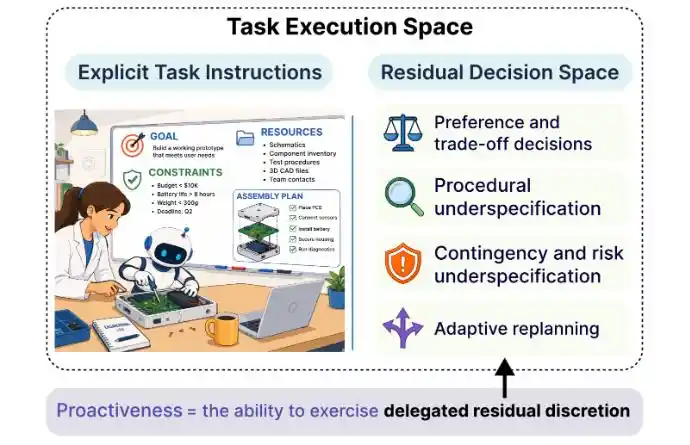
The overall goal of attending the conference and the budget still apply, but the specific items that now need attention depend on the changed situation. The review reduces those judgments to two questions: what is worth handling, and whether, when and how to intervene. A return-flight conflict threatens the conference goal, so revisiting the return itinerary has a clear rationale.
After spotting the conflict, the assistant still has to compare the benefits and costs of changing plans, take the cancellation deadline into account and decide whether the right move is to prepare options, ask for confirmation or execute an already approved action.
The paper describes these open choices as a “residual decision space.” An instruction may specify conference dates, a budget cap and which accounts can be used, but trade-offs such as connection risk versus ticket price, what to do if the hotel stay cannot be extended, or which existing arrangements should be preserved are often left to be resolved at execution time. Proactivity can serve the current task, and it can also surface new concrete work under an ongoing responsibility. Human goals and constraints remain the basis for those choices.
The authors also separate the ability to initiate work from the authority to execute it. An assistant may proactively detect the travel conflict and prepare rebooking options while leaving payment for the researcher to approve. Once the researcher explicitly asks for the change, the assistant may then complete the authorized steps on its own. Proactivity is about how work is discovered and raised. Autonomy, in this narrower sense, is about how far the system is allowed to act independently. Intelligence helps it understand and solve the problem. Alignment governs whether the behavior fits human intent and values.
A single assistant can also operate in several modes. It can answer a direct request for flight information, send a boarding reminder at a scheduled time and proactively inspect the itinerary after a conference update. As the system’s responsibilities change, the human role can shift from step-by-step operation to joint plan revision and then to reviewing key decisions. Reactive behavior, proactive judgment and human involvement need to be understood together in the context of the task.
From a schedule change to proactive assistance: the 6A framework
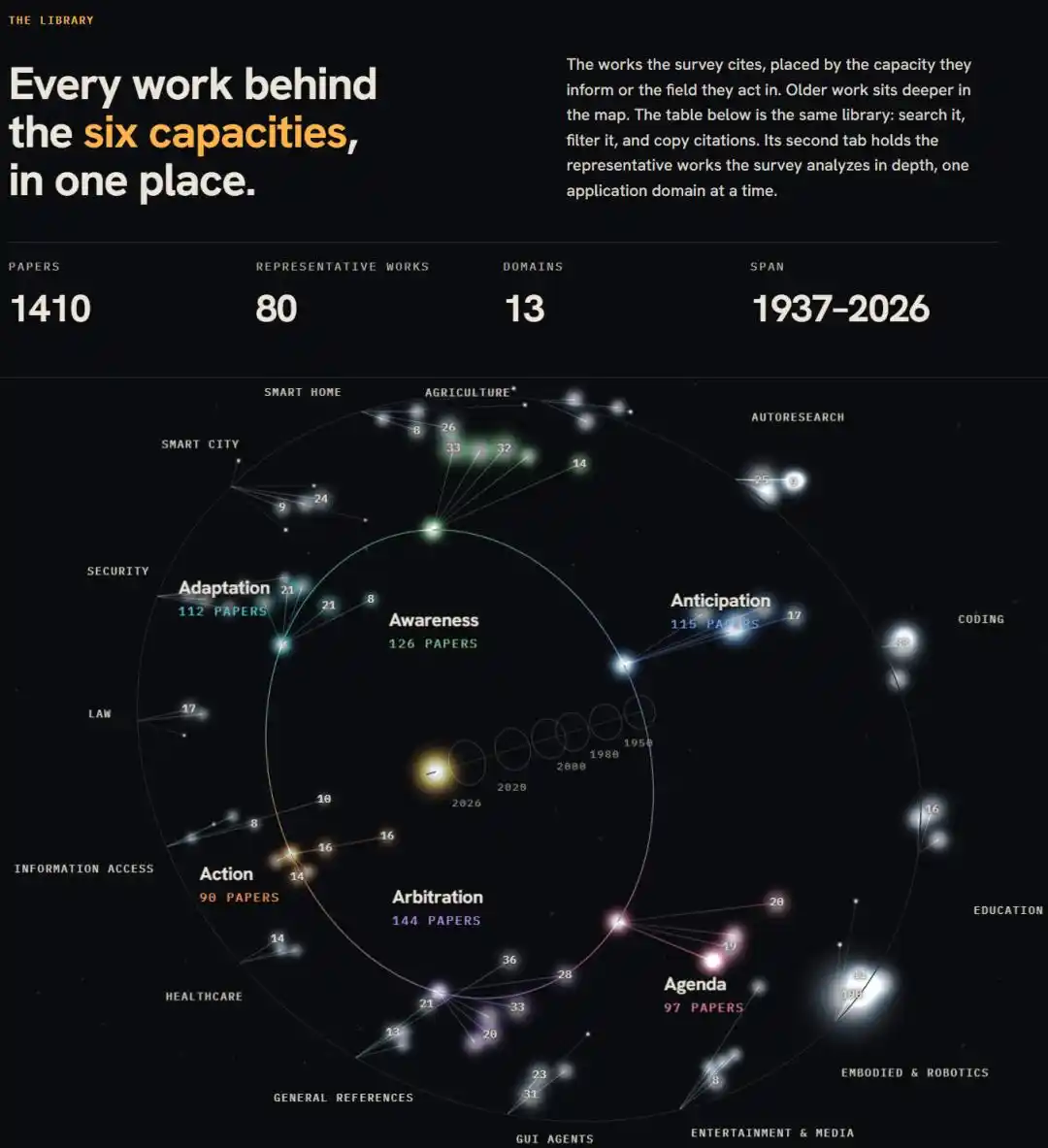
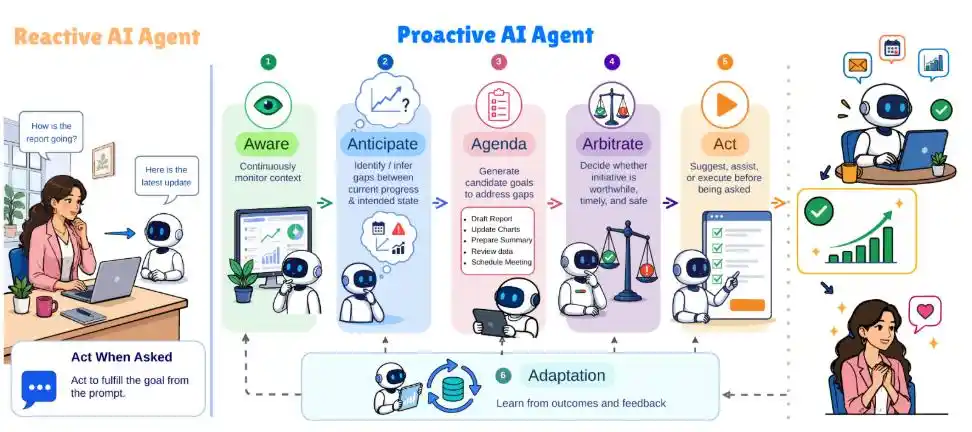
In the travel example, discovering work without being told depends on several capabilities working together. Notifications and orders provide the current state. Anticipation identifies downstream effects. Goal selection determines what should be followed up. Intervention judgment decides when to move. Execution and feedback keep the work going. The review groups these capabilities into six parts: Awareness, Anticipation, Agenda, Arbitration, Action and Adaptation.
Large language models and multimodal models can process text, images and other contextual signals. Agent harnesses add memory, tools, skills and execution management, extending what an agent can do by connecting it to external applications, preserving progress and carrying tasks across sessions. The 6A framework is meant to explain how those capabilities support work discovery and work progression, and how the parts influence one another.
Awareness: checking new notices against existing arrangements
The new conference end date, the original return time and the hotel cancellation deadline are spread across a notice, a flight booking and a hotel order. The assistant has to connect those pieces to the current goal of attending the conference and update its understanding of the trip. At that point, the conference extension is confirmed while the flight and hotel are still booked under the old dates, giving the system a clear starting point for later decisions.
Work that spans multiple sessions also depends on preserving and updating information. Memory may store the conference goal, the budget and the arrangements already completed, while the new notice changes one of those dates. If rebooking terms are missing, the assistant can look them up proactively. When the task resumes later, it can reuse records that are still valid. Awareness covers state tracking, information acquisition and memory management, including how a system obtains relevant changes even when no new question has been asked.
Anticipation: inferring what the change will cause
Once the itinerary is updated, the assistant can infer that the original return flight now conflicts with the final day of the conference. Delaying the return creates a lodging need, which may affect the budget and later plans. A nearby hotel cancellation deadline means waiting itself may carry a cost. Anticipation turns a date change into work that no human has explicitly requested yet.
Those judgments depend on both human goals and external conditions. The conference goal determines which time conflicts matter. Budget and personal commitments shape the trade-offs among options. Flight schedules, seat availability, rebooking rules and hotel terms determine whether a plan is feasible. The paper refers to user models and world models as tools for understanding those factors and forecasting later needs and environmental changes.
The assistant can also compare the consequences of keeping the original arrangement, delaying the return or choosing another option, and estimate what benefit early intervention might bring. That comparison requires separating verified facts from assumptions inside a forecast. A guess about seat availability or cost may trigger a query, and the query result can then refine the plan.
Agenda: selecting and maintaining worthwhile work
After identifying effects on the return trip, lodging and budget, the assistant has to decide which items enter the to-do list and how to organize them into work that can move forward.
That list may include checking rebooking and hotel-extension conditions, preparing a cost comparison and surfacing the points that require the researcher’s decision. The free cancellation deadline affects ordering, and flight choices may in turn affect lodging arrangements.
Agenda is about goal selection, prioritization and persistence. If the to-do structure stores the basis, progress and dependencies for each item, the assistant can continue after waiting for confirmation or after a cross-session interruption. If hotel-extension conditions are already known but the return flight is still undecided, the next session can resume directly from the unfinished part. When a new important task arrives, existing work can be reprioritized while preserving the information needed to restore it later.
Arbitration: deciding how far to move right now
Once return travel and lodging are on the agenda, the assistant still has to decide what form of intervention is appropriate at the current moment. Compiling options, reminding the user of a deadline, asking for confirmation and directly modifying an order do not have the same consequences. This stage weighs evidence, value, time and risk to decide whether to intervene and how strongly.
In the travel case, the conference date is confirmed and the hotel deadline is known, so there is a clear reason to prepare options quickly. Exact costs and extension terms may still need to be checked, and payment or cancellation actions may be limited by permissions. The assistant can first gather information and organize alternatives, then raise the items that require the researcher’s decision before touching the orders.
This stage also has to account for uncertainty and reversibility. One adjustment may solve the time conflict while creating a high cost. Once an order is canceled, the original price or room may not be recoverable. Arbitration brings those consequences into the intervention choice and turns “a problem was found” into a justified action for the present moment.
Action: turning a decision into understandable assistance
After choosing an intervention mode, the assistant can package the original orders, the new dates, alternative flights, cost differences and deadlines into a plan the researcher can compare and edit. Presentation matters here. It affects how long review takes and whether the researcher can clearly see which arrangements would change, where the costs come from and which operations have not yet taken effect.
Once the researcher selects an option and confirms it, the assistant can complete the rebooking or lodging adjustment within the approved scope and then verify the result.
When several applications are involved, some steps may succeed while others fail, so existing orders and pending items need to be tracked separately. The paper includes suggestions, questions, drafts, previews and direct execution under Action, and it also discusses editing, undo, human takeover and failure recovery as support for collaboration.
Adaptation: adjusting later work from outcomes and feedback
After the itinerary is changed, tool outputs can show whether the rebooking succeeded, while the researcher’s edits provide feedback on the proposed plan. If an operation fails, the assistant can query again or revise the execution method. If the researcher changes the return option, the assistant can update the current arrangement accordingly. Feedback then flows back into state understanding, goal maintenance and action.
Learning across tasks requires interpreting how far a piece of feedback should generalize. If the researcher replaces a suggested late flight with an earlier one, the reason may be a same-day commitment or a long-term preference. One choice can correct the current trip, but its meaning for future travel needs more evidence. Ignoring a reminder may likewise reflect busyness, poor timing or the content of the reminder itself.
Adaptation covers both correction inside the current task and personalization or adjustment of proactivity over longer collaboration. What the system learns may include need recognition, reminder timing and intervention style. Execution success, acceptance of a suggestion and whether proactive help actually matched the human goal all provide different kinds of feedback.
Thirteen application areas where proactivity is being explored
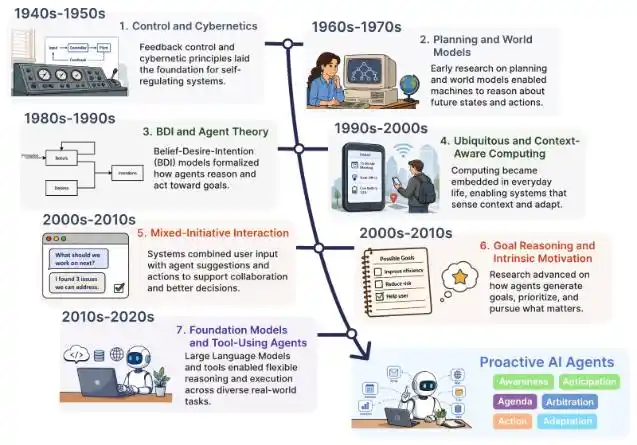
Travel planning is only one form of personal assistance. The review also examines coding, graphical user interface operation, information seeking, embodied robotics, safety, automated science, smart homes, smart cities, healthcare, law, education, entertainment and media, and agriculture, for a total of 13 domains. Looking across them shows that the need for proactive work discovery changes with the task, the environment and the human role.
In coding, the focus is on finding issues that have not been explicitly assigned by reading code, tests and usage feedback, then proposing justified fixes and following through on maintenance. Some systems can already prepare fixes and test results, but maintaining an entire project over time still requires choosing which issues are worth handling, setting priorities and preserving unfinished work.
Automated science systems work around a direction given by a researcher, propose hypotheses, choose experiments and schedule follow-up research based on results. The judgment problem there is not limited to running experiments. It also includes whether the question and the experiment are worth the investment.
Proactive help in household settings often relates to daily routines. Existing systems can remind users about forgotten device operations or predict heating needs from usage patterns. If they are to take on household responsibilities over time, they also have to deal with different preferences across family members and whether a reminder or action is appropriate at that moment. City systems use prediction to support decisions in public matters such as traffic, while concrete actions are usually still taken by the relevant people and institutions.
The paper records both the degree of proactivity and the execution authority of these systems. Some research systems can carry out relatively long workflows independently, but high-level research questions are still set by humans. Smart-home systems may issue reminders on their own, while the scope of device control is specified separately. Across the surveyed systems, there is still room to improve long-term maintenance of standing responsibilities, and the ability to revise higher-level goals on their own is not yet mature.
The cross-domain comparison also points to three trends: foundation models and domain-specific methods are sharing the workload; some agents are beginning to own workflows with multiple stages; and the reliability of feedback, along with the cost of verification, affects continuous improvement.
Evaluating proactive help means more than checking whether the task was completed
If an evaluation prompt says, “The conference was rescheduled, please update the trip,” the problem has already been identified by the tester. To evaluate proactivity, the system should instead receive the official notice, the existing orders and the current responsibility, then decide for itself whether there is work worth initiating. What it discovered, what it missed and what unnecessary changes it proposed should all be recorded.
The review organizes evaluation at three levels: task, mechanism and user.
At the task level, the travel example would check whether the return trip is scheduled after the conference ends, whether lodging covers the attendance period, whether the budget is exceeded and whether duplicate orders or cancellation losses were created. The time, computation and human effort required to complete the work should also count as costs. Without that, it is hard to judge how much practical value early intervention actually produced.
At the mechanism level, the evaluator would check whether the assistant recognized the official rescheduling notice, found the related orders, correctly predicted the schedule conflict and arranged the items requiring confirmation before the deadline. The timing of the suggestion, the evidence required and the permissions involved also matter. Continuing to verify when dates are still uncertain, or stopping follow-up when the need has disappeared, can both count as reasonable choices. Error records should be detailed enough to locate the problem in information gathering, prediction, goal selection, intervention judgment or execution.
At the user level, the review asks how much time the researcher spent checking plans, adding information and correcting errors, whether reminders interrupted work, whether order status was easy to understand and whether it was easy to modify, reject or stop an operation. Over longer use, it also matters whether the human can decide when to accept and when to double-check based on the assistant’s actual reliability. Any reduction in work, and any extra review burden created by proactive help, should be backed by evidence.
The paper adds that continuing the trip a few days later, traveling again to a different destination or changing a long-term budget can reveal issues that short tests miss. Whether the assistant carries over outdated preferences, whether it can resume interrupted work and whether it rechecks stale information all require tests that run across weeks or months. The review also proposes more fine-grained mechanism checks to help identify where long-term performance breaks down.
How proactivity connects to long-horizon tasks and self-improvement
In long-horizon work such as scientific research, the next step often depends on new findings. Hidden constraints can invalidate the original plan. A failure can expose a new research question. Even human experts may not be able to specify the full path in advance.
The paper argues that proactivity is necessary for agents facing this kind of work. They need to notice problems in the current path, propose new goals worth exploring and seek clarification when needed so that work can continue even when no next instruction has been issued.
Proactivity also points toward self-improvement. An agent can identify capability bottlenecks from unmet needs, anomalies and its own mistakes, then decide what to learn or explore next. What it learns can then improve situation understanding, forecasting, goal selection and intervention judgment. The authors say future research should examine how these two capabilities can reinforce each other so that self-improvement benefits the full 6A process.
At the same time, self-generated goals and capability updates need supervision. Why an agent chose a goal, and how its behavior changed after learning, should be inspectable and correctable, with rollback support where possible. Human authorization and external safety checks also need to constrain what the agent pursues and how it improves itself.
The paper’s closing view is straightforward: moving toward superintelligent agents will require intelligence, alignment and proactivity to develop together. Agents with those traits could become long-term collaborators that keep finding worthwhile work, suggest directions when they encounter unknown problems and improve themselves through practice. That kind of collaboration could reduce the burden on humans to constantly monitor the environment, add instructions and revise plans, leaving more attention for deciding which questions are worth studying, which goals are worth pursuing and which open-ended problems should be explored together with AI.
The source notes that the article originated from the WeChat public account New Intelligence, with New Intelligence credited as author and LRST as editor.