
Bitcoin controlled by UK enforcement authorities in the Zhimin Qian case has become a focal point for victim recovery efforts. The immediate questions are practical ones: how any property may be distributed, and what evidence victims who have already registered losses still need to provide. A recent High Court ruling does not settle those issues, but it does fix the legal starting point for one of the central disputes.

On Oct. 12, 2026, the High Court of England and Wales issued an interim ruling in DPP v Zhimin Qian, cited as [2026] EWHC 2509 (KB). The court held that the underlying rights said to support victims’ proprietary claims must be determined under Chinese law. The content of Chinese law, and the evidence for each individual claim, will be dealt with at a later stage.
That ruling pushes the next phase of recovery work toward legal basis and evidence preparation. Victims will need to explain how they invested funds, what rights they acquired, and how those rights connect to the property now under control. For legal teams, cross-border procedure management, fund-flow reconstruction, and Chinese-law analysis need to move together from the outset.
Where the case stands now
The factual background to the UK proceedings lies in investment activity organized by Zhimin Qian in China and the later movement of funds. In this stage, the court addressed the choice-of-law issue on the basis of assumed facts agreed by the parties: the investment activity was mainly carried out in China, the relevant contracts, payments, and initial receipt of funds also took place in China, and some of the funds were later converted into Bitcoin and other assets.
Those background facts were used to determine the applicable law. The judgment states at the outset that no evidence had yet been filed on the content of Chinese law, and that the court had not undertaken a detailed review of the evidence of each individual applicant. The next phase is expected to move more deeply into specific investment relationships, the destination of funds, and the nature of rights under Chinese law.
The UK Crown Prosecution Service had already said in a victim notice issued in October 2024 that civil recovery proceedings had been started under Part 5 of the Proceeds of Crime Act 2002, or POCA. That process is brought by enforcement authorities against criminal property or property representing it, with the aim of identifying and controlling assets that may be recoverable.
Running alongside that process, victims may assert their own property interests in the relevant proceedings. The CPS said at the time that reasonable time would be allowed for affected persons to obtain legal advice and make appropriate applications. As the court issues later directions, the method of participation, deadlines, and documentary requirements will depend on the current operative court orders and formal notices.
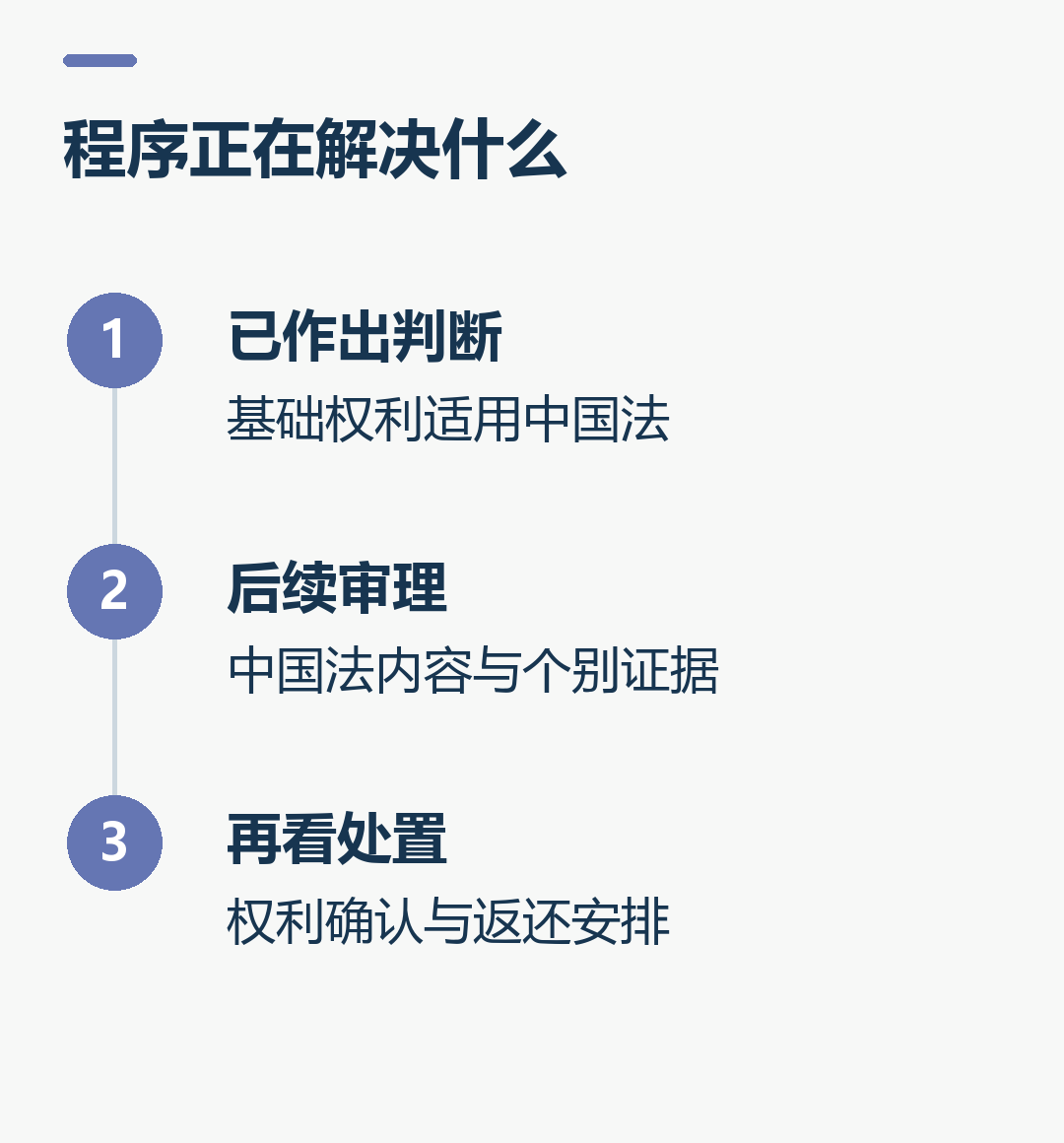
Criminal conviction, civil recovery, recognition of victims’ property rights, and final distribution each address different questions. Criminal proceedings deal with criminal responsibility. Asset proceedings identify and dispose of relevant property. Victims’ applications require the court to decide what rights, if any, they hold in specific property or shares of it. That distinction matters because it determines what kind of material should be prepared now.
The judgment at [2026] EWHC 2509 (KB) does not decide final distribution.
What section 281 of POCA requires
Section 281 of POCA is the main legal gateway for victims’ claims in this context. It allows a person who claims that recoverable property, or part of it, belongs to that person to apply to the court for a declaration. If the court is satisfied that the conditions are met, the property covered by the declaration is excluded from the pool of recoverable property.
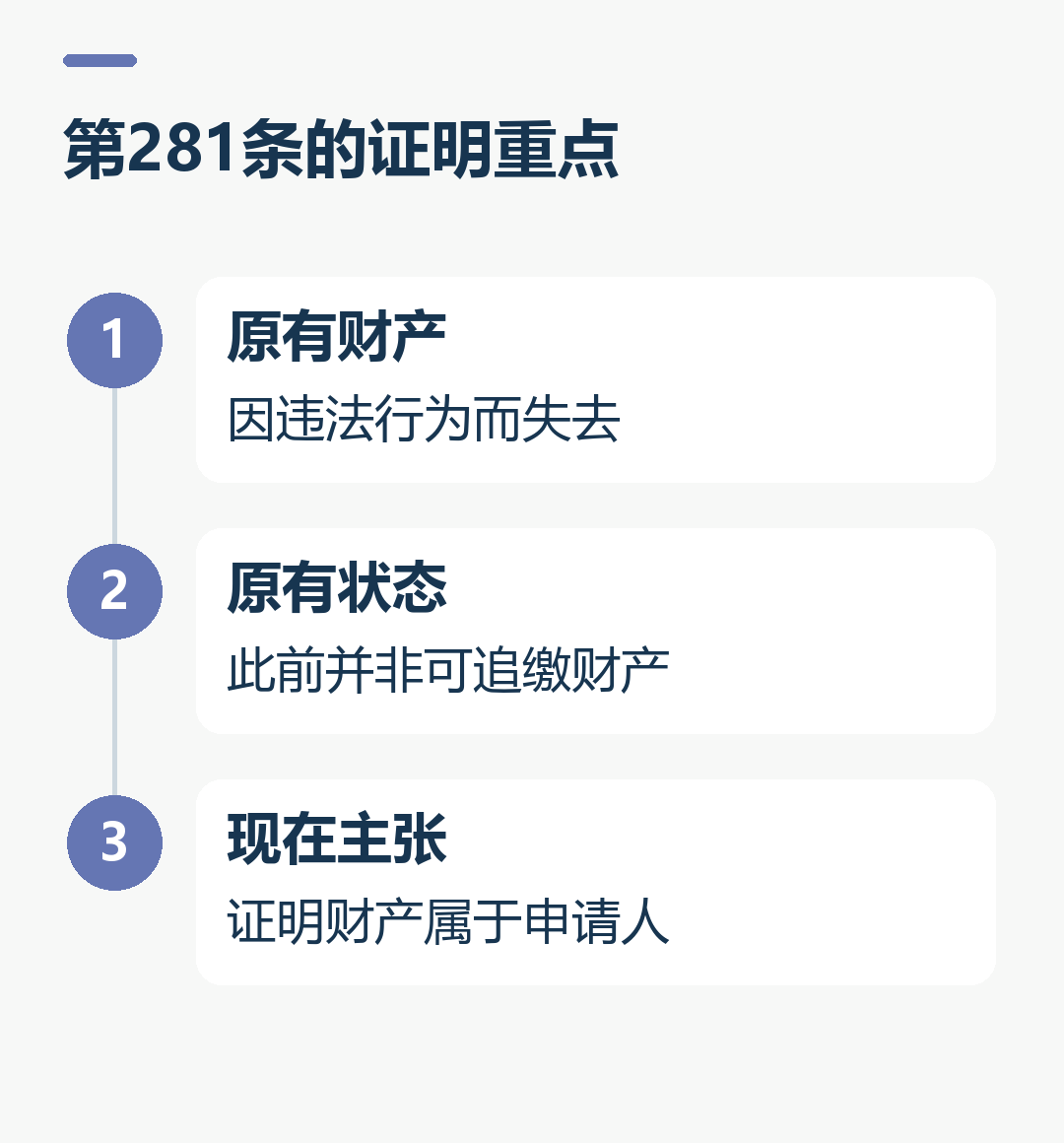
Under section 281(3), an applicant must prove three things: first, that the applicant was deprived, by unlawful conduct, of the property claimed or of the property that the claimed property represents; second, that the property lost before that deprivation was not itself recoverable property; and third, that the property now claimed belongs to the applicant. Each element has to be explained through both facts and legal basis.
The phrase that has drawn the most attention is “belongs to him.” In paragraphs 18 to 23, the court explains that this requires proof of a proprietary right. A claim that a wrongdoer should repay a sum of money is not the same, in legal structure, as a claim that the applicant has rights in specific property now under control.
A simplified example helps. If A is defrauded by B out of a sum of money, A may have a claim for repayment of the loss. But if A goes further and says that an asset later held by B, or part of that asset, still belongs to A in law, A must explain how that specific right arises and connect the facts to the applicable law. That is the level of argument the applications in the Zhimin Qian case now face.
This also shapes the order in which lawyers need to organize the record. First comes the legal relationship between the investor and the receiving entity. Next comes the question of what rights arose after payment. Then comes the issue of whether those rights continued after the funds were converted into Bitcoin, and if so in what form. Each step needs evidence and legal support. A list of loss amounts on its own will not complete the argument.

Police reports, criminal case materials, and prior loss registrations may help establish the fact of investment and loss. Where a claimant seeks a specific proprietary interest, the materials still need to be tied to particular elements of the test, and any factual gaps need to be identified. Matching evidence to legal elements should make later hearings more focused.
Why the court pointed to Chinese law
Cross-border disputes often engage more than one legal system. A court must first identify whether the issue sounds in contract, tort, restitution, property, or something else, and then apply choice-of-law rules to determine the governing law. That exercise is meant to identify the legal rules that actually govern the issue in dispute.
In this case, the applicants advanced different legal routes, including claims to Bitcoin interests based on the original investment relationship, trust, or tracing rules. The court analyzed those routes separately and, looking at factors such as where the transactions occurred, the connection between the parties and the contracts, the fraudulent activity, and the initial transfer of property, concluded that the underlying rights should be determined under Chinese law.
Paragraphs 242 to 246 set out the conclusion in concentrated form: the underlying issues arising in relation to the contracts, non-contractual obligations, and the common-law private international law analysis all point to Chinese law. The court did not accept the applicants’ third route, which sought to rely directly on POCA’s statutory tracing arrangements to establish their own proprietary rights. POCA’s recovery regime itself remains in place. The content, effect, and proof of Chinese law are left for the next stage.
So the case continues in the UK, but the UK court will need to ascertain and apply the relevant Chinese law. That means victims’ legal teams will need to explain clearly to the court what the rights structure looks like under Chinese law and provide legal materials or expert evidence that meet procedural requirements.
The work is likely to involve questions such as how the contracts should be characterized, what effect unlawful activity has on the civil relationship, how restitutionary claims differ from proprietary claims, and how mixed or converted property should be treated. Expert opinions will need to address those issues directly and explain how statutory provisions, judicial interpretations, and relevant case materials support the conclusions offered.
A word-for-word translation of Chinese legal provisions will not be enough. The UK court will also need to understand how those provisions operate within the legal system, what conditions trigger them, and what remedies they produce. For example, whether a restitutionary claim points to the original asset, substitute property, or monetary compensation may affect how it fits with the section 281 test.
Where more than one interpretation exists, legal teams will also need to address the competing views head-on, explain the basis for each, and show how each relates to the facts of this case. That is the kind of preparation that can support later questioning and evidentiary review.
Tracing after funds were converted into Bitcoin
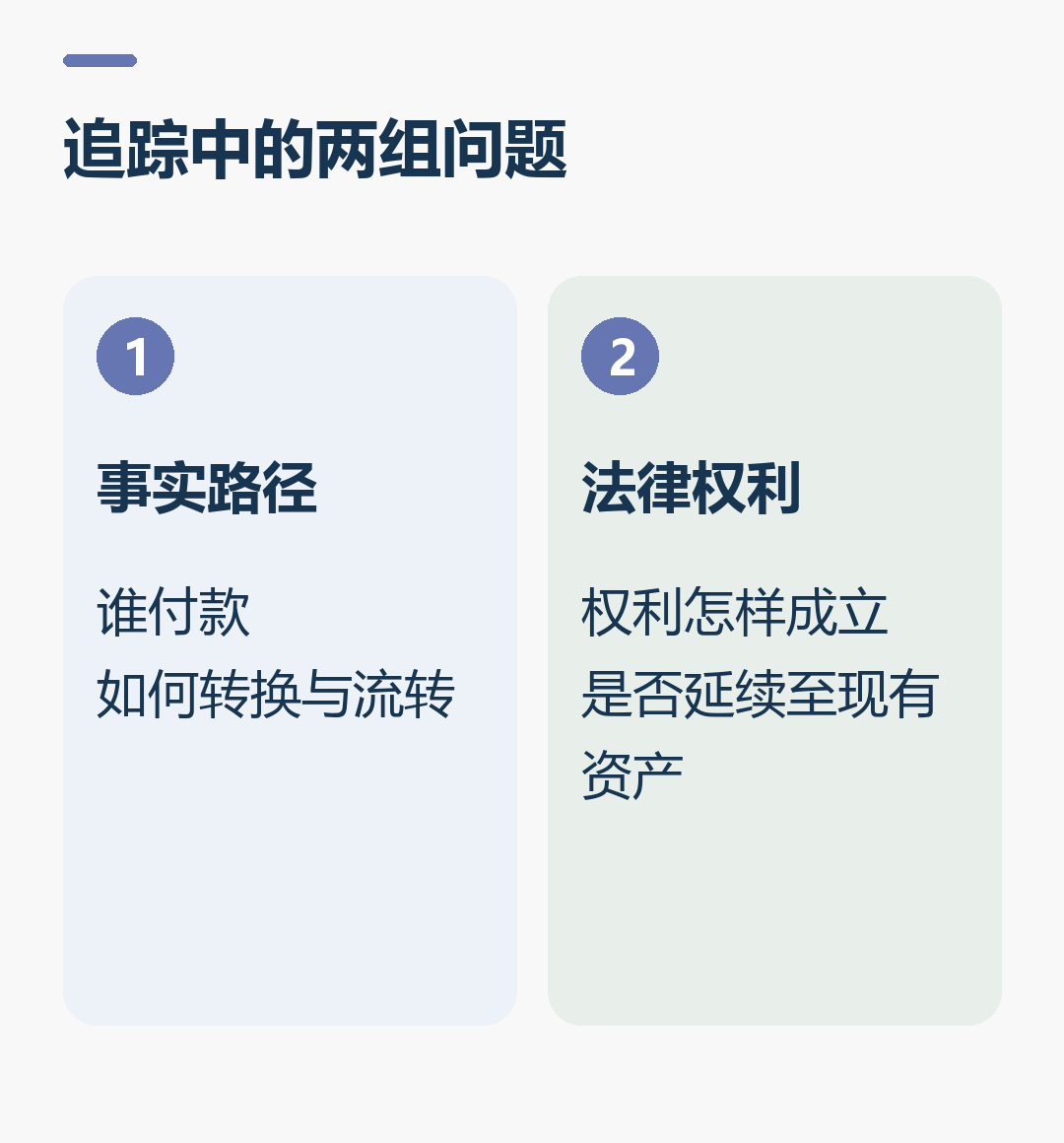
The assets in this case moved through several stages: receipt of fiat currency, transfers between different accounts, purchase or acquisition of Bitcoin, later holding, and cross-border control. The longer the path, the more important it becomes for victims to separate facts that are already established from links that still need investigation.
On-chain transaction records can help show movement between addresses. Exchange account records, bank statements, device information, and records tied to relevant individuals can help show who controlled those addresses and where the purchase funds came from. Those two categories of material need to be used together if on-chain movement is to be tied back to specific people and transactions.
Legal tracing raises another set of questions. If the original funds were mixed with other funds, how are rights identified? If the asset was exchanged, can substitute property be claimed? If part of the asset was spent and part appreciated, how should the relevant share be calculated? The answers depend on the applicable law.
Sections 304 to 310 of POCA set out rules used by enforcement authorities to identify recoverable property, including where criminal proceeds have been converted, mixed, or represented by related property. For victims, however, a section 281 application still requires a separate showing: what rights they have, under the applicable law, in which property. Lawyers therefore need to pair tracing results with the legal basis for each claimed share and explain the source of each claim item by item.
For claimants, one practical approach is to divide tracing material into two parts: factual records and legal analysis. The factual record can list each payment, receipt, conversion, and known destination of assets. The legal analysis can then explain the effect of each step on the rights asserted. That reduces the risk of treating investigative assumptions as settled conclusions.
Bitcoin appreciation also enters the analysis. If a proprietary right and its share are established, the treatment of later changes in the asset will depend on the nature of that right and on the court’s decision. If the route taken is loss recovery or another remedy, the amount will need to be calculated under the rules governing that remedy. The legal basis comes first; only then does the analysis of amount and appreciation become clear.
How victims’ materials should be organized
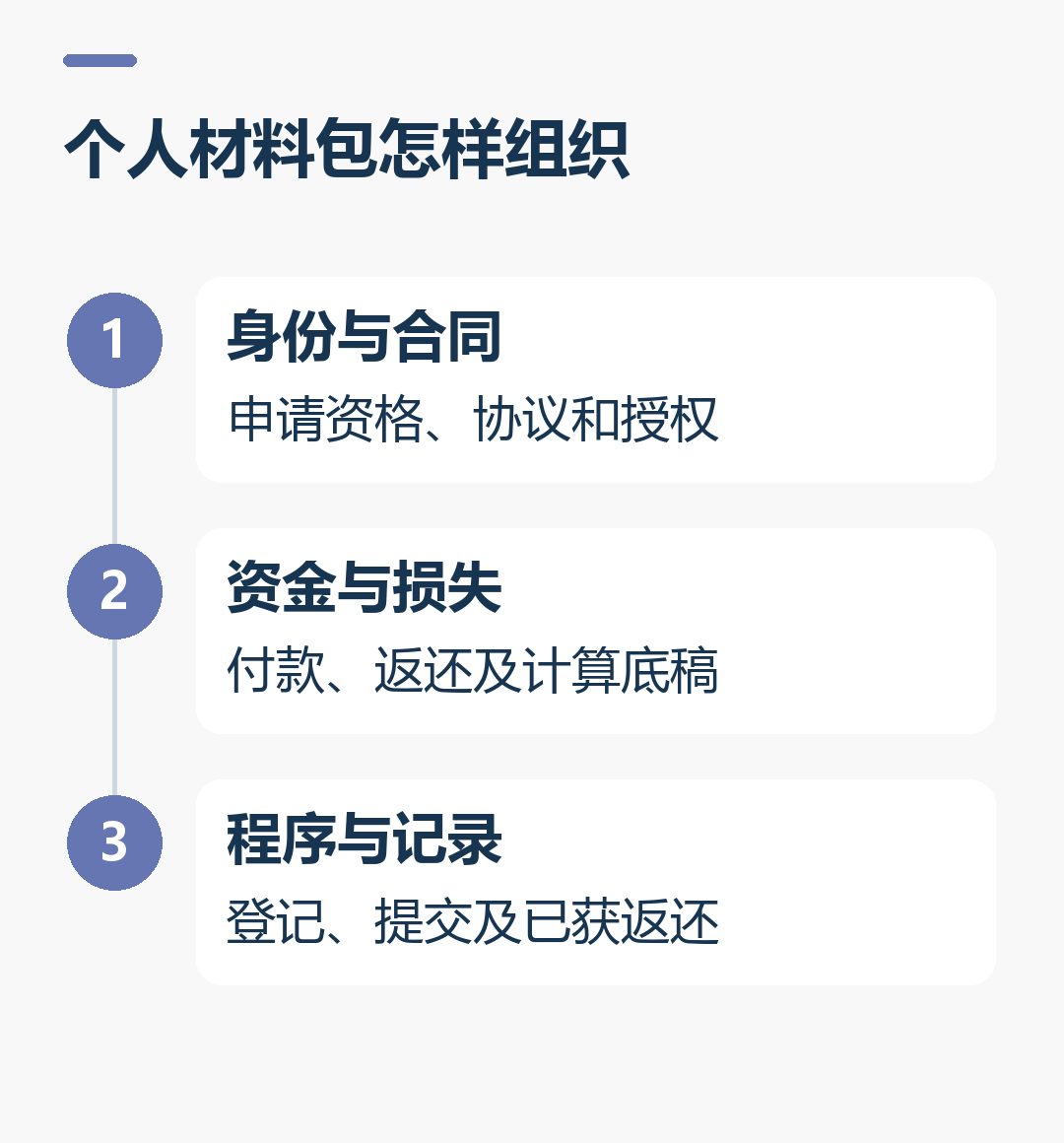
A document package prepared for cross-border proceedings should allow someone unfamiliar with the case to understand the basic sequence of events. One starting point is a personal chronology listing, by date, contact with the project, signed materials, payments, receipts, discovery of problems, police reports, and prior registrations, with supporting evidence identified for each entry.
The first group of materials concerns identity and standing. The applicant’s name, former names, identity documents, contact details, and any authorization for a representative should match across the file. If inheritance, guardianship, joint contribution, or payment on behalf of another person is involved, the rights holder and actual source of funds should be explained.
The second group is contracts and promotional materials. Investment agreements, subscription certificates, project descriptions, chat records, and written promises received at the time may help reconstruct the transaction. Keeping original files, the time they were obtained, and their context can reduce the risk of misunderstanding caused by isolated screenshots.
The third group is funding material, and it is the part that usually requires the closest checking. Each payment’s date, amount, paying account, receiving entity, and transaction reference should be listed together. Any refunds, returns, or other amounts already received should be listed separately. Total investment, amounts recovered, and claimed loss should be calculated separately, with the calculation process preserved.
If a claimant has already registered in proceedings in China or received a return there, the file should also include case numbers, acceptance records, confirmation documents, and proof of receipt. Lawyers in and outside China need to know whether the same loss has already been dealt with in part, so that conflicting figures or duplicate claims do not appear in different submissions.
When materials are prepared for UK proceedings, translation, certification, and formal requirements should be confirmed by professionals handling that procedure under the specific directions given. It may help to standardize name translations, date formats, currencies, and document numbering first, then prepare an index. Matching originals and translations item by item should save time when further evidence is added later.
If some bank records are now difficult to obtain, the reason for the gap can be stated first, followed by payment notices, receipts, emails, police-report attachments, or other materials that can corroborate one another. The factual narrative should preserve those gaps honestly, leaving lawyers to assess whether formal disclosure channels or substitute proof may be available.

Coordinating proceedings in China and the UK
Articles 298 to 300 of China’s Criminal Procedure Law provide for confiscation procedures for unlawful gains in certain cases involving fugitives or deceased persons. Article 299 deals with public notice after a court accepts the case and with participation by interested parties. Article 300 addresses disposal of unlawful gains and other case-related property, and states that property that should be returned to victims according to law shall be returned.
Those confiscation procedures apply only in specific categories of cases and under specific conditions, so legal teams need to verify what procedure has actually been used in China and what rulings already exist. Where assets have been controlled abroad, the position also needs to be mapped against overseas proceedings, judicial assistance, and concrete enforcement arrangements, with formal notices, filing deadlines, and materials already submitted recorded on both sides. That is the only way to judge which authority should receive the next application.
The CPS notice issued in 2024 also said that inter-state contact concerning the return of assets would need to be considered alongside the progress of the civil recovery proceedings and section 281 applications. That notice helps explain the procedural design at the time, but the actual position still needs to be updated by reference to later operative decisions.
For victims, the easiest points to confuse are these: having registered, having become an applicant in a particular procedure, having had a property interest recognized, and having entered a payment arrangement. Legal teams can reduce that confusion by using a simple progress chart showing the current stage and what the next filing is meant to resolve.
Where multiple victims instruct the same lawyers, the scope of representation, cost sharing, information sharing, and the method for confirming major decisions should also be made clear. Common facts can be organized centrally, but each person’s payments and recoveries still need separate checking. Differences in contracts, recipients, and evidence may affect the claims advanced for each individual.
For claimants who already have lawyers in China, those lawyers may be authorized to coordinate with overseas counsel on necessary materials, with the scope and method of document transfer clearly defined. Identity documents, bank statements, and contact details all involve personal information and should be exchanged through reliable channels rather than repeatedly uploaded in public group chats.
What legal services need to focus on
The early work in cases of this kind can be broken into three parts: fact organization, route assessment, and procedural execution. Fact organization answers what the claimant invested, what has been recovered, and what evidence is available. Route assessment asks what kind of claim the existing materials can support. Procedural execution covers filing documents, supplementing evidence, and taking part in later hearings as required by the court.
Chinese-law analysis should be built around a clear list of questions, including the underlying contractual relationship, the nature of any restitutionary claim, rights after property conversion, and the relationship between those issues and the disposal of the assets in question. Lawyers handling the overseas proceedings can then organize those points around the section 281 requirements and the court’s directions, deciding which issues need expert evidence and which can be proved through factual documents.
Retainer documents should also define the scope of work clearly. Early assessment, document translation, formal applications, expert evidence, hearings, and any appeal may each generate separate costs. Setting out deliverables and budgets by stage can help claimants decide whether to continue and avoid committing to a full package of unclear fees without understanding the procedure.
Asset-recovery work also calls for caution against payment demands from people falsely claiming to be courts, prosecutors, or representatives. Official institution websites, lawyers’ practice credentials, and the identity of the payee should all be checked, and retainer documents and payment records should be kept. Any message claiming that a distribution ratio has already been fixed, or demanding an “unfreezing fee” or wallet keys, should be verified with the actual professionals handling the matter before any action is taken.
At the next discussion with counsel, claimants may want clear answers to three concrete questions: whether they have already joined the relevant proceedings, what proof of rights is still missing from the current file, and when and to whom the next document must be submitted. Keeping those answers in the same case record as the retainer scope, court notices, and payment evidence should make later supplementary filings and fee arrangements easier to verify.
This article is provided only for legal, policy, and industry research exchange. It is intended as an objective analysis of digital finance, stablecoins, digital assets, and related regulatory developments, and does not constitute investment advice, legal advice, tax advice, or any other professional advice. It also does not constitute a recommendation, promotion, or solicitation of any financial product, digital asset, or commercial project. The regulatory rules, market data, and institutional information discussed are mainly drawn from public materials and may change with laws, regulations, regulatory policy, market conditions, and project developments. Readers should make their own judgment based on the latest public information and comply with the laws and regulations applicable in their own country or region. Neither the author nor the publishing platform accepts responsibility for investment, trading, or other commercial decisions made in reliance on this article.
Disclaimer: Markets involve risk, and investment requires caution. This article does not constitute investment advice. Readers should consider whether any opinion, view, or conclusion in this article fits their own circumstances. Any investment decision made on that basis is at the reader’s own risk.